SEO is changing.
Oh, you’ve heard that one before? It’s true; SEO has been many things in the twenty or so years that it’s been around, but static has never been one of them. What began with simple keyword stuffing and quantity-over-quality link building has evolved into a deeply strategic and data-centric discipline — one that prioritizes intent over tricks, clarity over cleverness, and exploration over exploitation. So, yeah SEO is changing and always has been. But 2026 hits a little differently.
This new year is the dawn of a new era. Search is no longer just a list of links politely waiting for users to click them. It’s answers, summaries, recommendations, and increasingly confident machines stepping in as intermediaries to decide whether your content deserves to exist at all. AI-driven search is adding a new and somewhat unforgiving layer to SEO. It’s not an entirely new game; traditional ranking factors still matter, it’s just that they don’t carry the same weight they once did. And that changes what it means to be visible.
Simply put, the rules of SEO have evolved, and the brands that adapt to meet these changes will come out on top.
Key takeaways
- SEO in 2026 is shaped less by static rankings and more by how content is interpreted, reused, and trusted across search engines, AI systems, and discovery platforms.
- Evolving SEO strategies prioritize clarity, structure, and credibility so content can travel well across AI summaries, citations, and search-adjacent environments.
- Topic authority, user experience, and E-E-A-T now work together to determine visibility, making isolated optimizations far less effective than cohesive systems.
- Measuring SEO success requires looking beyond traffic to signals like brand familiarity, assisted conversions, and visibility within AI-driven discovery.
- Brands that design their SEO strategies for adaptability today are better positioned to earn compounding visibility and trust as search behavior continues to change.
SEO Strategies for 2026 Must Be Built on How Content Is Interpreted
The biggest shift is in where and how those changes are showing up:
- Search behavior has spread across platforms and formats. Users now move fluidly between Google, AI tools, social platforms, forums, marketplaces, and community-driven spaces, often without thinking of any of them as ‘search’ in the traditional sense. The moment of discovery has fractured.
- AI-generated answers increasingly sit between users and websites, summarizing information, filtering options, and, in some cases, resolving intent without a click. Google, large language models (LLMs), and discovery platforms all evaluate content through different lenses, and none of them rely on rankings alone to decide what gets surfaced.
- SEO ‘playbooks’ age out faster than ever. Evolving SEO strategies require adaptability. Best practices don’t disappear… not really. It’s just that the context in which they operate keeps shifting.
Which brings us to the inevitable question: If SEO now depends on how content is interpreted (rather than simply ranked), where does that leave the growing pile of labels we use to describe it?
SEO vs. GEO vs. “search strategies” in 2026
The SEO lexicon is growing: Generative engine optimization (GEO), Search Everywhere, AI Search Optimization (AIO)... It’s a whole new world of terminology. And don’t you dare close your eyes, because these terms are symptomatic of how search itself now operates across more systems than a traditional SERP ever could.
Modern visibility includes rankings, citations, summaries, and recommendations that appear across AI tools, discovery platforms, and search-adjacent environments. Evolving SEO strategies account for all of these surfaces by focusing on interpretability, credibility, and usefulness at scale.
So, whether we’re talking about SEO or GEO, we’re ultimately describing the same responsibility: ensuring that your content can be found, understood, trusted, and reused wherever search behavior shows up.
And wouldn’t you know it? In 2026, that responsibility extends beyond ranking signals and into how information is structured, contextualized, and validated across systems that are increasingly taking on the role of interpreters. Strategy lives in the connective tissue — how ideas relate, how authority is demonstrated, and how consistently value is delivered across touchpoints.
Labels will keep changing. The underlying work remains focused on building visibility that travels well and earns its place wherever discovery happens.
But "wherever discovery happens" increasingly includes systems that surface answers very differently than a traditional SERP — and those differences aren't cosmetic. Blake, Account Director at 97th Floor, takes on the question every SEO team is quietly wrestling with: is AI search a meaningful shift or just the next version of the same game? His answer cuts through the noise with a practical lens on what actually changes and what stays the same. This short video breaks down the real distinction between traditional search and AI search — and what it means for how you build visibility today.
Things search marketers should watch for as SEO strategies evolve
Have we belaboured the point enough? If not, let’s just come right out and say it. 2026 isn’t being defined by a single update, tool, or announcement. What’s changing is the environment in which search operates and the expectations placed on the content that moves through it. Search marketers now operate in a space where content gets evaluated repeatedly — by users, by traditional search systems, and by AI-driven interfaces that summarize, filter, and recommend information at scale. That layered evaluation changes where effort pays off and where shortcuts tend to collapse.
Let’s take a look at the most consistent pressure points shaping evolving SEO strategies this year:
GEO (Generative Engine Optimization) and AI integration
When it comes to AI search, generative systems interact with content very differently than traditional crawlers. Instead of indexing pages and ranking them in isolation, they ingest large volumes of information, identify relationships between concepts, and reconstruct answers dynamically.
That process places real weight on how content is constructed. Definitions that arrive early, terminology that stays consistent, and sections that stay focused all influence how information survives interpretation. When ideas are clearly framed and logically ordered, they remain intact even after being separated from their original page.
This changes how teams need to approach content creation. Planning now includes AI-search considerations and thinking about how information might be extracted, summarized, or recombined elsewhere. Content that holds together under that pressure tends to surface more often and persist longer across AI-driven environments.
Topic authority over keyword targeting
Authority now grows through accumulation.
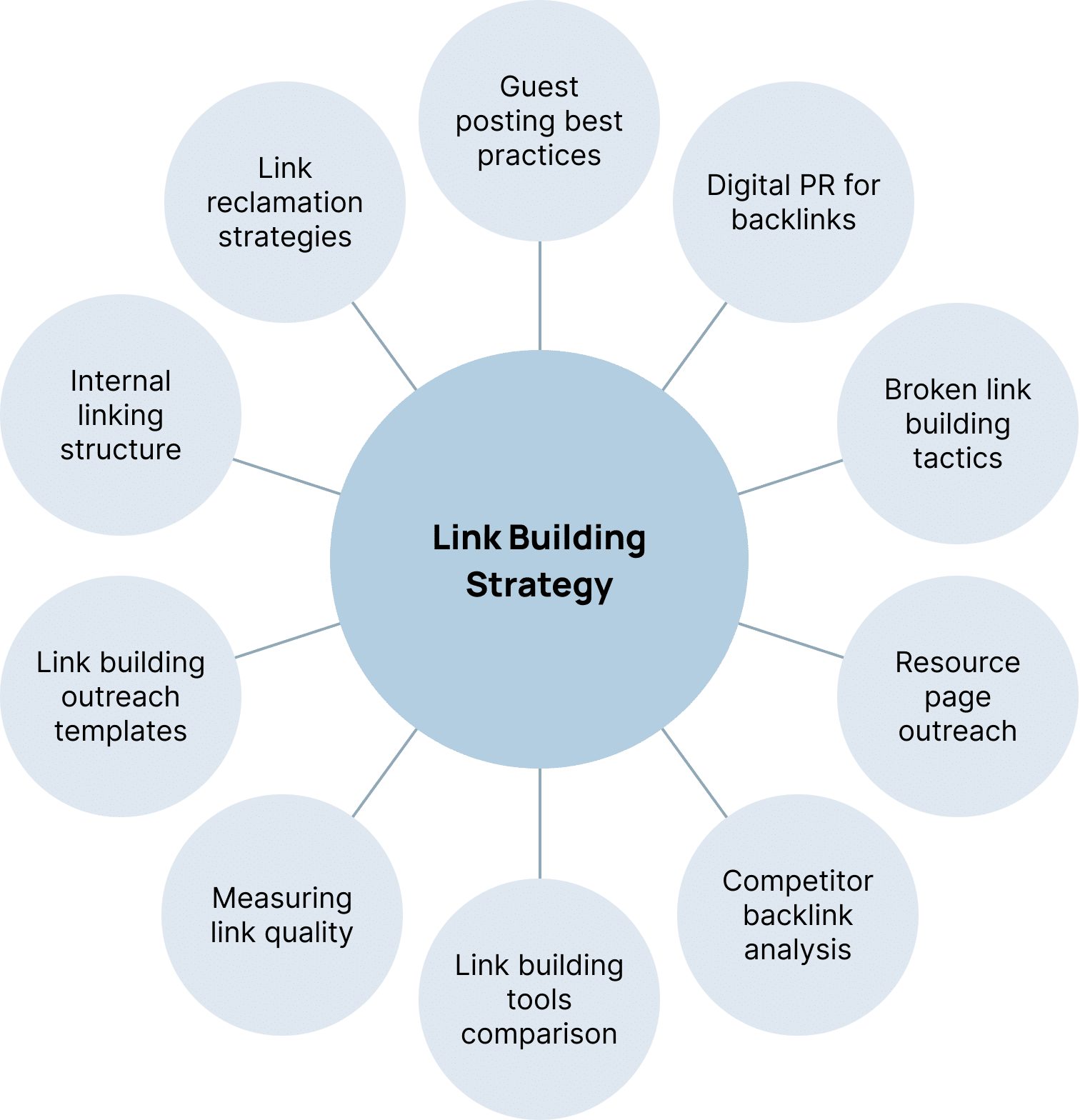
Search engines and AI systems pay close attention to how thoroughly a site explores a subject, how consistently it answers related questions, and how naturally its content interconnects. And yes, individual pages obviously still matter. It’s just that their performance increasingly reflects the strength of the entire surrounding ecosystem. Topic clusters support this by creating continuity. Internal links guide readers through related ideas while giving machines a clear sense of scope and relevance. Over time, this builds a reputation for depth that benefits new content as soon as it enters the system.
For organizations publishing at scale, this approach also introduces stability. Authority spreads across related assets instead of concentrating on a single page. And as authority accumulates, new content enters the conversation with momentum already behind it.
User experience and search experience optimization
Experience shapes perception long before rankings enter the picture. In practical terms, this is where user experience (UX) and search experience optimization (SXO) converge, shaping how people interact with content and how search systems interpret those interactions.
When content loads quickly, reads clearly, and flows logically, users engage with confidence. Those behaviors generate signals that ripple outward across search systems. Structure plays a central role here. Clear headings support scanning. Thoughtful spacing reduces cognitive load. Consistent formatting helps readers orient themselves as they move through complex topics. And this is just as true for LLMs as it is for human readers.
It may seem strange to suggest that AI would care about design, but it absolutely does. Or, to put it another way, content structure is often among the first signals a system uses to understand the navigability and coherency of the information on the page (even before it evaluates overall subject matter).
As search surfaces continue to prioritize usability, experience becomes inseparable from visibility.
E-E-A-T and human credibility signals
Credibility rarely announces itself directly. It accumulates quietly, through patterns that repeat over time. Readers, on the other hand, pick up on those patterns almost immediately. They notice when content reflects lived experience instead of abstract advice. They notice when examples feel earned, when sources make sense, and when a brand sounds like the same brand from one page to the next. That familiarity builds confidence, even if the reader can’t quite articulate why.
AI systems likewise pay attention to many of the same cues. Authorship, sourcing, topical consistency, and historical performance all influence which information gets prioritized. Content that demonstrates experience and expertise in small, repeatable ways tends to travel even farther in 2026.
This is what Google refers to as E-E-A-T: Experience, Expertise, Authoritativeness, and Trustworthiness — the signals that help determine what content earns visibility. For teams working on evolving SEO strategies, this realigns the focus from chasing isolated wins to building a reputation. Clear authorship, transparent sourcing, and original insight all contribute to that reputation.
Just be aware that this credibility is both cumulative and fragile. Each accurate, useful interaction reinforces the next, creating credibility that’s difficult to fake. But at the same time, when content gets stale or expert advice gives way to generic advice, that credibility quickly and quietly starts to erode.
Multimodal and platform-diversified content
Discovery rarely happens in a straight line. People don’t sit down, type a query, read one page, and call it a day. They skim an article, review an AI overview, glance at an image, save something for later, and circle back when the timing feels right. Some of those moments happen in long-form content, where depth and detail matter. Others happen through visuals, short videos, structured summaries, or quick references designed to help ideas click faster. Each platform shapes how information is absorbed and remembered, even when the underlying message stays the same.
This shifts how content earns longevity. Ideas that translate across formats tend to stay visible longer because they meet people in different states of attention and curiosity.
For evolving SEO strategies, this flexibility supports consistent presence across a widening ecosystem. Content that travels remains discoverable, recognizable, and useful as platforms and behaviors continue to evolve. Alternatively, non-traveling content puts all its eggs (visibility) into one basket (surface), losing relevance everywhere else as discovery habits shift around it.
Intent-driven content and funnel alignment
Site visitors show up carrying context: how much they already know, how urgent the problem feels, how close they are to making a decision, etc. Sometimes they’re trying to understand a concept for the first time. Other times they’re pressure-testing an option, looking for reassurance, or even just sanity-checking a choice they’ve mostly already made.
Content that works acknowledges those mental states explicitly. It anticipates the questions that naturally follow and answers them in an order that feels intuitive. When that happens, the content feels relevant almost immediately, because it meets readers where they already are instead of asking them to recalibrate.
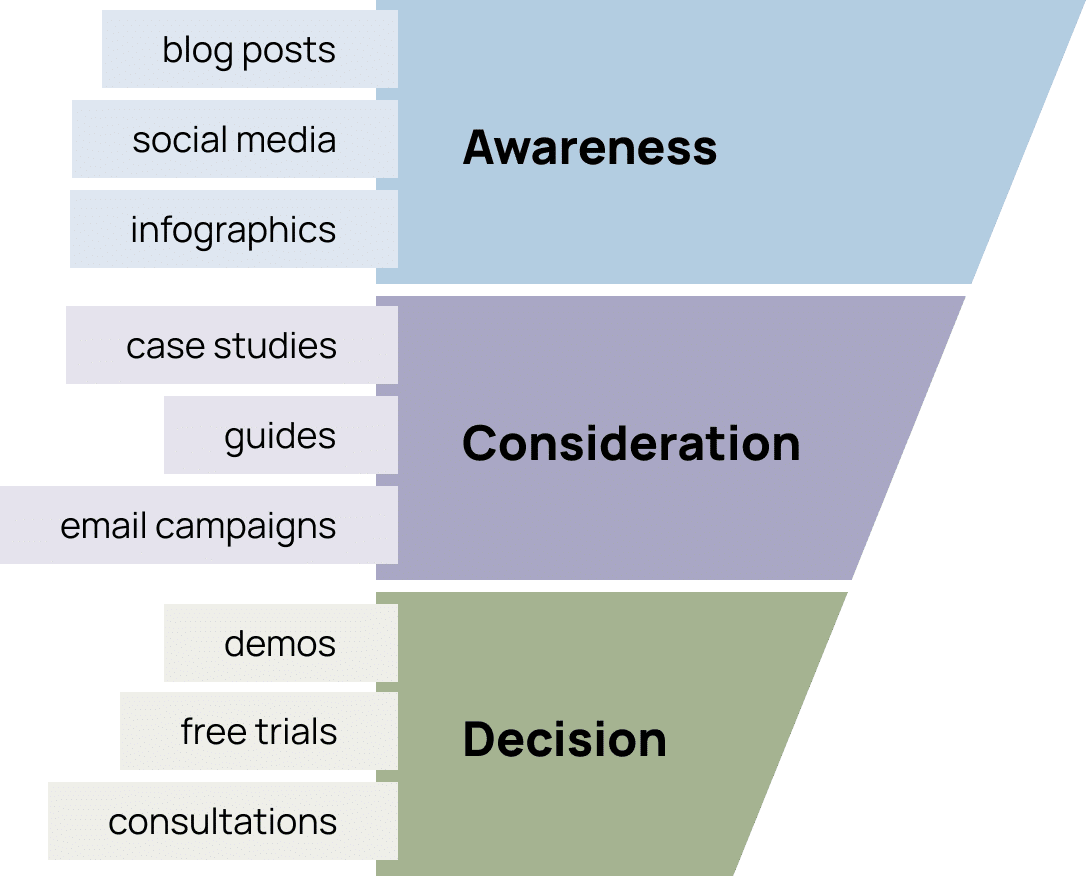
Early-stage content helps people understand what problem they’re dealing with. Mid-stage content helps them sort through their options. Later-stage content helps them decide what to do next. Together, these pieces form a throughline that reflects how real decisions unfold over time. When intent is baked into structure, it’s easier to read, easier to trust, and easier to decide whether it’s actually useful — both for readers and the systems evaluating how that content performs.
Measuring success in modern SEO
Measurement has gotten messier. Why? Because influence now shows up in more places than a traffic report can easily capture. Modern SEO metrics now include:
- Core visibility metrics
Organic rankings and sessions still matter, but they represent only one layer of visibility. Search presence now includes AI summaries, citations, brand mentions, and other moments of influence that never produce a click. - Multi-touch user behavior
SEO impact rarely lives inside a single pageview or session. Users move between platforms, revisit ideas over time, and often convert well after their first search interaction. - Momentum indicators
Brand search trends help show whether visibility is turning into familiarity. Engagement on high-intent pages reveals whether content resonates when it counts. Assisted conversions and longer attribution windows surface SEO’s influence across the funnel. - AI-driven discovery signals
Visibility now includes being cited, summarized, or referenced by AI systems. While these moments are harder to quantify directly, consistent appearances across platforms and research phases tend to support downstream performance. - Business-aligned outcomes
Directional clarity comes from connecting SEO activity to demand generation, pipeline contribution, conversion efficiency, and long-term growth.
When measurement evolves alongside strategy, SEO becomes easier to defend, easier to scale, and easier to integrate with the rest of the business.
Common mistakes brands make when adapting SEO strategies
So, where are the mistakes happening? As with many roads to hell, these ones are paved in good intentions applied a little too narrowly.
- Over-reliance on AI without editorial ownership
Teams lean too heavily on automation, publish faster than they can review, and gradually let expertise fade from the work. AI can accelerate research, organization, and iteration, but without human oversight, content loses specificity and credibility over time. - Over-optimizing for tools instead of people
Scores, checklists, and surface-level best practices start driving decisions. Content may look “optimized” on paper while becoming less useful, less readable, and less trustworthy in practice. - Letting legacy content decay
Years of articles, guides, and resources no longer reflect current thinking or brand positioning. When these assets go untouched, they dilute overall authority and create mixed signals for systems looking for clarity and consistency across the brand. - Isolating SEO from adjacent teams
Content, UX, analytics, and paid media operate in parallel instead of together. That separation makes performance harder to understand holistically. It also slows adaptation as search behavior shifts.
Plan your SEO strategy for 2026
They say that the journey of a thousand miles starts with a single step. We’d suggest that it starts before that step, by taking a look at where you’re standing right now.
- Audit current performance and visibility
Take stock of where your content actually appears today. Look at consistency across platforms (not just rankings). Identify which topics show real depth and cohesion, and which ones feel fragmented, outdated, or disconnected from how your brand currently thinks and talks. - Map AI-driven discovery to your brand
Pay attention to where summaries, citations, and recommendations surface in your category. Notice how your competitors show up in those moments, and where gaps exist. Those gaps often signal opportunities to clarify, expand, or restructure content. - Prioritize strategies that scale
Focus on work that compounds over time. Topic authority, clear content structure, experience optimization, and credibility all support growth that builds on itself instead of resetting with each algorithm shift. - Design for adaptability
Durable plans assume that change is ongoing (because it is). They rely on content structures, topic frameworks, and measurement approaches that can be adjusted without starting from scratch. When new discovery surfaces emerge or user behavior shifts, teams can update sections, expand coverage, refresh examples, or reorganize content without breaking what already works.
Optimize your SEO strategy with 97th Floor
At 97th Floor, SEO and AI search solutions are built around how search actually works today, and how it continues to change.
Our SEO services integrate AI search considerations, technical SEO, and content strategy into a unified framework built for modern discovery. The focus stays on building durable authority, improving interpretability across platforms, and aligning search visibility with meaningful business outcomes, all while ensuring that the human element doesn’t get lost along the way.
That work is supported by proprietary frameworks, deep analytics, and close collaboration across SEO, paid media, and measurement teams. The result is a strategy designed to hold up across platforms and continue performing well even as search behavior evolves, making 97th Floor one of the best AI SEO agencies available today.
SEO is changing… and it will keep changing. Our role is to help brands stay visible through that change by building strategies rooted in clarity and adaptability, optimizing for the future of AI search even as we keep sight of those fundamentals that will always remain relevant.