Hub and Spoke is an SEO strategy where a central hub page is surrounded by spoke pages covering specific aspects of the central theme. This structure creates a network of related content, improving search engine and user navigation.
Hub and Spoke shifts focus from individual keywords to broader topics, aligning with modern search algorithms that prioritize topical authority and relevance. This strategy enhances site visibility by creating a comprehensive content network, demonstrating your experience, expertise, authoritativeness, and trustworthiness (E-E-A-T) in a field.
This approach encourages a broader content perspective, ensuring comprehensive topic coverage. It enhances user experience by addressing various user queries, increasing page views and reducing bounce rates as users explore interconnected, valuable content.
Select a broad, relevant topic that acts as the central hub. This topic should be pertinent to your industry and broad enough to generate multiple subtopics for thorough coverage.
Conduct thorough keyword research to identify subtopics related to the core topic. Use tools like Ahrefs or SEMrush to understand how your audience searches for information, guiding targeted, relevant content creation.
Create comprehensive hub content covering the core topic, with spoke pages delving into specific subtopics. The hub page serves as an awareness piece, while spoke pages target users further down the buyer funnel.
Write engaging, informative content optimized for readers and search engines. Incorporate relevant keywords, optimize meta tags, and ensure mobile-friendliness.
Establish robust internal linking between the hub and spoke pages and among spoke pages where relevant. This enhances user navigation and signals the hierarchical relationship to search engines, boosting SEO performance.
Gympass is an employee benefit providing access to a huge selection of gyms and wellness apps. They came to 97th Floor with a goal of becoming a major info hub for HR specialists. In order to do that, they needed to build tons of content. They also needed to rank and capture backlinks for high-difficulty keywords.
A hub and spoke strategy would allow us to create strategic content groups to maximize internal linking potential and boost key pages faster.
We selected high volume keywords to extend our reach as far as possible. We crafted each piece of content with multiple on-page syntactical optimizations; internal links; and schema markup to match the SERP and maximize the ranking potential.
Together, we built out a content calendar combining Gympass’ priorities with our SEO recommendations.
Working with Gympass to adjust strategy as needed, we created quality content ranking high in the SERP for strategic, competitive keywords.
Gigamon is a leader in the highly competitive network security space that sought to increase sales pipeline by attracting prospects through a high-profile, short-tail keyword. After 6 months, the page still wasn’t ranking. Gigamon was experiencing the frustration of following the right protocol, but still not seeing the impact or results they wanted.
By building a hub-and-spoke content creation and promotional strategy (combined with large site architecture modifications), 97th Floor was able to help Gigamon win a series of longer-tail keyword variations and prove its authority on the subject. In time, the “big fish” keyword that would unlock major traffic and conversion increases.
The content hierarchy and hub and spoke method led Gigamon to position #1 for one of its industry’s most important keyword.
Hub and Spoke is a powerful SEO strategy that aligns with modern search engine algorithms and user behavior. By focusing on broad topics and creating interconnected content, businesses can significantly improve search rankings, user engagement, and authority in their industry.
Hub and Spoke is an SEO strategy where a central hub page is surrounded by spoke pages covering specific subtopics. This structure helps search engines and users easily navigate and understand the content.
This strategy improves SEO by organizing content for easy search engine indexing and user navigation, enhancing site authority and organic traffic.
Yes, it’s versatile and applicable to any industry. The key is identifying broad, relevant topics and creating in-depth subtopic content.
There’s no fixed number. Aim for comprehensive coverage, which could range from 5 to 20+ spoke pages, depending on the topic's breadth.
Select a relevant topic broad enough to generate multiple subtopics and pertinent to your business and audience.
Hub content provides a broad overview, while spoke content delves into specific subtopics. The hub page targets awareness, and spoke pages target users further along the buyer journey.
Internal linking is crucial for navigation and signaling content hierarchy to search engines, boosting SEO performance.
Regular updates are essential to keep content accurate and relevant. The frequency depends on industry changes and new information.
Yes, it enhances user trust and credibility, leading to higher engagement and conversions.
Google Analytics, SEMrush, and Ahrefs are invaluable for keyword research, performance tracking, and user behavior analysis.
OTT, or "Over-The-Top", refers to the streaming of video content directly to viewers over the internet, bypassing traditional cable or satellite TV services.
This type of advertising is unique because it offers brands the opportunity to reach cord-cutters – individuals who have foregone traditional television in favor of streaming services – as well as a younger, tech-savvy audience.
As traditional TV viewership declines, more and more people are shifting towards streaming services for their entertainment needs. This migration has made OTT advertising an attractive proposition for brands looking to capture a dedicated and engaged audience. OTT offers precise audience targeting, rich data insights, and the ability to deliver a more personalized ad experience.
OTT ads aren't restricted to just the middle of a show or movie. They can appear pre-roll (before the content begins), mid-roll (during breaks similar to traditional TV commercials), or post-roll (after the content concludes). This variety in ad placements allows brands to position their content strategically, ensuring optimal viewer engagement. Furthermore, OTT ads can appear across various devices, from smart TVs and desktops to tablets and smartphones, widening their reach.
When we talk about OTT platforms, names like Netflix, Amazon Prime, Hulu, and Disney+ might come to mind. However, while some of these services are strictly subscription-based and ad-free, others like Hulu offer an ad-supported version. Other emerging platforms, such as Roku, Peacock, and HBO Max, also offer OTT ad slots.
Purchasing OTT ads varies by platform, but many platforms provide self-service portals where advertisers can directly buy and manage their ad campaigns. Other platforms might work through partnerships with media buying agencies or programmatic advertising platforms. These collaborations provide advertisers with the flexibility to bid for ad space in real time and target their audience with precision.
OTT video content should be engaging and relevant. Since viewers have the option to skip or close out of ads, it's essential to capture their attention in the first few seconds. High-quality visuals, clear messaging, and a compelling call to action are key. Additionally, OTT ads should be optimized for different screen sizes and devices, ensuring a seamless viewing experience.
OTT advertising is revolutionizing the way brands reach audiences by offering advanced targeting options and precise measurement tools that give you much more control than linear TV ads ever could. Here’s how OTT stands out:
Behavioral Targeting: OTT platforms can track what shows or movies users watch, allowing advertisers to serve ads to those with specific viewing habits. So, if someone binge-watches cooking shows, they might see ads for new kitchen gadgets.
Interest-Based Targeting: Ads can be tailored to what viewers are into. Love sports? You’ll likely see ads for the latest fitness gear. This keeps the ads relevant and engaging.
First-Party Data: OTT platforms use their own collected data (like subscription details and viewing history) to personalize ads. Brands can also bring in their own customer data to retarget users who’ve visited their sites.
Retargeting: Ever feel like an ad is following you? That’s retargeting. OTT ads can be served to users who interacted with your brand but didn’t convert, keeping your product top of mind across different devices.
Geolocation Targeting: Ads can target viewers based on where they are. Whether you’re a local shop or a national chain, you can make sure your message reaches people in the right places.
Metrics That Matter
View-Through Rate (VTR): This shows how many people watched your ad all the way through. High VTR? Your ad is a hit!
Conversion Tracking: Tools like Google Analytics help track what actions viewers take after seeing your ad—like visiting your website or making a purchase.
Cross-Device Tracking: Track how viewers interact with your ads across different devices. Using IP addresses, you can see a complete picture of the user journey from TV to mobile to desktop.
Audience Insights: OTT platforms give detailed reports on who’s watching your ads. Use these insights to tweak your strategy and improve future campaigns.
Return on Ad Spend (ROAS): This measures the revenue generated from your ad spend, helping you see if your OTT campaigns are paying off.
OTT advertising is all about engaging the right viewers with precision and measuring the impact. By using these advanced targeting and measurement tools, you can create more personalized ad campaigns that truly connect with your audience.
Like any emerging medium, OTT advertising has its set of challenges. Ad fraud, fragmented viewership, and data privacy concerns are among the top issues faced by advertisers. However, the future is bright. As technology evolves and platforms become more sophisticated, these challenges will be addressed. With innovations in interactivity and immersive ad experiences on the horizon, OTT advertising is set to redefine the way brands connect with their audiences.
The shift from traditional cable TV to Over-The-Top (OTT) platforms has opened up a plethora of opportunities for advertisers. These platforms allow for more targeted and interactive ad campaigns, leveraging the expansive reach of television with the precise targeting capabilities of digital advertising. Here's a detailed breakdown of the steps involved in crafting a successful OTT advertising campaign:
OTT advertising, particularly when broadcasted on television screens, combines the immersive experience unique to TV with the measurable impact akin to direct response channels. With the right steps, advertisers can craft campaigns that not only engage but also drive desired outcomes.
OTT (Over-The-Top) advertising is transforming the advertising landscape by merging the broad appeal of traditional TV with the precision and flexibility of digital marketing. This makes it a must-have for modern marketers looking to spice up their media mix.
OTT advertising captures the essence of TV’s grandeur but adds the magic of digital marketing. You get the immersive, wide-screen experience of TV ads combined with the real-time measurability and flexibility of digital ads. This blend allows for sophisticated targeting and immediate adjustments, ensuring your ads hit the right audience at the right time.
One of the standout features of OTT advertising is its ability to make real-time tweaks. If an ad isn't performing well on one platform, it can be quickly adjusted or shifted to another, optimizing performance on the fly. This level of control and responsiveness is something traditional TV simply can't offer.
Unlike passive TV commercials, OTT ads can be interactive. Viewers can click on products, watch additional content, or even make purchases without leaving their screens. This interactive element engages audiences in a way that traditional ads can't, making your campaigns more memorable and effective.
The OTT ecosystem involves a dynamic interplay between content creators, platforms, advertisers, and viewers. OTT platforms stream content directly over the internet, bypassing traditional TV channels. This setup allows advertisers to insert their ads easily into the streaming content, ensuring targeted delivery.
OTT advertising excels in targeting specific audience segments with precision. Use analytics to understand your audience’s demographics, interests, and viewing habits. Tailor your ads to resonate with different segments for higher engagement and conversion rates.
Ensure your OTT ads are optimized across all devices, from smartphones to smart TVs. Consistent messaging and responsive design are crucial to maintain effectiveness across platforms.
Regularly track key metrics like viewer engagement, ad completion rates, and conversions. Use this data to refine your strategy and improve campaign performance continually.
OTT advertising costs can vary based on platform selection, ad format, and targeting specifics. Continuous measurement and optimization ensure that campaigns remain cost-effective and deliver high ROI.
With the rise of high-speed internet and streaming services, OTT advertising spend is increasing. Brands are keen to leverage the engaged audiences on these platforms for effective marketing.
Expect to see more integration with e-commerce, immersive AR/VR ad experiences, and advanced automated ad buying processes driven by AI.
By understanding and leveraging the unique strengths of OTT advertising, marketers can create compelling campaigns that captivate modern viewers and drive significant results.
OTT advertising refers to the delivery of video ads through "Over-The-Top" platforms, which allow users to stream video content over the Internet, bypassing traditional cable or satellite TV services.
Unlike traditional TV advertising, which broadcasts ads to a general audience, OTT advertising leverages user data to deliver targeted ads to specific demographics, interests, or viewing habits.
OTT advertising combines the broad reach of TV with the precision of digital targeting, offering personalized ad experiences that can lead to higher engagement and conversion rates.
Popular platforms include YouTube, Hulu, Roku, and Amazon Prime Video, among others. The best platform for your brand depends on your target audience and campaign goals.
Key metrics to monitor include video completion rates, click-through rates, engagement metrics, and conversion metrics. Advanced analytics on many OTT platforms also offer insights into audience demographics and behavior.
The cost varies based on factors like platform choice, ad format, duration, audience targeting, and content type. It's essential to consult individual platforms for specific pricing.
OTT platforms offer sophisticated targeting capabilities. By using platform analytics and integrating third-party data, you can tailor your ads to specific audience segments.
While some OTT platforms offer skippable ads, many provide non-skippable ad formats, ensuring that your message gets seen. Additionally, the immersive nature of OTT content often leads to higher ad engagement compared to other digital ads.
Absolutely! With geo-targeting capabilities, local businesses can serve ads specifically to viewers in their region or city, making OTT a powerful tool for localized campaigns.
Predictions include a rise in interactive ads, increased integration with e-commerce, growth in AR and VR ad experiences, and more automation in ad buying, leveraging AI and machine learning.
BOFU, or "Bottom-of-Funnel," is the final stage in the customer journey. At this point, potential customers have recognized a problem, explored solutions, and are ready to make a purchase. BOFU marketing strategies aim to guide and persuade them to take that final step, like making a purchase or signing up.
The marketing funnel represents a customer's journey from awareness to purchase. It starts with top-of-funnel (TOFU) content that generates awareness, followed by middle-of-funnel (MOFU) content that educates potential customers. Finally, the bottom-of-funnel (BOFU) focuses on conversion and sales, targeting leads who are already interested and need a final push to make a decision.
BOFU strategies target warmed-up leads who are close to making a purchase. These aren’t just random visitors; they’re people who already know your brand and are almost ready to buy. This makes BOFU marketing incredibly effective for boosting conversion rates.
Focusing on BOFU marketing can be more cost-effective than continuously pouring resources into the top or middle of the funnel. Since you're targeting leads already interested in your product, the Return on Investment (ROI) is often higher.
At this stage, potential customers are looking for reassurance. Delivering the right content solidifies their trust, ensuring not just a one-time sale but potentially long-term relationships.
BOFU allows for highly personalized marketing. By understanding what the lead has interacted with previously, you can tailor your marketing efforts to resonate better with their specific interests and needs.
While TOFU and MOFU play foundational roles in building awareness and interest, BOFU directly impacts sales. Properly executed BOFU strategies can lead to a significant increase in sales, contributing directly to your bottom line.
Most visitors won’t purchase on their first visit. Retargeting helps you reach out again, reminding potential customers of your products and nudging them toward a final purchase decision.
Leads at this stage often seek to understand how a product works. Offering demos or trial versions can help them experience the benefits firsthand.
Potential customers might be evaluating multiple options. Providing comparison charts that highlight the superior features and benefits of your product can sway their decision in your favor.
Creating a sense of urgency can be a compelling motivator. Limited-time discounts or bonuses can encourage leads to make a purchase decision sooner.
Social proof is powerful in BOFU marketing. Showcasing genuine testimonials or reviews builds trust and alleviates any lingering doubts.
At the bottom of the funnel, customers may require in-depth information about a product before purchase. Offering detailed specifications, FAQs, and other relevant data can be beneficial.
Ensure your landing pages are optimized for search to cater to leads actively seeking specific products or solutions. Focus on keywords that users would search for when they’re close to making a decision.
Based on previous interactions, send personalized emails addressing the potential customer's interests. This makes them feel valued and more inclined to purchase.
Real-time support can address any last-minute queries or concerns, offering immediate solutions and making the transition from lead to customer smoother.
Once a customer is ready to purchase, suggesting complementary products or higher-tier options can enhance the sale's value.
Your potential customers are looking for solutions. Create content that shows how your product or service solves their problems or fulfills their needs.
Engage your audience with videos, infographics, and interactive content to effectively convey your product's value proposition.
Address common questions and concerns to build trust and reduce friction in the buying process.
CTAs should be clear, persuasive, and compelling. Encourage your leads to take that final step, whether it's "Buy Now," "Book a Consultation," or "Get Started."
Offer detailed guides that provide insights into your product’s features, benefits, and applications. This helps customers understand its full potential.
Real-world applications and success stories offer powerful testimonials. They provide social proof and show potential customers the tangible benefits of choosing your product.
Tools like price calculators, product configurators, or quizzes can offer personalized recommendations, boosting confidence in purchase decisions.
Ensure your content is responsive and optimized for mobile devices, as many users might be reviewing it on the go.
Encourage satisfied customers to share their experiences. Reviews, photos, or videos from previous customers can be a convincing factor for potential buyers.
While BOFU marketing is an important step toward conversion, it represents only 5% of potential customers ready to make a purchase. The 95/5 Rule highlights the untapped opportunities in the remaining 95% who are not actively seeking a solution. Great marketing balances immediate gains with a long-term vision, engaging both the ready and waiting market segments. Use data to understand where customers are in their journey and how to catch their attention, making sure that today's 5% influences tomorrow's 95%.
In early 2022, eFileCabinet’s LinkedIn ads were in decline. The campaigns sporadically pulled a high volume of leads, but these leads never turned into qualified leads.
At this time eFileCabinet was also moving up-market to target larger organizations and change their USP, presenting another hurdle to qualified leads.
In June 97th Floor began working with eFileCabinet to leverage 6sense segments with LinkedIn ads to better isolate target ICPs and fill the pipe with qualified leads.
By the end of 2022, the revived LinkedIn campaigns were pulling leads that were qualified 22% of the time - a huge bump from the 1.5% qualified in 2021.
The Conference Group lacked data to make quantifiable business decisions. They enlisted 97th Floor to pair data with consumer insights and reveal promising conversion opportunities.
The Conference Group’s home page contained multiple primary calls to action, so 97th Floor started the process of A/B testing there. While running these tests, we paid careful attention to trends in the data, enabling us to pivot toward the most effective strategies. We began with a focus on one CTA vs two CTA’s but also wanted to test CTA’s promoting top-of-funnel content vs lower funnel content.
V4 was the winning variation, showing that BOFU verbiage paired with product pages led to the biggest increase in conversion rates.
BOFU marketing is about sealing the deal. It's the stage where potential customers are on the brink of making a purchase, and your strategies can tip the scales in your favor. By leveraging targeted tactics like retargeting campaigns, personalized content, and real-time support, you can guide leads to take that final step. Remember, while BOFU is important for immediate sales, balance these strategies with long-term engagement tactics that address the broader 95% of your potential market. This comprehensive approach will provide your brand with sustained growth and customer loyalty.
TOFU (Top of the Funnel) focuses on raising awareness and attracting potential customers. MOFU (Middle of the Funnel) aims to nurture these leads by providing more information and building trust. BOFU, on the other hand, targets leads who are ready to convert, using strategies to close the sale and solidify their decision.
While attracting and nurturing leads is essential, conversion is the end goal. BOFU marketing is crucial as it directly impacts a business's revenue by turning potential customers into actual buyers. It's the final push that can significantly influence a company's bottom line.
The primary goals are to eliminate any remaining purchase hesitations, reinforce the value proposition, offer personalized solutions, and persuade the lead to take the desired action, such as making a purchase, subscribing, or signing a contract.
Effective BOFU content addresses the specific concerns or questions potential customers might have at this stage. This can include product demos, comparison charts, testimonials, case studies, detailed product or service specifications, and personalized offers.
BOFU marketing and sales go hand-in-hand. Marketers can provide sales teams with BOFU content and tools to assist in their pitches, while sales teams can offer feedback from the field, helping marketers refine the BOFU strategy. Regular collaboration ensures alignment in messaging and tactics.
Key metrics include conversion rate, average order value (AOV), sales growth, time to conversion, cart abandonment rate, and customer lifetime value (CLV). These metrics directly reflect the efficacy of BOFU strategies in driving revenue.
Technology can facilitate personalized marketing, track user behavior, automate communication sequences, and retarget potential customers. Tools like CRM systems, chatbots, retargeting platforms, and analytics can significantly enhance BOFU efforts.
While there's no one-size-fits-all answer, given the dynamic nature of digital marketing, it's advisable to review BOFU strategies quarterly. Regularly assessing performance metrics and staying updated with industry trends can guide necessary adjustments.
Absolutely. While BOFU primarily focuses on conversion, strategies like post-purchase support, loyalty programs, and feedback collection can not only secure the sale but also foster long-term trust and loyalty, turning one-time buyers into brand advocates.
A recent 97th Floor survey of SEOs revealed that "not enough leadership support" is the biggest challenge SEOs face in getting projects moving. The second biggest obstacle, "not enough budget", is often a bi-product of leadership support.

Getting leadership buy-in on the long game of SEO can be hard - especially when other channels are more quickly proven.
That same tension lives in every long-game strategy, and the challenge of getting buy-in goes beyond presenting better data. Bringing a skeptical team along before results are visible is one of the most underrated leadership skills, and most practitioners figure it out the hard way.
Daniel Nisan, startup founder and operator, shares the specific approach he's used to move teams from doubt to conviction — without waiting for results to do the convincing for him. This short video breaks down how to turn your most skeptical stakeholders into your most committed advocates.
Use these three tips to win the hearts of leadership and sell your SEO strategy.
You’ll be a whole person ahead if you have someone in leadership who believes in the massive potential of SEO. Which decision maker seems the most interested in SEO? Who can be a voice for SEO in decision-making meetings?
Identify this stakeholder and then involve them in your SEO work. Consider pitching this executive first, or otherwise involving them in your strategy development. Communicate with them often and be sincere in your efforts to collaborate with them.
This individual’s enthusiasm for SEO, strengthened by their invested time with you in strategy, can make all the difference in prioritizing SEO projects and getting you budget.
To increase the resources coming towards SEO efforts, you need to create urgency by showing the consequences of neglecting SEO—the opportunity cost.
Tom Capper, Senior Search Scientist at Moz, agrees that "when dealing with larger organizations, it's common practice to spell out and estimate the positive ROI of action. What's less common is to spell out the risks of inaction, but often large, established brands, who have a lot more to lose, find it easier to act on this kind of rationale."

Low priority SEO may not sink your company, but how can you show leadership the lost potential (read: revenue) of failing to start?
We have found that competitive comparison as quantified by market share is one of the most effective ways of demonstrating the opportunity cost of neglecting SEO—market analysis is one of the most important jobs of top-level leadership.
Sam Oh, VP of Marketing at Ahrefs, says, "One of the best ways for SEOs to show value to top-level leadership is through competitive analysis. It’s best when you can show it visually in graphs and then add context to educate leadership about what’s happening and why. It may be obvious that a competitor’s organic traffic is exploding, but help leadership see what tactics and strategies would be in play and how long it realistically takes to see results like this."

You may also want to demonstrate the opportunity cost in terms of savings.
Crystal Carter, Head of SEO Communications at Wix, puts it this way, "Leadership cares about revenue, but they also care about savings. Learning your customer’s journey can reveal content that can save the business time and energy. For example, if you learn that customers often contact customer service with the same question, create content that answers that question. This way, your customer service team is addressing real needs instead of sharing basic information.This saves time and energy, while also increasing value for your users."

SEO is a long game. If you want to minimize the irritating, “are we there yet,” conversations, consider handing leadership a map.
Based on your strategy, identify what immediate wins (or signals) leadership can expect, and how long it will take for SEO efforts to reach the bottom line. Set expectations for reporting frequency and metrics.
Perhaps most important, acknowledge to leadership that SEO is impacted by many things that are not in an SEOs control.
Ancestry’s John Crockett explains, “SEO is measured based on what’s going to work and what’s not going to work. We’re only one part of that. We have to worry about how Google’s going to interpret new initiatives. We also have to worry about what our industry competitors are doing. We have to worry about what our search competitors are doing.”

It is imperative that you clarify the difference between branded and non-branded keywords. Distinguishing between the two will help you explain variation in traffic that is unrelated to your SEO work. Branded keywords are heavily dependent on external factors like PR, TV and advertising. Non-branded keywords are in the scope of SEO, so try to delineate and report the traffic, keywords and revenue for non-branded keywords.
By keeping goals specific, timelines clear, and confidently pitching SEO as an important strategy supported by your SEO stakeholder champion, you can win leadership favor and a signed check for your great work.
Inevitably, you’ve discovered technical issues that are hampering your organic growth—and you need development to tackle these optimizations. But getting the ear and time of dev teams can be extremely challenging amongst all the non-SEO initiatives they’re tackling.
Frequently, SEOs will find themselves in these scenarios:
Josh Moody, 97th Floor Executive Director of Palomar, offers five tips for reducing the friction between SEO and development:
Instead of trying to bend development to your SEO-strategy, learn how your development team operates and consider how you can amend your SEO strategy to fit into their existing process.
Get curious about your dev team:
Adjusting your strategy cadence to be more development-friendly decreases frustration for both SEOs and developers.
Before sending over a long list of optimizations, consider how development thinks about implementation. To begin, they’re using a completely different vocabulary than you use. Why in the world are we talking to developers about “optimizations?” Let’s try “bug” instead. Submit tickets, not slide decks.
Ancestry’s Director of SEO John Crockett advises, “Understand a developer’s world enough to talk to them intelligently. I don’t get too much into the solution with them, but I do know enough coding and engineering to be prepared in those meetings with an idea of how we’d accomplish it. Doing the research has taken projects from being labeled as impossible to being done.”
Be respectful of the developer’s expertise. Don’t assume you know what a fix will require from them, but come speaking in their language to show you’re ready to collaborate.
Marketers are always trying to create a story for their target audience. For SEOs, developers are your audience and you should structure your story using the following three components: user description, functionality, and benefit.
Here’s the formula:
As a [description of user] I want [functionality] so that [benefit].
For example,
“As a new or existing website visitor, I want to ensure text remains visible during the page load, so that I can have a better user experience, especially if I’m on mobile devices with a slow network.”
This reads a lot better than “make text visible while the page is loading,” and helps a developer understand why your requests are worth their extremely-limited time.
Writing like a developer is a learnable skill, not a personality trait — Whitney Goldstein makes the case. This short video breaks down what it actually takes for a marketer to close that communication gap.
Get as clear as possible about the problem you are trying to solve and the role development will play in solving the problem.
There’s a huge difference between, “Could you add Google Analytics to the site?” and “Could you add the following JS tracking code to the site via each page’s header?”
A developer’s kryptonite is scope creep—changes made to the project push schedule, budgets, or resource allocation—and every time more clarification is needed, deadlines are at risk. Get clear by helping the developer know exactly what you need from start to finish—you’ll get more accurate estimates and preserve the relationship you’re working so hard to keep with them.
Need a change and want it a certain way?
Phrases like “Add some zing” or “make it more punchy” leave way too much room for interpretation. Whatever those phrases conjure up in your head are drastically different than what it may suggest to a developer. Obviously, you’d never use “zing” or “punchy”, but maybe you’re using other terms with subjective meaning.
Sharing examples side-steps this problem altogether. The best kinds of example you can share are:
Search around Dribbble and other sites to show development what you mean by “zing.”
Bonus Tip: Once a project is completed, share wins with the development team who helped you complete them. CC the boss. CC everyone. Get excited about the ways that SEO is improving customer experience and showcase how each person contributed.
SEOs, remember that your relationship with development is a partnership. Make dev your friends by understanding their world. Developers think literally. They are also extremely busy. Make their job as easy as possible, and your SEO implementations can happen faster and with greater precision.
Organic backlinks are links from other websites that point to your pages because your content earned their attention. These links come from genuine editorial interest, not payment, link schemes, or automated tactics.
This makes them especially valuable: each link signals that your content brings something new, relevant, or useful to the industry. Search engines use these signals to evaluate trust, relevance, and authority across your site.
Organic backlinks play a critical role in long-term SEO growth because they strengthen your entire domain, not just a single page. When reputable sites link to your content, search engines recognize your brand as a trustworthy source, which boosts domain-level authority and lifts keyword rankings across competitive categories. Beyond visibility, these links also enhance your brand’s credibility within the industry and create momentum for future content to perform even better. The more relevant and high-quality backlinks you earn, the more your entire site benefits.
Manual, one-off link building campaigns are essential for going after specific "money" pages and keywords, especially for long-tail keywords with less competition. Guest posting can help in these individual URL scenarios, but this won't boost overall domain authority.
Your best play for a massive website is to run large link-building campaigns. We’re recommending full-funnel brand awareness campaigns that will earn organic links as you pull tons of visibility. But these aren't simple:
There's no formula for making these campaigns happen, but these principles put you in the best place for success.
Be curious. Ask yourself question and go through the mental exercise of finding insights in data. These link building opportunities will not arrive pre-packaged. Be constantly exploring Ahrefs' Content Explorer, Google Analytics, or any other source of valuable data. We recommend scheduling time daily or weekly to do this.
Sam Oh, VP of Marketing at Ahrefs, has great advice for SEOs ready to get started with this practice: "SEOs should be regularly looking at really good data sources and asking themselves, what’s happening here? And why did it happen? You might not always have the right answer. You might not figure anything out for the first week. You just feel like you're looking at numbers and letters, but you are exercising that muscle of exploration and curiosity. Then all of a sudden connections start to make sense. We have everything in front of us and that data is painting a story that can inspire creative link building opportunities."

The heart of any successful marketing campaign is audience.
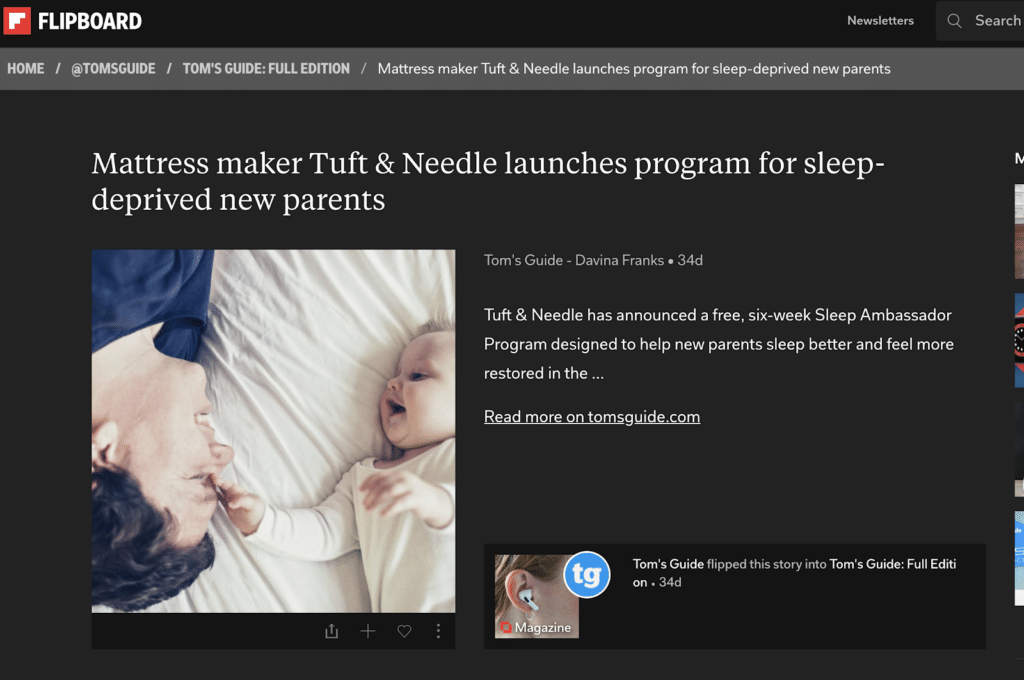
You need a pure and dedicated understanding of your audience so that you know what they care most about and can create link building campaigns combining this persona knowledge with current events and opportunities. This is where all of 97th Floor's strongest brand and linking campaigns have come from, including this one for sleep-deprived parents.
SITUATION
Our Mattress Industry Client (MIC) is an American mattress and bedding brand. At its launch in 2010, MIC was among the first online, bed-in-a-box companies to disrupt the brick-and-mortar industry.
MIC approached 97th Floor to increase organic reviews and organic market share for the online sleep space. While they do sell 3 main mattresses, they also sell bedding (blankets, pillows, duvets, etc) and other sleep-related products (furniture, noise-canceling machines).
MIC wanted their blog to generate more revenue from the high traffic numbers they were seeing. The sleep space is full of very competitive keywords which made this all the more challenging.
STRATEGY
"Sleep deprivation" is found in headlines everywhere. Large mattress companies pay lip-service to better sleep, but really only focus on getting you to upgrade your mattress.
Our teams decided to focus on possibly the most sleep-deprived group of all: parents.
With MIC, 97th Floor decided to shift the messaging by helping parents prioritize their rest and recovery so they can spend more time focusing on their family.
To accomplish this, we launched a Sleep Ambassador Program — a program where MIC would actually pay a select number of parents to improve their sleep health.
Of 331 applicants, 8 were selected. Aside from products to improve their sleep, each ambassador received a 1:1 sleep consultation with an expert and a personalized Sleep Course.

97th Floor teams then wrote 60+ newly researched, written, and designed blogs, infographics and micrographics to support parents in getting better sleep. Each piece of new content was informed by keyword research and optimized for maximum ranking and traffic potential.
Our teams created copy and design for 17 social media posts for MIC to use, and social media strategy and requirements for the ambassadors and influencers partnering with MIC for the campaign. Three separate email funnels and paid promotion and Linkedin and Meta boosted awareness and nurtured leads.
To increase the reach of this campaign, 97th Floor teams fulfilled outreach to a list of 2,000+ news media, websites, local media and blogs.
RESULTS
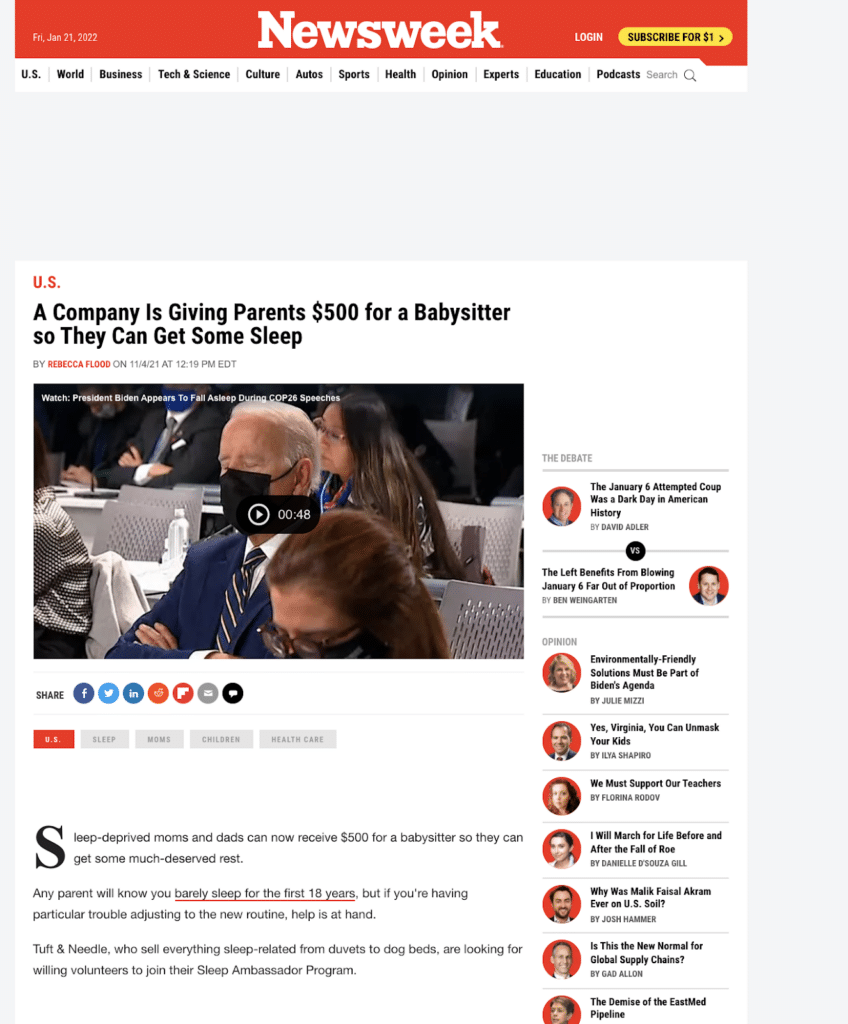
By taking an audience-centric approach and leaning into the power of earned media, this campaign won our client 100+ organic backlinks from authoritative and relevant websites.
And that's not all. MIC also benefited from:


You need a group who understands the value of SEO that you can bounce ideas off of. This may include SEOs, but you can also extend this group to your PPC counterpart, to someone in development, or to a highly-supportive leader.
Get everyone looking at the data and exploring opportunities.
Sam Oh says it's best to "Refine your backlink-generation ideas with a small team of people who understand the value of SEO. This process filters out less impactful ideas, and the buy-in from the individuals involved increases the likelihood that your best ideas will ultimately see execution."

SITUATION
eFileCabinet is a document management SAAS company that takes the pain out of complex filing and digitizing processes. Their software is cutting-edge and intuitive, but the document filing industry is stale.
eFileCabinet hired 97th Floor at a time when their stagnant market share was shrinking daily. Without a single marketing professional to manage the crisis, 97th Floor became the company's chief marketing force.
STRATEGY
After extensive customer research, 97th Floor teams built four target personas. We then synchronized all digital channels to target these personas, including intent-based keyword SEO campaigns; PPC on Facebook, LinkedIn and search; and content audits leading to new ebooks and blog posts. We built strong Hubspot workflows for the leads coming from this omni-channel strategy.
Our omni-channel campaigns were a success, but when eFileCabinet expressed that their trade show presence has been a little lackluster, we took that to challenge.
We dove back into personas to find out what would excite this audience. Our idea was simple: we would set up a room packed with old office equipment and a sledgehammer. Before handing these professionals the hammer, we would collect their information in Hubspot. Attendees were then unleashed to beat the ink out of printers, monitors, fax machines and copiers. In the background, Hubspot nurtured these new leads.

Our final deliverables for the campaign included:
RESULTS
The Rage Cage would go on to be an award winning campaign that would drive the highest influx in MQLs in a single month, which contributed to the following:
Not bad for one tradeshow, right?
97th Floor teams don't think in terms of tactics or services. What eFilecabinet needed was an omni-channel campaign supported by content, ads, creative, and SEO. By integrating all of these capabilities, SEO received a considerable lift as one component of this brand awareness campaign.
Organic search has continued to compound its success since we started with eFilecabinet. In the past year, leads brought in by organic traffic increased by 281%.
Want more? Here are seven link-building tips from our SEO experts.
Advanced Strategies for Scaling Backlink Acquisition
Still curious about backlink acquisition Here are seven advanced link-building tips from our SEO experts. These require a little more technical expertise to execute, but will yield great results.
Scaling your backlink strategy requires going beyond basic link-building techniques. To achieve substantial growth, you need to integrate multiple tactics and maintain a consistent focus on quality and relevance. Here, we’ll explore seven strategies for acquiring organic backlinks at scale, ensuring your website achieves a robust link profile.
By implementing these advanced strategies, you can scale your backlink acquisition efforts, ensuring your website benefits from a strong, diverse, and high-quality link profile. Consistency, creativity, and a focus on value are key to building sustainable organic backlinks that drive long-term SEO success.
Not all backlink tactics push your strategy forward. In fact, some can severely damage your long-term authority. Buying cheap backlink packages, overusing exact-match anchor text, or submitting your site to low-quality directories may seem like shortcuts, but they often trigger spam signals that weaken your domain. Link exchanges, private networks, and irrelevant guest posts can have the same effect, creating a backlink profile that looks manufactured rather than earned. Sustainable organic backlink growth happens when you prioritize consistency, relevance, and editorial value over quick fixes. By steering clear of risky tactics, you protect your authority and set the foundation for a strong, trustworthy link profile that compounds over time.
Building organic backlinks at scale takes creativity, insight, and a coordinated strategy that aligns content, PR, and audience behavior. When every channel works together, your brand earns the kind of editorial links that strengthen authority and drive long-term growth. If you’re ready to take your backlink strategy beyond the basics, 97th Floor brings the experience, data, and creative horsepower to help you make it happen. Let’s build something remarkable.
For seasonal business owners, demand rises and falls with the changing weather. While seasonality is a unique and perhaps daunting challenge, the predictable rhythm of demand means that those businesses who can sync their marketing with the mandates of sun or snow can have success year-round.
97th Floor is no stranger to seasonal marketing; we’ve executed winning strategies for businesses including pool maintenance, sports equipment, cruise lines, pest control, lawn care, solar, and moving services, just to name a few.
In this article, our resident experts in SEO, content, and advertising share five actionable tips for seasonable business marketers.
Search Engine Optimization (SEO) is a long-term game, and waiting until peak season to focus on it can be a costly mistake. It's essential to begin your SEO efforts well in advance, ideally during the off-season.
Head of SEO Mike Witham says, “You need consistent year round efforts to maintain and improve rankings. If your peak season is in March, you should be ensuring you have solid rankings for core pages by no later than December. Do not start working on it the month before your peak season!”
For businesses serving multiple states or a large region of the country, seasonal demand may be different across these various geographies.
Enterprise advertising specialist Spencer Martin uses Google Keyword Planner to anticipate search volume fluctuations in different areas.
He shares, “We launch campaigns early so that we have 2 to 4 weeks to ramp up and capture the full demand. Campaigns need time to scale and learn, so if we wait until the season starts to launch we lose out on potential profits for our clients.”
While digital marketing is crucial, seasonal businesses can see major wins by looking at more traditional advertising. Enterprise Account Executive Nathan Hooper suggests non-digital forms of advertising, such as mailers or community events to target local audiences. Advertising on community calendar pages or local business directories can put your business in front of potential customers who may be researching local services.
Understanding your buyer and their motives for buying is essential for capturing demand at the right time.
Brandon Smithwrick asks what happens to your marketing instincts when you let AI do all the thinking. He breaks down how cognitive offloading quietly erodes the skills great marketers are actually built on.
Senior Director of Campaigns Jon Hammond shares that his clients in the travel industry refer to December through February as “The Wave.” This three-month period is the biggest sales period for travel as people look forward to summer sun during the cold, dark winter months. His clients maximize their ad budget and run major deals and promotions during this time to capture the demand.
Content Marketing Specialist Kaylee Baker emphasizes the importance of targeting specific demographics, such as 18-30 or 25-40-year-old males, who are the main consumers of seasonal services. Consider the platforms they frequent, such as YouTube, to tailor your marketing efforts accordingly.
When reporting to leadership, especially in industries with high historical seasonality, like cruises, it's essential to use Year-over-Year (YoY) data rather than Month-over-Month (MoM) data. This approach provides a more accurate depiction of progress or decline in traffic or sales over the seasons. By analyzing YoY data, you can better understand trends and make informed decisions to optimize your marketing strategies.
In conclusion, marketing a seasonal business requires careful planning, adaptation, and understanding of your target audience. By implementing these five tips, you can maximize your marketing efforts and capitalize on seasonal fluctuations in demand.
Locked away in a vault for nearly 150 years, the Coca-Cola formula is one of the most secretive and highly-guarded pieces of proprietary information in US company history. The only rival worth comparison is the one and only Google Search Algorithm, that great unknown that dictates the lives of SEOs determined to win rankings.
Google rarely shares how it decides what pages to show for which search queries, leaving SEOs to wrestle with the wimpy scraps of information that Google does reveal. However, scrappy SEOs have successfully reverse engineered the algorithm over the last two decades to determine the most impactful ranking factors.
But it seems that the more SEO professionals discover about how the Search Algorithm works, the more Google tries to protect their “secret formula”.
Hardly has a breakthrough graced the front page of Search Engine Journal before Google is issuing carefully worded public statements that confuse the true meaning, all in the name of protecting the algorithm.
What reasons does Google have to hold their ranking algorithm so secretive? Here are a couple to consider:
Well, last week the “vault” malfunctioned. From credible sources, there was a reported internal Google API Docs leak that shed some light for the first time on what Google considers when ranking pages for keywords. Given the history of secrecy and occasional dishonesty from Google around their algorithm, this is a really big deal! Before we jump into our biggest takeaways from this leak it's important to note a couple of things:
There is no information on a scoring system that Google uses to weight these ranking signals that were discovered in this leak. So testing is still very much necessary in determining the impact of these ranking signals.
While it is very exciting to have confirmation of long suspected ranking signals, these ranking signals still very much fall in the middle of these two categories. Without a scoring system, we do not know how important or unimportant they are without testing for a wide range of keywords.
Even though it has long been denied by Google that they use user click and interaction data as a ranking factor, ranking signals found in the leak contradict this claim. The click data metrics measure whether users found what they were looking for when they clicked on the page in the SERP or not.
Why Does it Matter?
This knowledge opens the door to increased emphasis on creating a user experience that matches what the searcher intent is. Obviously this has always been of high importance, but now we can run user experience tests and competitor analysis in the name of ranking higher for intended keywords. One example of what this could look like is testing different pricing strategies to determine if the price of our product does not match expectations, causing the user to bounce after seeing the price, and how that affects our rank on the SERP.
It's important to know that Google is a hoarder-of data. Google saves nearly everything it crawls. According to this leak, the last 20 versions of a page are considered when ranking a page.
Why Does it Matter?
We can now have a better idea of how long Google will take to understand which keywords we want to rank for when a site goes through a rebrand or re-positioning in a market.
The quality and user experience of the homepage of a site is considered every. single. time. a page is ranked by Google. We also suspect that it matters if what is found on the home page is on topic with the content on the page being considered by Google
Why Does it Matter?
The home page can be used as a way to test if Google is considering it as a significant ranking factor for a focus keyword.
The leak showed that Google attempts to find the date of a page in various places: the URL, the title or in semantics of the body text of a page. The date is then considered in rankings in order to determine the freshness of the content.
Why Does it Matter?
If a page has a date in the title or the URL, it is going to indicate to Google whether it is recent information or not. Sometimes this is not a problem, say if you are trying to rank for the keyword “best 2024 baseball bats.” However if you are trying to rank for a more evergreen keyword like “best youth baseball bat brands”, having a date in the URL may harm your ability to rank long term.
One of the pillars of great marketing at 97th Floor is Empathy. All of our marketing efforts are driven by what matters most to the audience we are marketing to. We are connecting real people who have problems that our clients can solve. Nothing about that approach will change given this data leak or any future revelations about the workings of the algorithm.
What this data leak will allow us to do is test and experiment new optimization techniques and tactics to determine what will get our clients the most visibility in front of the intended audience.
Reaching the right audience takes more than targeting — Ardath Albee, B2B content strategist and author, argues that most personalization misses the point entirely. This short video breaks down what buyer-relevant content actually looks like.
97th Floor is expert at getting results from our SEO efforts. We already know our processes drive significant results, but now we have a better understanding on enhancing those processes.
Meta ads win or lose on creative. Your targeting and budget can be flawless, but if the creative falls flat, the campaign fails. Sharpening your ad creative is one of the highest-return moves you can make on Meta. Strong creative catches attention in a crowded feed, tells a story quickly, and drives action. Any brand can apply these practices to improve performance.
At 97th Floor, we build and test Meta ad campaigns that deliver measurable ROI. These are the Meta creative best practices we see work time and again, backed by real examples you can learn from.
Let’s get into it.
Because they compete on design and emotion, luxury brand ads are great examples for creative execution. As a matter of fact, Meta is basically the only place many luxury brands are putting their paid media dollars. A smattering of ad budget goes to display ads or YouTube, but well over 75% of luxury brands' advertising efforts happen on Facebook and Instagram.
We’ve pulled Meta ads from ten luxury home brands to see how they’re pairing copy and imagery to entice their buyers.
Use these ads and our analysis as inspiration for your own Meta ads; there’s lots to think about here.
You’ve got a second—maybe less. That’s how long your ad has to earn a pause in Meta’s feed. One way to stand out is to create depth in your visuals. It makes static imagery feel more alive and immersive, pulling the viewer in instead of letting them breeze past.
Nearly all of Arhaus’ product photography, including the images in these ads, uses light and shadow to create dimension. The effect is that we can’t help but imagine what the rest of the room must look like – what must be causing those shadows – and it’s breathtaking.
The ad copy further transports us; it’s hard not to feel a warm breeze and hear the chatter of friends and neighbors.
With both imagery and copy, Arhaus’ Meta ads have us daydreaming about the possibilities a new outdoor set can introduce.


Busy feeds are packed with loud colors and visual overload. Sometimes, the most effective creative is the quietest. Giving your product room to breathe with negative space draws the eye and signals confidence. It says, “This is the whole story, and it’s worth a look!”
Instead of staging the pieces as in a home, Maiden Home’s elegance and beauty is presented uncluttered and unadorned, inviting audiences to carefully inspect the shapes and colors at play.
In these examples, the chairs are intriguing enough that standing alone is the only way to do them justice. The pieces make us curious, and the simplicity of the ad compels a click.


Authenticity wins attention on Meta, and nothing says real like content from actual customers. Showcasing your product in real homes or hands builds credibility and sparks ideas for viewers imagining the product in their own lives.
Castlery proves their products’ versatility by featuring the homes of real buyers in their ads. By showing actual living rooms of delighted Castlery shoppers, the ads supply both social proof and styling inspiration for a wide range of homeowners and decorators.


Flat visuals blend in and get forgotten. Using layered colors, tactile textures, and bold materials makes your ad feel more dimensional, more physical, and more emotional. In a fast-scroll environment, that emotional hook matters more than polish.
Giorgetti’s ads feature rich colors and a mix of interesting materials. The spaces feel out of a biopic about a brilliant musician or a mysteriously wealthy young person. We’d love to know what the fabric and the walnut talk about; we’d love to pull those pieces right off the screen and into our front room. Girogetti’s photos and copy promise audiences a “unique and personal” experience that immediately feels natural and inviting.


Want instant relevance? Tie your creative to something your audience is already thinking about. Whether it’s a pop culture moment, a viral trend, or an awards show red carpet, aligning your product with the conversation earns quick attention and clicks.
In this Meta ad, Koket highlights the similarities between Lana del Ray’s Met Gala gown and Koket’s side table. The two are remarkably alike! Whether their Met Gala-inspired Meta ad was a stroke of luck or a careful analysis of the evening’s attire, we’ll never know. Is there an audience match here? Do Koket shoppers love Lana? Not so sure. But perhaps Koket’s audience is abuzz about fashion, design, and what the A-listers wear. Not too much of a stretch, is it?

Words shape perception. If your copy says “elegant,” your visuals better deliver on it. Great Meta ads use language that complements the look, feel, and energy of the product being shown, creating a seamless experience between what’s read and what’s seen. The words and images used in Rove Concept’s ads promise what luxury furniture should provide: sophistication – in your home office, on your balcony, and everywhere else.


Product specs are forgettable. Stories stick. When your copy hints at a journey, a person, or a place, your ad becomes more than just a sales pitch. It becomes an invitation into a narrative your audience wants to join, or better yet, buy into.By giving its audience a few examples of what these stories may be and referencing their globally-sourced products, Currey & Company promises eclectic and delightful pieces without all the tariffs and bubble wrapping that accompany a purchase, and without an online cart. The copy here brilliantly matches the unusual pieces shown in the photos, and we imagine most people are interested in a ceramic cow, truly.

Sometimes the best way to sell a product is not to sell it at all, at least not right away. Ads that offer help, tools, or personalized advice can win trust faster than a discount ever could. Especially in cluttered categories, utility becomes a real differentiator.
Lulu and Georgia Meta ads sell furniture by offering free design support. Clever, ehh? Their Meta ads offer custom floor plans and mood boards made by Lulu and Georgia designers, which we’re confident will be full of Lulu and Georgia rugs, end tables, couches, and decorations. The ad copy here could’ve gone a little farther to exaggerate the pain point: trying to curate a beautiful space is a lot of work. Especially if you’re working off of a Pinterest board on which half of the links to that dreamy chandelier or pinstripe curtain set are missing or broken. Lulu and Georgia could ramp up the language around their unique selling point to strengthen these ads, but we applaud the strategy here.


Your audience isn’t just buying a product; they’re solving a personal need. If what you offer can be tailored to fit them perfectly, lead with that. Customization on Meta is an opportunity to show that you really get your customers. Interior Define’s ads invite their audience to take the designer’s seat and build bespoke furniture, choosing from hundreds of materials, features, and finishes. Surprisingly, the ads don’t focus on the boast of owning one-of-a-kind pieces. Instead, their advertisements offer help and a solution for shoppers who feel they’re never satisfied. Interior Define says, “Don’t settle.” Well, except into your custom couch, I suppose.


The right backstory can instantly elevate your product. Whether you’re born from a famous collab, a niche community, or a cultural hotspot, tying your brand to its origin story builds instant trust and makes your product feel more worthwhile.
The Soho Houses are a collection of beautifully designed homes dotted across the globe as safe havens of inspiration for members-only creatives. Soho Home came to life when guests came begging to know where they could purchase the magnificent pieces curated for each unique House.
As a consequence of this opportunistic arrangement, Soho Home pieces seem bespoke and almost necessary for a creative and inspired space. Their pieces are automatically associated with exclusivity, travel, and the arts. We’d mention the Soho Houses in every one of our Meta ads, too.


Meta Creative Testing and Optimization
Creative fatigue means wasted spend. Even the strongest ad will lose its edge if shown too often. Testing your creative isn’t an optional thing; it’s the backbone of sustainable Meta ad performance.
Use A/B testing to compare different visuals, headlines, CTAs, and copy angles. Meta’s built-in tools like Experiments and A/B Tests make it easy to isolate variables and track results. Don’t just test once; keep testing on a rolling basis. The goal is to find what works now, not what worked last quarter.
Tip: Test early and often, but don’t test everything at once. Focus on one change at a time so you know what’s actually making a difference.
No matter how good your strategy is, the wrong creative can tank performance. Here are a few of the most common mistakes we see on Meta:
The simple fix is to think like your audience. Would you stop to read your ad?
At 97th Floor, our advertising specialists are committed to a thorough process of audience research and ad testing. We fine-tune copy, creative, and targeting until everything is just right and our clients are getting the maximum return on investment.
See how an audience-first approach translates to bottom-line results.
Cybersecurity buyers are hard to impress. Ranging from CISOs to security architects, your audience is deeply technical, highly skeptical, and usually immune to generic B2B marketing.
They don’t care about buzzwords or brand storytelling. They do care about substance: what your product actually does, how it solves real security problems, and why they should trust you over a dozen lookalike competitors. Smart, intentional marketing is a must-have skill in the cybersecurity space.
At 97th Floor, we build cybersecurity marketing strategies that reach decision-makers and influence every stakeholder in the buying committee. We’ll break down the best practices we’ve observed, backed by ad examples and persona insights.
Let’s get into it.
Cybersecurity marketing is the specialized practice of promoting cybersecurity products or services to highly technical, security-conscious audiences. It goes beyond traditional B2B marketing by focusing on decision-makers like CISOs, SOC analysts, and IT leadership, all personas who demand depth, clarity, and provable value.
Effective cybersecurity marketing combines SEO, content, advertising, and design to engage buyers throughout a long, complex sales cycle. This involves building credibility, addressing real threats, and positioning your brand as a trusted solution in an oversaturated market.
As you might have experienced, Cybersecurity is a high-stakes environment where mistakes can cost millions (and your audience knows it). The technical acumen of your buyers means any hint of fluff or oversimplification can tank your credibility.
Other challenges include:
To break through, cybersecurity marketing needs to be as intelligent as the people it’s trying to reach. That means aligning every campaign with how your audience thinks, what they’re solving for, and how they evaluate vendors.
Where traditional B2B campaigns can succeed with broad messaging, cybersecurity campaigns must go narrow. They need to:
Bottom line: If your marketing isn’t built for security buyers, it’s not built to perform.
Creating a high-performing cybersecurity marketing strategy means throwing out the one-size-fits-all B2B playbook. We’ve dug through our history as a cybersecurity marketing agency to identify six principles that drive success in cybersecurity marketing, each paired with a unique ad example. Use these tips to help you take your next cybersecurity campaign to a new level.
You’re not marketing to “security teams.” Remember your target, whether it’s marketing to a CISO who oversees a sprawling enterprise, or a SOC Analyst who lives in alerts. Specificity is non-negotiable in cybersecurity marketing, because vague messaging gets ignored.

Darktrace succeeds here by getting specific. Not only are they directly calling out CISOs, but they’re tackling only one facet of security: email. This approach self-eliminates some audiences, but ensures that those who do interact with the ad are likely higher-intent. The headline text could be helped by offering some specifics about what the whitepaper offers, but the ad maintains strong branding and a strong call-to-action.
Brainstorm: What’s the most specific piece of content you can offer to your audience? How can you write ad copy that hits on just one pain point and offers one precise solution?
Cybersecurity buyers are burned out on abstract “platform” talk. What do they actually want? Time back. Fewer compliance headaches. Less operational friction. When your value proposition addresses those second-order benefits, it lands harder.

Identity security company CyberArk’s ad pinpoints a problem experienced by their customers: losing so much time finding the right security solution and dealing with compliance, that important projects get deprioritized. Rather than focusing on CyberArk’s product offerings, the ad leans on a secondary benefit that prospective buyers are eager for. A simple design and minimal colors make the ad visually appealing, and the offering of a personalized audit and compliance call is a strong call-to-action.
Brainstorm: What is the most significant benefit that your solution provides to your audience?
If you’ve been recognized by Gartner or Forrester, or if your solution meets hard-to-hit compliance benchmarks, by all means say it. Security professionals are looking for signs that you actually know what you’re doing. A little proof goes a long way.

Crowdstrike leverages Gartner’s authority in this ad, highlighting their place on Gartner’s Magic Quadrant. Gartner is a trusted source on cybersecurity and IT solutions for CrowdStrike’s audience, and using this report for advertising is a brilliant and low-effort win.
Brainstorm: Have you won any awards or accolades that you can put on an advertisement? What about client testimonials?
Cybersecurity buyers are lifelong learners. They respond to content that teaches them something new, especially when it’s visual, data-driven, and skimmable. If your brand can help them stay sharp, you earn trust and attention.

A10 Networks’ use of data visualization is a great idea. People are more apt to engage with graphs, statistics and data than a chunk of text. This chart invites A10’s audience to see how they stack up against their peers concerning TLS/SSL inspections, and the ad’s call-to-action implies that there is more to learn about how technology leaders consider decryption solutions.
However, this chart isn’t the easiest thing to swallow. This ad would be stronger with just a single metric or with a more simple visual from their data. As is, the ad requires too much of its viewer and, by failing to supply any conclusions about this data, leaves too much ambiguity about where this information puts its audience in relation to A10 Networks.
Brainstorm: What data can you share with your audience that will make them want to learn more about you?
The best cybersecurity brands shape how the industry sees threats. Establishing thought leadership through bold, creative design and clear messaging makes your brand feel indispensable.

Palo Alto Networks’ ad stands out for cohesiveness between copy and design, strengthening the impact of the ad’s message. Pairing the idea of unknown threats with the impression of half-turned blinds evokes that eerie feeling of being watched by something unseen. This strengthens the ad’s promises of protection for “whatever, whenever, wherever.” Palo Alto Networks is positioning itself as an omniscient and omnipresent security solution, putting a certain 2006 babysitter receiving threatening phone calls customers at ease.
Brainstorm: What objects symbolize safety or privacy to your audience? How can you use those objects to create something visually interesting?
Let’s be honest, most cybersecurity ads look like they were built from the same uninspired template. But a little creativity goes a long way—especially when it surprises, entertains, or reframes a threat in a clever way.

All cybersecurity ads pretty much look the same, so we love it when a brand breaks out of the B2B monotony like Carbonite has. The visual analogy is straightforward and intriguing, demanding a pause and inviting a chuckle from its audience. With simple, unique ad creative, Carbonite establishes that its security solutions are so good that its customers can be completely unbothered about threats - even threats as sinister as prowling predators.
Brainstorm: What analogies does your brand or product lend itself to? How can you use that to surprise your audience?
To build a cybersecurity strategy that drives pipeline, you need to know who you’re talking to, what keeps them up at night, and how they influence the buying process. Each persona plays a different role, and each one needs a tailored message.
Below are four common groups we build campaigns around, with tips on how to reach them.
CISOs and Security Leaders
What they care about: Risk reduction, cost justification, strategic alignment
How to market to them: Be brief, credible, and focused on outcomes. CISOs aren’t deep in the weeds—they’re trying to evaluate whether your solution moves the needle on security posture or operational efficiency. Give them high-level proof points, ROI-driven messaging, and third-party validation like analyst reports or compliance frameworks.


Security Practitioners and Implementers
What they care about: Technical specs, real-world application, peer trust
How to market to them: These are the engineers and analysts who will poke holes in your claims. Your marketing needs to speak their language and show technical depth. Use product walkthroughs, architecture diagrams, feature comparisons, and use-case content that demonstrates exactly how your solution works in practice.
IT Decision Makers
What they care about: Integration, scalability, cost, security trade-offs
How to market to them: This group sits at the intersection of IT and security. They want solutions that won’t break their systems or their budget. Emphasize interoperability, performance, and ease of deployment. Case studies and pricing calculators can help them make a confident decision.


Boards and C-Suite
What they care about: Business risk, liability, brand protectionHow to market to them: You're not selling features—you’re selling peace of mind. Frame your messaging around financial impact, regulatory compliance, and business continuity. Use concise, high-trust formats like executive summaries, brief videos, or benchmarking data to support your case.
Marketing in cybersecurity is a high-stakes game. There’s less room for error, more skepticism in the room, and a shorter window to prove your credibility. Here are some do’s and don’ts that help keep cybersecurity campaigns focused, effective, and persona-aligned.
Do speak to specific personas.
Generic messaging gets ignored. Tailor every piece of content, ad, or landing page to one specific role and pain point.
Do lean on data and authority.
Use trusted sources like Gartner reports, industry benchmarks, and analyst quotes to back your claims. Show, don’t tell.
Do invest in content depth.
Your audience can sniff out fluff in a second. Write with substance. Collaborate with your SMEs. Make every piece worth your reader’s time.
Do prioritize technical accuracy.
One wrong detail can undermine the whole campaign. Double-check product specs, terminology, and claims, especially in visual assets.
Do align with the buyer journey.
CISOs don’t click “Buy Now.” Build layered campaigns that nurture interest across awareness, consideration, and validation stages.
Don’t overpromise.
"Total protection" or "unbreakable security" won't land and could backfire. Be confident, but stay grounded in reality.
Don’t assume they’ll connect the dots.
Spell out exactly how your product helps solve a specific problem. Don't rely on vague claims or industry jargon.
Don’t recycle general B2B creative.
Your cybersecurity audience has seen the same ad template 1,000 times. Differentiate with smarter, more persona-aware creative.
Don’t ignore design preferences.
Security audiences favor clarity and simplicity over flash. Avoid overly polished, “marketing-looking” assets that feel insincere.
Don’t skip the proof.
Your audience needs evidence before they trust your brand. If you don’t provide it, they’ll find a competitor who does.
Why Choose 97th Floor as Your Cybersecurity Marketing Partner?
We understand cybersecurity marketing because we’ve done it—successfully—for some of the top names in the industry. If you need to lower your CPA, hit revenue goals, or get in front of the right people, we can help. We build strategies based on research, data, and a deep understanding of how security buyers think. And we always respect your audience’s intelligence, time, and high standards.
Learn more about our cybersecurity marketing services, or get in touch to start your next campaign.
Ready to Grow? Get in touch to see what's possible for your brand.
Every customer’s journey begins at the Top-of-Funnel, aka TOFU. TOFU refers to the initial phase in the sales funnel, where the primary objective is to generate awareness and interest within a broad audience. This stage is not about hard selling but rather about sparking curiosity and establishing a connection.
At this juncture, potential customers might be seeking information, answers to questions, or solutions to problems, but they are not yet ready to make a purchase. This is where TOFU plays a big role, serving as the first point of contact between a brand and its prospective audience.
The importance of TOFU lies in its ability to introduce a brand's value proposition and to begin nurturing a relationship with potential customers. It builds a solid foundation for further engagement in the subsequent stages of the sales funnel.
Executing an effective TOFU strategy will set you up for success throughout the rest of your customer’s journey. TOFU marketing is vital for several reasons:
In summary, TOFU is all about laying the groundwork for a lasting relationship. It's the start of a journey that, with the right strategy, leads to conversion and customer loyalty.
Blog posts stand as a cornerstone in TOFU marketing. They are a versatile tool, capable of addressing a wide range of topics, from educational content and industry insights to company news and thought leadership pieces. The key to effective blog posts at the TOFU stage is to focus on topics that resonate with your target audience's interests, questions, and challenges. Well-crafted blog posts can:
Social media platforms are a great way to engage in TOFU marketing. They offer a way to reach and engage with a vast audience through various content forms, including posts, stories, and live videos. The immediacy and interactivity of social media make it an excellent channel for starting conversations and building relationships with potential customers. Effective TOFU social media strategies include:
Videos offer a dynamic way to convey messages and engage audiences. They can range from educational content, and product teasers, to behind-the-scenes looks into your company culture. Videos can:
Infographics are an excellent way to present complex information or data in an easily digestible format. They are particularly useful for summarizing topics, presenting statistics, or explaining processes related to your industry. Benefits of using infographics include:
Each of these content types plays a unique role in the TOFU stage. They work together to attract, engage, and educate potential customers, paving the way for deeper engagement in the later stages of the sales funnel.
One of the fundamental aspects of effective TOFU marketing is identifying and targeting the right audience. Attracting a relevant audience is crucial because these are the individuals most likely to progress through the sales funnel. Key strategies for targeting the right audience include:
Search Engine Optimization (SEO) is an essential tool in TOFU marketing. It involves optimizing your online content so that it is more likely to be found and ranked highly by search engines. Effective SEO strategies for TOFU include:
Influencer marketing can be a powerful tactic in the TOFU stage. Collaborating with influencers who have a significant following in your industry can:
In summary, effective TOFU marketing tactics involve a combination of targeting the right audience, optimizing content for search engines, and leveraging influencer partnerships to enhance brand awareness and reach. These strategies lay the groundwork for attracting potential customers and guiding them further down the sales funnel.
Case Study: Solo's Full-Funnel Strategy
The Client
Solo.io is an Application Networking Platform enabling companies to take the next step in their cloud journey. They came to 97th Floor to increase MQLs.
Audience Insight
Solo.io’s existing campaigns didn’t convert because they lacked mid-funnel nurturing. We first built personas for Solo, discovering customer questions and content needs at every stage in the buying journey.
Big Swing
Based on persona insights, we developed and pitched a full-funnel LinkedIn campaign targeting personas for Solo’s two main products: Legacy API Gateway and Gloo Mesh. Solo.io would deem the campaign successful if we achieved a CPL < $200.
The Results
Campaign Term: June 15th - September 15.
Leads: 246
CPL: $141
This is a 26% increase in total leads and a 29% decrease in total cost per lead. All of these leads came as eBook downloads.
A successful TOFU strategy begins with clear objectives and goals. These should align with your overall marketing and business objectives, and be specific, measurable, achievable, relevant, and time-bound (SMART). Objectives might include increasing brand awareness, driving traffic to your website, generating leads, or establishing thought leadership. Key considerations in setting TOFU goals include:
A content calendar is essential for organizing and scheduling your TOFU content. It ensures a consistent flow of content and allows for strategic planning around key dates, events, or product launches. Your content calendar should detail what type of content will be published, on which platforms, and at what frequency. Aspects to consider when developing a content calendar:
To gauge the effectiveness of your TOFU strategy, you need to measure and analyze performance against your set goals. This involves tracking various metrics such as website traffic, engagement rates, social media analytics, and lead generation numbers. Effective analysis techniques include:
Planning a TOFU strategy requires a thoughtful approach to setting goals, organizing content, and measuring performance. By following these steps, you can ensure that your TOFU marketing efforts are targeted, effective, and aligned with your broader marketing objectives.
To execute an effective TOFU strategy, be sure to use available tools and platforms to streamline your content creation process, enhance the quality of your content, and help you measure its impact. Here are some recommended tools for various aspects of TOFU content creation:
In conclusion, an effective TOFU marketing strategy is an important component of your overall digital marketing efforts. It requires a clear understanding of your audience, creative and engaging content, smart use of digital tools, and a consistent approach to measurement and optimization. By focusing on these key elements, you can effectively attract and engage your target audience, setting the stage for successful conversions down the sales funnel.
TOFU marketing refers to strategies aimed at the top of the sales funnel, focusing on awareness and engagement. It’s crucial because it’s the first step in attracting potential customers and building brand awareness, laying the groundwork for subsequent sales and marketing efforts.
TOFU marketing is about creating initial awareness and interest, as opposed to middle-funnel (MOFU) strategies that focus on consideration and evaluation, or bottom-funnel (BOFU) tactics aimed at conversion and loyalty. TOFU is broad and informative, while MOFU and BOFU are more targeted and persuasive.
Effective TOFU content includes educational blog posts, engaging social media content, informative videos, and visually appealing infographics. This content should be informative, relevant to your audience’s interests and challenges, and designed to attract and engage.
Success in TOFU marketing can be measured through metrics like website traffic, social media engagement (likes, shares, comments), lead generation numbers, and SEO rankings. Analyzing these metrics helps in understanding the effectiveness of your TOFU strategies.
While the primary goal of TOFU marketing is not direct sales, it can indirectly contribute to sales by increasing brand awareness and interest, which may eventually lead to conversions as prospects move down the funnel.
The frequency of TOFU content creation and distribution depends on your resources and audience engagement. It's important to maintain a consistent presence without overwhelming your audience. A content calendar can help in planning and organizing content distribution effectively.
SEO is vital in TOFU marketing for increasing the visibility of your content in search engine results, thereby reaching a larger and more targeted audience. It involves using relevant keywords, creating quality content, and optimizing your website and content structure.
To target the right audience in TOFU, conduct market research to understand your audience’s demographics, interests, and pain points. Use this information to create detailed customer personas and tailor your content accordingly.
Paid advertising can be a useful complement to organic TOFU strategies. It can help in reaching a broader audience quickly, especially when launching a new product or entering a new market. However, it should be used judiciously as part of a broader TOFU strategy.
Integrating TOFU with other funnel stages involves creating a seamless journey for the customer. This can be achieved by ensuring that TOFU content naturally leads to more in-depth MOFU content, and by using TOFU data to inform and optimize MOFU and BOFU strategies.
Cybersecurity solutions buyers are worn out by the constant barrage of stale content flooding their search results, inboxes and social media.
Only brands that are willing to pause the content machine long enough to develop true empathy for their audience will be able to make any progress towards the mecca of trust and authority.
97th Floor believes that Empathy, paired with Innovation and Profitability, produces Great Marketing—marketing that fosters relationships and ultimately sales. We unlock empathy for our client’s customers through an exhaustive process of in-depth persona research and customer journey mapping.
Our customer journey maps reveal the questions, actions and touchpoints of an audience at each stage of the funnel: awareness, consideration and decision. Using these maps as a launching pad for every marketing campaign makes delivering "the right message at the right time" a reality.
The following are real persona customer journey maps created for our clients in and adjacent to the cybersecurity industry. They have been anonymized, but all other information is as-delivered to our clients.
Most buyer personas get built, presented, and shelved. This short video breaks down why — and what the ones that actually drive content decisions look like instead.