



Too often marketers rely on instinct to create content. As a result, content is less engaging and we have to produce more of it to make up for that lack of performance. In this clip from the 2019 ContentTECH Summit, Paxton Gray - VP of Operations at 97th Floor - shares how marketers can access hidden treasure troves of data, which will help them to create content their audience will love.
At 97th Floor we love to talk shop. We also love to talk about pop culture, and you better believe that television tropes are frequent points of discussion. You may have heard of the classic trope known as, A.I. is a crapshoot. It’s the scenario where a supposed perfectly created artificial intelligence rises up, and ultimately leads to humanity's demise — or at the very least ruins someone’s day.
This isn’t a new concept. In fact, it features (in varying degrees) in some of the worlds most well known movies and television franchises: Terminator, The Matrix, Avengers: Age of Ultron, 2001: A Space Odyssey, TRON, Logan’s Run, Battlestar Galactica, Dr. Who, and the list continues on until you get to the genteel Pixar classic, WALL-E (I am of course referring to the evil co-pilot robot, not the cute one that saves the world).
If pop culture is any indication, it’s pretty clear that we, as a collective whole, have trust issues when it comes to cold, soulless data. But if that’s the case, then why are marketers so keen on putting the numbers in charge?
Now, don’t get me wrong; I love data. But I have to love data. A digital marketer literally cannot function without data. So when I see “data-driven” on a resume or across an agency’s site, it’s almost like they’re saying nothing at all.
It’s like seeing a pizzeria advertising that they use dough on all of their pizzas. I mean, sure, it’s better than the alternative (although dough-less pizza would be a big hit with the keto crowd). It’s probably just not something that needs to be advertised. It’s a pizzeria; even without being told, we’re already pretty sure that dough is part of the equation.Data and modern marketing are inseparable. So stop bragging about it.
Additionally, I believe there’s a growing flaw in the data-driven mindset, namely that data becomes a dictator in the strategy. But handing over the reigns to analytics programs is exactly how LA got cremated inTerminator, and doing the same thing with marketing strategies is only slightly less careless.
If you’ve ever read a terribly unhelpful blog post, you could probably trace it back to some SEO who saw a valuable long-tail keyword, and then threw together some heavily optimized (but ultimately worthless) dumpster fire of content designed to capture it. Or, if you’ve ever been accosted over email relentlessly asking for a purchase with varying price discounts, it’s probably because the data said that users make purchase after 14.2 emails, which led a marketing automation specialist to believe that hitting you up on a daily basis would make you convert faster.
And yes, obviously analytical insights are invaluable. And strategies built exclusively on data can even work sometimes. But the returns will seldom stack up to what you can get with a flesh-and-blood marketer calling the shots. The point is that data doesn’t run marketing strategy for humans. Humans make campaigns for humans, and we need to keep it that way.
In other words, you never put the robot in charge of the nukes, and you don’t let a spreadsheet do your marketing for you.
The same logic applies to every marketing convention that gets codified as "best practice." Once something earns that label, it belongs to everyone — which means it belongs to no one's advantage. Udi Ledergor, former CMO at Gong and B2B marketing strategist, makes the case that the marketers who win aren't following the consensus — they're the ones who acted before it formed. This short video captures why arriving at a best practice on time is usually arriving too late.
But PJ, you’re in digital marketing. Are you saying you ‘don’t use data?’
No. I’m not saying that I don’t use data. Quite the contrary, we need data. We rely on it — always have, and always will. In fact, let me tell you a story:
In the first version of competitive research I ran at 97th Floor, we collected 43 metrics for each result on the first page of Google, plus the page we were trying to rank.
Don’t worry, I’ll do the math for you: That’s 473 different cells being manually populated. And when I say manually, I really do mean manually. We used 10 different tools to get everything we needed. Metrics ranged from word count, to load time, to followed backlinks, to Google+ shares (do you feel old yet?). A single SERP would take someone 1.5 – 3 hours. Let’s just say I got through a lot of podcasts during this method of competitive research.
And while time consuming, this method of data mining was therapeutic, restful, even invigorating. The process of gathering data by hand was lengthy, but every hour in the trenches saved weeks of bad strategy.
A lot has changed since then at 97th Floor, we’ve scaled that research process into our suite of proprietary software. Now of course we have our competitive research tool (more on that to come later), which lifts all the metrics we need through the glorious use of APIs and some custom formulas. But the core truth, that our data helped us do a better job, remains.
So yeah, we like data. We respect data. We use it and abuse it. But data, all by itself, does not move the needle — like at all. It’s the action you take based on the data that makes all the difference.
I’d be lying if I said that we’re not proud of our new set of proprietary tools that have essentially taken our drawn out processes, and condensed them into something simple, effective, and efficient. But the reason we love these tools so much is because of the time they save us on the front end of a campaign. If we can condense the first week’s worth of data gathering into an afternoon of well coordinated data pulls and analysis, we’re that much further ahead. But we’re certainly not done.
Not all robots are bad. Heck, R2D2 certainly picked up more than his share of the slack. And sure, most of the time data does the heavy lifting.
I remember a relatively recent situation where a newly onboarded client approached us with a keyword they had been struggling with for years. They had a well optimized page for it, the page had many links going to it. On paper they should have been doing better for this keyword.
Once upon a time, that page had been in an above-the-fold position for its SERP. Then it had begun to drop. The client added more copy to the page to counter the dropping ranking. But more copy caused it to drop even further, which suggested to the client that they had to add even more copy. This game of cat and mouse went on until they were off the first page entirely. And that’s where they were when 97th Floor was brought in.
After assessing the situation, we threw the page into our proprietary competitive research tool. Once the data was finished crunching, the answer was obvious. They had vastly over-optimized the page!
When looking at the top 10 results on the front page of Google, the SERP was seeing an average word count of 1,983. But the page our client has built had… any guesses?
17,744 words.
Not characters, words. Oh and the page was using the exact-match keyword more than twice the amount of the average on the SERP.

The data called out a problem. It helped save the day. But the data didn’t come up with the solution.
We got to work crafting a strategy involving everything from keyword usage, to semantic analysis, strategic internal links to alleviate cross page cannibalization, and strategically cutting and reworking sections of the page. Essentially, we deoptimized the page. After the above plan was executed with the client, we saw fruit — jumping from page 2, to spot 2 in less than a week.
I love this story because:
1) The tool saved us a bunch of time upfront on research and on the backend by ensuring we weren’t wasting time reoptimizing what was already too optimized.
2) The SERP data lead us deeper down a very productive rabbit hole; cannibalization, which upon more research, yielded some very actionable tactics.
3) Possibly my favorite, we didn’t have to waste any time and energy on backlinks.
The above story and hundreds before it have happened at 97th Floor. While we can’t function without data, we certainly can’t function with numbers alone. That’s why it’s called digital marketing, not digital analyzing.
That’s why I love this industry. We’re a fun breed of humans that crave and cultivate good data, and then create something bold and beautiful — with or without the data’s support.
I cringe a little when I hear people say, “well, this is what the data says we should do.” I’m sorry did I hear you just imply that this spreadsheet told you to increase your bid strategy? Of course not. What you meant to say was, “I believe we should increase our bid strategy.”
Own that strategy, don’t let data own you.
Don’t be handcuffed by data; have the courage to look beyond surface-level data inferences, and use your own intelligent, problem solving, human brain to figure out the rest. Because, when all is said and done, your clients aren’t interested in hiring a spreadsheet (or even R2D2).
Today Inc. magazine revealed that, for the fourth year in a row, 97th Floor made the annual Inc. 5000 list, the most prestigious ranking of the nation’s fastest-growing private companies. The list represents a unique look at the most successful companies within the American economy’s most dynamic segment—its independent small businesses. Microsoft, Dell, Domino’s Pizza, Pandora, Timberland, LinkedIn, Yelp, Zillow, and many other well-known names gained their first national exposure as honorees on the Inc. 5000.
“The Inc. 5000 list is solely based on growth in revenue. What’s so special to me about making it four years in a row is that we focus on our customers and employees first and that directly effects our revenue as a result. Our sales team is a fraction of the size of our client fulfillment teams, yet here we are for the fourth year in a row." said Chris Bennett, CEO & Founder of 97th Floor.
97th Floor's mission is to elevate people and brands we believe in. We've found that when you put people first, the money and results naturally follow. We instill this belief not only in the way we operate as a company, but within the marketing we do for our own clients.
Big thanks to the amazing teams and clients who have made this all possible!
To see the full Inc. 5000 list, click here.
One of the not-so-secret secrets to successful marketing is knowing your audience. Arguably, the best way to do this is to use persona based marketing. When we onboard new clients at 97th Floor, we always ask for their existing personas, and they often shrug their shoulders and rifle aimlessly through some papers. “I think we had some made about a year or two ago,” they say. But in this age of smart digital marketing, that just won’t fly. The world needs more personas—and better personas. We at 97th Floor have the expertise, and we’re here to make the internet a better place. So we put this guide together to help you build personas for your business that will bring in consumer insights that will elevate all of your marketing efforts and increase your revenue.
A buyer persona is a fictional depiction of an ideal, individual customer. Creating and applying a buyer persona helps marketers craft campaigns that feel more true and have more impact. A good buyer persona can turbocharge the understanding of your customers, leading to more traffic, higher conversions, and eventually, bigger revenue figures.
This is Tony Zambito in 2001. He invented the concept of buyer personas, according to
himself and the internet. “Buyer personas are research-based archetypal (modeled) representations of who buyers are, what they are trying to accomplish, what goals drive their behavior, how they think, how they buy, and why they make buying decisions.”
Sound familiar? Maybe you're thinking of a time when you fit in a very small chair at a very small desk and were instructed that 5 W's and an H - Who, What, When, Where, Why, and How - belong in every story. Hmm. And we didn't think they taught marketing that young. But the truth is that you need these components for your company's storytelling and you must have them for your consumers' sake.
While we're here, let's consider what a persona is not.
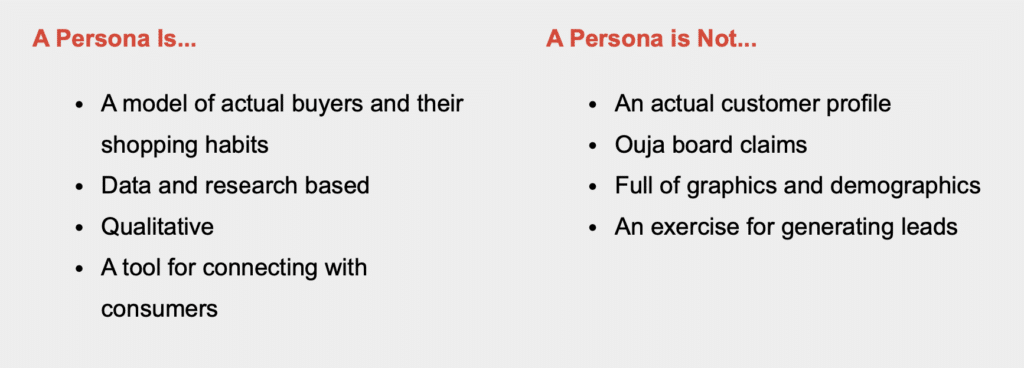
Consider this quote from Scratch: “Consumers aren't as interested in your story until it helps them tell their own. Personas are a powerful and concise way for you to use data to understand your consumers—and help your whole company understand your consumers - so that they are ultimately interested in your brand story”. Sounds rather important, right?
Persona based marketing is the practice of building your entire marketing strategy around detailed, data-driven buyer personas. Instead of creating broad, one-size-fits-all campaigns, you develop messaging, offers, and experiences tailored to the specific needs, motivations, and challenges of your ideal customers. This approach ensures every ad, blog post, email, and social media update speaks directly to the people most likely to engage with your brand. When executed well, persona based marketing increases clicks and conversions, builds trust, fosters loyalty, and keeps your brand top of mind for the audiences that matter most.
In the past few years, our client teams at 97th Floor have launched wildly successful campaigns driven by insights discovered through building personas.
In-depth personas are invaluable to our teams and our clients.
Rachel Bascom, head of content at 97th Floor, shares these benefits from using personas:
And if your personas are doing that, they're ultimately bringing you this:
We're confident that data-driven personas enable every department to work better for clients and the company.
How should you create a buyer persona? The ingredients are simple, and the process is not rocket science. Like baking bread, you already own most ingredients—flour, water, yeast, salt—and the things you don’t already have in your cupboard are easily accessible.
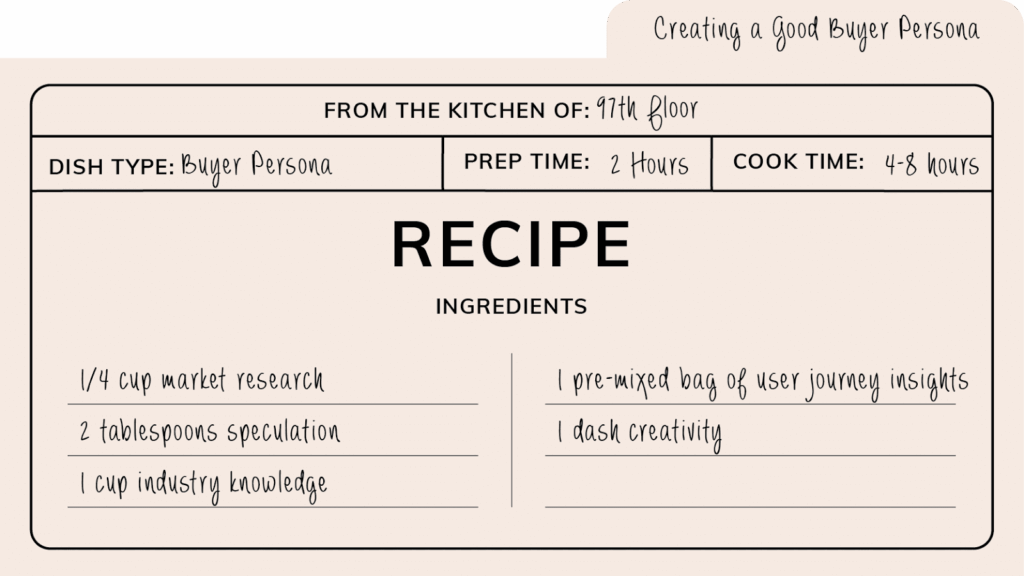
Begin with a little market research. What data do you already have about your customers? What are their current job titles, responsibilities, and interests? If you can, use a tool like SparkToro to find out more about what your customers care about. Ask: Why would they benefit from your brand? What are their pain points, and how does your offer solve them? The more research you can do, the better.
Then add a little speculation. If your persona loves running, you can assume they’ll care about running form or proper running shoes. If they’re a busy mom, you can assume they’re looking for ways to relax and save time. Some assumptions are okay, and even needed, but be sure you don’t get off track.
Once you flesh out your customer with a few assumptions, mix your research and speculation together with a knowledge of the user journey for your product or service. For instance, how do they come in contact with your brand? Will they be eager to buy, or will they need a little persuasion? What appeals to them on your site?
Finally, sprinkle a little creativity on top. This is the fun part: make it a story. Be as specific as you possibly can. What is their name? What do they look like? How does an average day in their life flow? Don’t be shy, write it out. Use your imagination. The end result should be fun, spunky, realistic, and easy to remember.
In baking bread, you simply put the dough in an oven. For personas, however, you need something much more rare: objectivity. A good persona requires you to set aside what you think you know about your customers and to see what the data tells you. This is very, very difficult for most businesses, which is why it makes sense to ask someone else to do it for you. When it comes to paying someone to create a customer persona for you, the greater the objectivity, the more you will pay. Spend less, and you will have a few assumptions mixed in with your objective assessments.
However, assumptions, especially when used in the less-critical and less-controversial parts of the buyer persona, are likely a good trade-off for many businesses. Not everyone needs to spend $50,000 to get something truly useful.
The personas that we build for our clients at 97th Floor are a mix of strategic assumptions and objective research. We are intentional in our approach, choosing where we can assume and where to use data. It might not be the right approach for every business, but it’s appropriate for most businesses most of the time.
Let’s break it down.
There are three major parts to buyer personas
As you might presume, demographic information tells us the external details about the persona. This describes the age, gender, racial identity, socio-economic details, family status, occupation, and such. We glean it from a number of sources: existing customer profiles, analytics data, competitive analyses, etc. We use whatever we can get our hands on.
When we build our personas, we use a balance of assumption and evidence. Our stance is that in this area, the information that we infer is good enough for the purpose, and the potential mistakes are low-impact ones. But don’t get me wrong, you shouldn’t go wild with assumptions here.
There isn’t much value in knowing that your average age customer is 37 rather than 39 or 40. But there is a significant difference in the average age of 30 instead of 45. Be careful that you have enough evidence for the correct ballpark. But don’t waste resources digging into teeny specifics if they aren’t likely to be impactful.
Remember that a buyer persona is different from a target audience. This is not a broad composite, but a fictionalized specific individual. There is value in having a target audience in mind--in knowing a range that describes the whole of your customers--but the value of a buyer persona is to clearly envision one perfect client.
The demographic information describes the external details of the individual, while the psychographic information describes her internal life. We want to know what she likes and dislikes, what makes her excited or nervous, what she reads and who she follows. This is the information that a savvy marketer will prize.
We obtain this through research into tens of thousands of individuals’ web habits. With this information, we can better predict the specific behaviors and biases of a likely customer, but also general principles that describe a lot of people. There are tools out there that will help you to accomplish this task with some confidence--just don’t forget the critical role of objectivity here. We’ve seen clients with personas that only really describe the client themselves. It’s an awkward conversation: “Since you’re just launching Bob’s Widgets, is it realistic that your persona is already a member of the Bob’s Widgets Fan Club?”
When you get the psychographic profile right, it’s almost magic. For example, our research might uncover that people who like your brand are also fans of the Chicago Bulls or the Los Angeles Dodgers. It is probably too specific to know which particular team they root for, but it is useful to know that your audience is sports fans (as opposed to, say, fans of quilting or politics or tattoos).
Many clients we onboard don’t have personas (or have only target audience information). Others have spent tens of thousands of dollars on specialists to get personas built. These expensive ones are often very slick, visually stunning, but a little impractical. While there is a lot of good stuff in these large personas, the mental strain to use them—and to tell what is most important—is too much. So we developed a convenient method that uses our inherent human neurological strengths to make it memorable.
We tell a story.
Maybe our stories aren’t on par with Shakespeare, but we are not doing this to scratch a creative itch. We are doing this because, as humans, we remember stories. We also remember songs, but that seemed like a little too much. So we’ve chosen to always tell a story about our persona.
There is no new information in the story. All the data we use for the story is already covered in the demographic and psychographic sections. But when we craft it into a couple of clear, easy-to-read paragraphs to describe the character succinctly, suddenly she is easier to understand and easier to remember. Because of that memorable image, it is easier to keep clearly in mind, and thus easier to create campaigns just for her.
Critically, when we tell a story, we have more of the facts in easily accessible memory. Without personas, marketers will create campaigns crafted for one or two of the most obvious customer characteristics, and they generally fall pretty flat. They’re not much better than target audience descriptions. But a good story to anchor our memory allows us to retain a fuller picture of the individual. In turn, our campaigns therefore have more depth, fullness, and richness. They are, simply, more effective campaigns.

She tried to diet and exercise, but her goal seemed so distant. Plus, was it even realistic for her to lose 50 pounds when she barely had time to pee alone before one of her hungry kids found her? She wanted more direction, maybe from a personal trainer or dietician, about what her goal weight should be. But they were so expensive.
She’d tried doing her own research about her BMI and ideal weight. But those gave her wide ranges or goal weights that seemed impossible.
Do you see how this little clip from Sharon’s life makes her a tangible woman? We feel her discomfort at the party. We understand why she is the perfect customer for this fitness company. We even get excited to find marketing strategies that will help Sharon find our client’s company and feel empowered on her next birthday.
Personas that hang around in a company’s back pocket unused aren’t doing anyone any good. A successful buyer persona is one that gets frequently referenced and utilized. The team has read it, talked about it, and knows it. They know that fictionalized individual as well as they know each other. She feels real to them.
Not only should these personas feel real to your team. You should lean on them during planning and writing content. This is the essence of persona based marketing. For instance, as you're sitting down to plan out Q2’s content, turn to your personas. Mention, “Taylor (your persona) has young children. During Q2 those children will start summer break. How might that affect the kind of content she wants to access during that time? How might it affect how much time she has to engage?” Use the persona’s name. There’s power in shared vocabulary. Of course “Taylor” won't mean much to those outside this team, but your marketing team should be using your persona’s names. Use the personas to tap into the daily life of your content consumers, and they will feel a more realistic connection to your company.
All of this work might seem like the buyer persona is creating extra work: compressing data into a single point, and then it has to be expanded again when doing the actual marketing. The magic of the buyer persona is that it enables, and even encourages, the marketer to work at an individual level but to have that function at a broad scope. The compress-decompress that the buyer persona facilitates will hone the edge of the campaign. In practice, if it’s done right, it can feel like a superpower.
We create personas for clients as a service, or we upgrade existing ones, but personas are only the launching pad into the deep pool of consumer-facing work. Here are a few examples of great client work powered by a marketing team that understands its audience using the processes we describe above.
Wikipedia's Jimmy Wales built the world's biggest knowledge base by knowing exactly who he was building it for. He shares the one insight that turns audience research into a real negotiating edge.
eFileCabinet came to us with a goal of increasing its brand visibility. In a fairly stagnant industry, their cutting-edge technology had a hard time gaining the excitement it deserved. Our team came together to define who eFileCabinet’s customers were. Like most businesses, they required multiple personas, but one particularly useful buyer persona portrayed an accountant who was frustrated with endless paper filing and tedious office chores.
Sure, this persona is an accountant, but he was far from boring.
We looked closely at what human emotions and pain points he faced, as well as ways he might enjoy letting off steam. The answer: taking a hammer to the often-frustrating office equipment he sits in front of every day. Enter: the Rage Cage.
So they could live the Office Space dream, our team crafted an experience for an accounting conference that would give them what they really wanted—the chance to smash old office equipment. Then we connected with these individuals to introduce them to the benefits of eFileCabinet’s problem-solving, headache-reducing software. This became an award-winning campaign that brought eFileCabinet the highest influx of MQLs in a single month and 100+ closed deals. None of this would have been possible without concrete, memorable, human buyer personas.
One 97th Floor client, a data service company called Qubole, was facing a long sales cycle that they were eager to tighten. We knew that buyer personas would undoubtedly help Qubole target the most promising potential customers. So we took a closer look at Qubole’s ideal buyers and got to work.
We created a persona who was a data scientist at a growing tech business that needed to scale quickly. We got to know his pain points with bringing on a data company, including security and IT complications. Knowing this information, we created a hyper-focused content strategy that was built with him in mind.
With the help of this persona sitting in the driver’s seat of our newly targeted content strategy, Qubole’s traffic and conversions skyrocketed. In fact, 97th Floor's strategy led to a 600% increase in organic traffic and a 300% increase in qualified organic leads. In addition to chopping their buyer’s cycle from 240 days to only 90 days.
As with most NBA teams, the Utah Jazz found themselves struggling to sell their summer season ticket. They came to us with a desire to increase their summer ticket sales and maybe, just maybe, they’d be able to do something never done before: sell out the entire lower bowl for the summer season. As always, we began with the audience and personas.
Because we are from Utah, we knew what a typical Utah Jazz fan looks like, and so we had a good understanding of the audience to begin with. The final version of our persona consisted partially of what we knew from the standard Jazz fan and was merged with the data we had collected about folks who buy low-cost items (like summer season tickets) via Facebook Ads. Once we had our more specific persona, building the campaigns in Facebook Ads came very naturally.
First, we fanned out our ads’ reach to a wide audience of Jazz fans on Facebook. Then, we conducted tests to see which ads were the most effective at increasing sales (this information even informed our personas to make them better for the next round). We found that segmentation, even to a non-Utah Jazz audience, and sales-focused ad copy brought in a positive ROAS, a great achievement for the low budget of their summer season marketing. Our knowledge of the buyer personas of these summer customers gave the Utah Jazz an increase in ticket sales by over 300% MoM.
Our beauty and skincare client uses playful design, sustainable ingredients, and
delicious flavors to deliver products that feel like a treat for their consumers. But the company wasn’t leveraging its audience to maximize conversions. They needed real customer personas, complete with a goal and journey for each.
Using analytics, we built—you guessed it—5 consumer personas.

Each persona included personality traits, concerns, risks, influences, an analysis of the buyer’s current status with the company, and solutions for improvement.
This in-depth analysis led to a full-funnel strategy, including launching on new platforms.
Our research helped us craft persona-focused messaging. Our discovery that certain personas were interested in astrology inspired our design team to create these stunning ads for a zodiac sign campaign, targeting shoppers based
on their birthday.
And the results? Highest-ever engagement, volume of purchases, and ROAS of all client ads.
Using only
4.1%
of total ad budget
Accounted for
42.5%
client's total purchases
While achieving
Historic ROAS
of all purchases
As these examples show, personas are not reserved for folks in content marketing roles. Entire teams from SEOs to paid media specialists to, well, everyone, should be well-versed in your buyer personas because a good persona will have insights that influence every decision from every member of a marketing team.
We've all stumbled through a cluttered Walmart. The seasonal decor, random furniture, and crates full of $5 movies and cereal boxes stall your progress to the single thing you came here for. Pretty annoying, huh?
In 2009 Walmart addressed the mess with Project Impact. The project's purpose was to improve customer experience by reducing clutter and improving the aesthetics to compete with Target. This idea came from a survey that asked customers, "Would you like Walmart to be less cluttered?" The answer was an overwhelming, Yes. But who wouldn't say yes?
Walmart halted the project when the first 600 locations that they tidied saw year-over-year sales plummet. Walmart lost an estimated $1.85 billion in sales. It appeared that all the extra clutter led to people buying more.
Fueled by turkey and pumpkin pie and armed with a Christmas wishlist, nearly 155 million Americans make Black Friday weekend the biggest shopping event of the year. Seattle-based outdoor retailer REI would rather not participate.

Instead of wow-ing shoppers with massive markdowns, REI closes its stores, activity centers, distribution centers, call centers, and headquarters for its annual #OptOutside campaign.
In 2015, REI saw 10 times more traffic than any other retailer on social media as thousands posted with the hashtag.
In 2021, REI expanded the campaign to challenge its members and community to get outside and build an inclusive outdoor space.
And yearly earnings? Up and up.
Alright, alright. So we can't really say for certain that Walmart wasn't using personas and that REI was. But what we can say for certain is that REI understood its mission and its consumers' habits and lifestyle far better than Walmart did.
Persona based marketing is an ongoing process that shapes every part of your overall strategy. The more you refine your personas with real data and insights, the more precise your targeting, messaging, and campaigns will become. If you’re ready to turn buyer personas into a powerful growth tool, let’s talk about how 97th Floor can help you build and use them to drive measurable results for your brand.
See how an audience-first approach translates to bottom-line results.
Talking about design, and giving feedback can be difficult. Sometimes it feels as though there’s a whole language you don’t know how to speak. And when you can’t find the words, it’s a challenge to get anything done the way you envisioned it in the first place. Here are a few pointers to help you communicate better with your designer so you can both end up in a place you’re proud of.
There’s nothing more frustrating for graphic designers than finishing a project and being notified of an issue that could have been addressed (and fixed) in the early stages. If you have concerns or feedback about something, voice them early and as they arise. Waiting until the end of a project to address the issue only makes things worse. Most often, it creates a domino effect of other changes that now must be made.
Don’t be afraid to give a free and honest critique. Graphic designers expect opinions, and yours are valid. Everything should be up for discussion. Remember, you know your brand/company/product the best. Your designer needs your voice on that front. While some feedback may seem obvious to you, it may not be obvious to your designer. Be sure to share your concerns. If you don’t tell your designer you think something needs to be revised, they won’t know there’s an issue. And when words are hard to find, gather examples. Show your designer what you like and/or what you don’t like. This will help carve a more guided path for the designer to take.

When it comes to graphic design, there are 5 main principles your feedback should live under.
When you give feedback, be specific to one of those principles. Instead of saying, “Make it pop.” Say, “I’d like to see brighter colors.” The field of interpretation to “make it pop” opens up a sea of possible solutions. But by being specific, the graphic designer can then ask more clarifying questions. Do you like the current color combination? Do you want brighter hues of what we have, or new colors? This will help pinpoint the root of the issue.
Poor: “Make it pop.”
Good: “I’d like to see brighter colors.”
Best: “I’d like to see brighter colors because it’ll show up more prominently. It also relates to our youthful audience.”
Telling your “why” helps the designer see from your perspective beyond your feelings or emotions (“I think” and “I feel” statements). Giving specific feedback is helpful, but explaining the “why” can really visualize your thought process. Opinions (“I think” and “I feel” statements) hold weight, but “why” statements can reveal more substantial underlying points worth talking about.
Design is subjective. While you may feel strongly one way about a design, your designer may feel the opposite way. State your case. This means you’re giving specific feedback and following your feedback with the “why” behind it. After you state your case, be sure to ask and listen for your designer’s reasoning. Design is full of decisions that you may not be aware of. Find out what the designer insists is necessary to the project, then compromise on what can be changed.
Keeping your website in optimal condition gives your business an edge against the competition. Regular website audits help identify and resolve issues that may hurt performance, user experience, or search engine visibility. With consistent, comprehensive audits, you can keep your website functioning at top-level, reaching your audience, and supporting your business objectives. Here, I’ll give the SparkNotes version of how to perform a successful audit and maximize your website’s potential.
Whether you’re a novice or an expert in the field, when performing a website audit, you need to start with the basics to identify any glaring issues that require immediate attention. In this article, I’m not going to dive into keyword research. While keyword research is an important step in evaluating the SEO of your website, it requires a longer explanation if you want your research to be perfect. If you want to dive into keyword research, one of our SEO experts, Joe Robledo, covers the steps of a low hanging fruit keyword audit here.
For the steps of an SEO website audit that I’ll be covering, you’ll need to use a few tools and platforms. Here are my recommended platforms to use for this audit.
In the sections below, I’ll break down what to look for, the tools necessary for each section, and also uncover potential issues. Welcome to your SEO audit crash course.
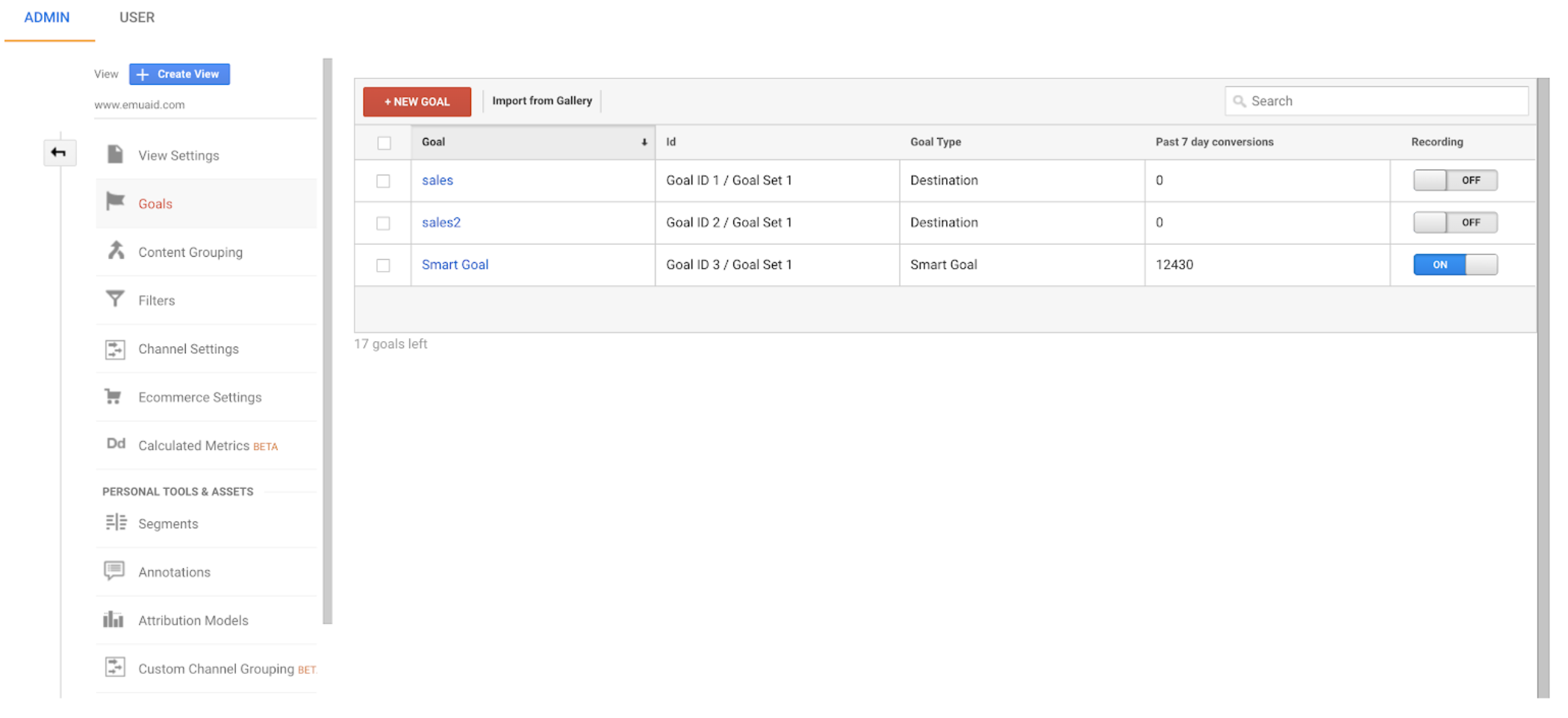
To fully understand the success of your website efforts, you must have accurate data. There are many issues that come from incorrect data or lack of data. I’ll be speaking specifically about Google Analytics in this section. The first step is to review the goals that are set up within your view. Ask yourself, are these goals valuable? Do they represent my team’s KPIs? Does this information help us track revenue and ROI?
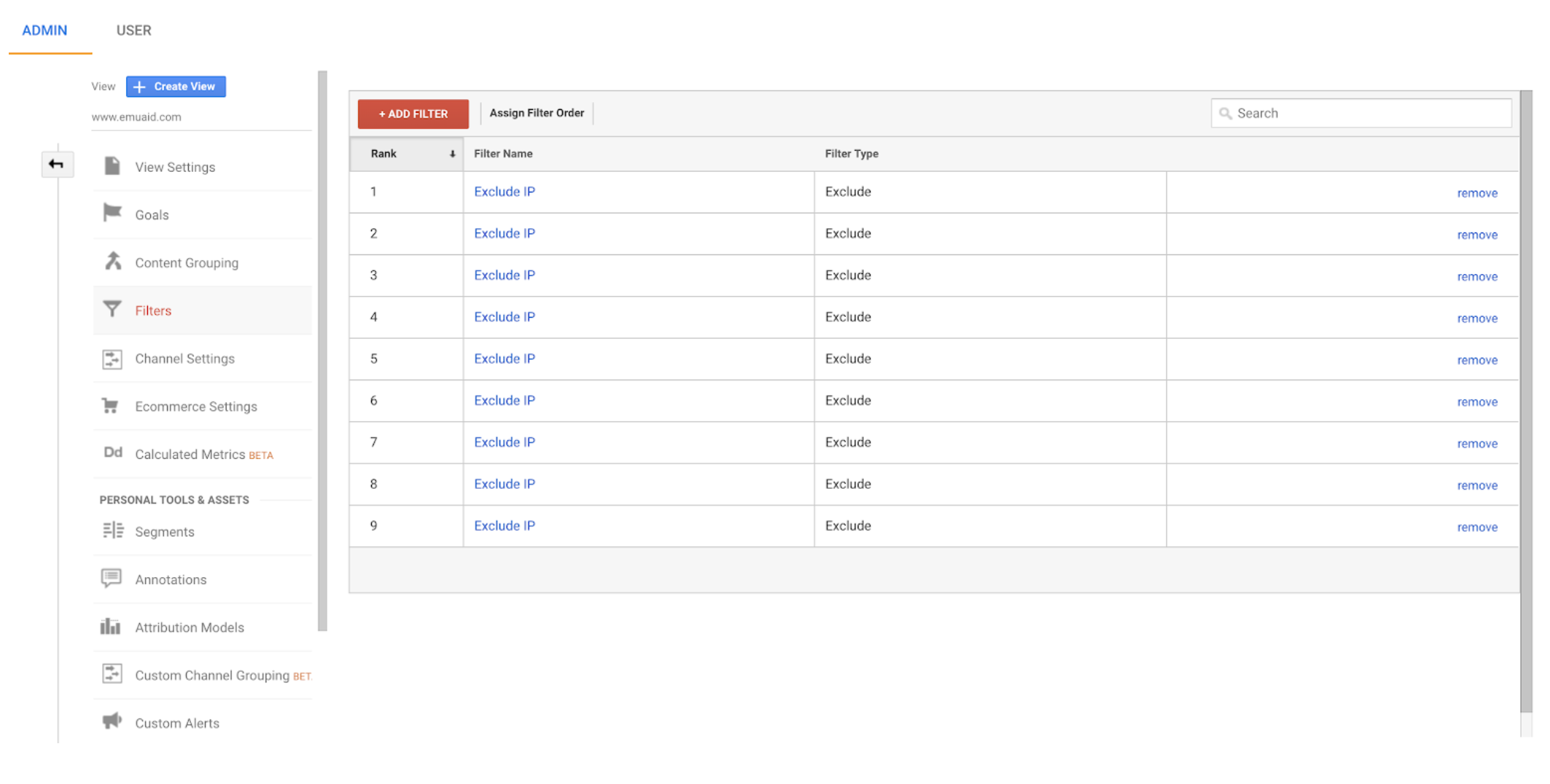
After you’ve ensured your goals are tracking the exact data you’re after, check on your filters tab within your reporting view and review your filters. If it’s not currently added, take your company’s IP address and add it as a filter to your view. You don’t want all the times employees viewed your website pages to skew your data.
Once you’ve properly filtered your IP, go back to your home tab and view your traffic channels located under the ‘All Traffic’ dropdown in your ‘Acquisition’ tab. What is the traffic distribution of your channels? If your direct, other, or not set channels have a traffic percentage larger than 5% then there is a possibility of a tracking error across your website. A possible issue is that you have a login page on your website and haven’t included current users as an excluded filter.
Next, check your organic traffic over the past few years. Are there any major dips in traffic? If there is anything substantial, your website may have experienced a penalty in the past. Gather as much information as you can from past penalties and determine how they were resolved.
The last step to verify all traffic is being recorded properly is to use GAchecker.com. This tool allows you to see if any pages across your website don’t have your UA tracking code. Ensure all the website pages that you want tracked are included in the list of pages with the tracking code.
Indexation
Once you’ve verified that Google Analytics is set up correctly, you’ll need to verify that your website is being indexed in Google. The first items to check are your robots.txt file and sitemap. The robots.txt file can usually be found by typing yourdomain.com/robots.txt. Your robots.txt file should look something like this:
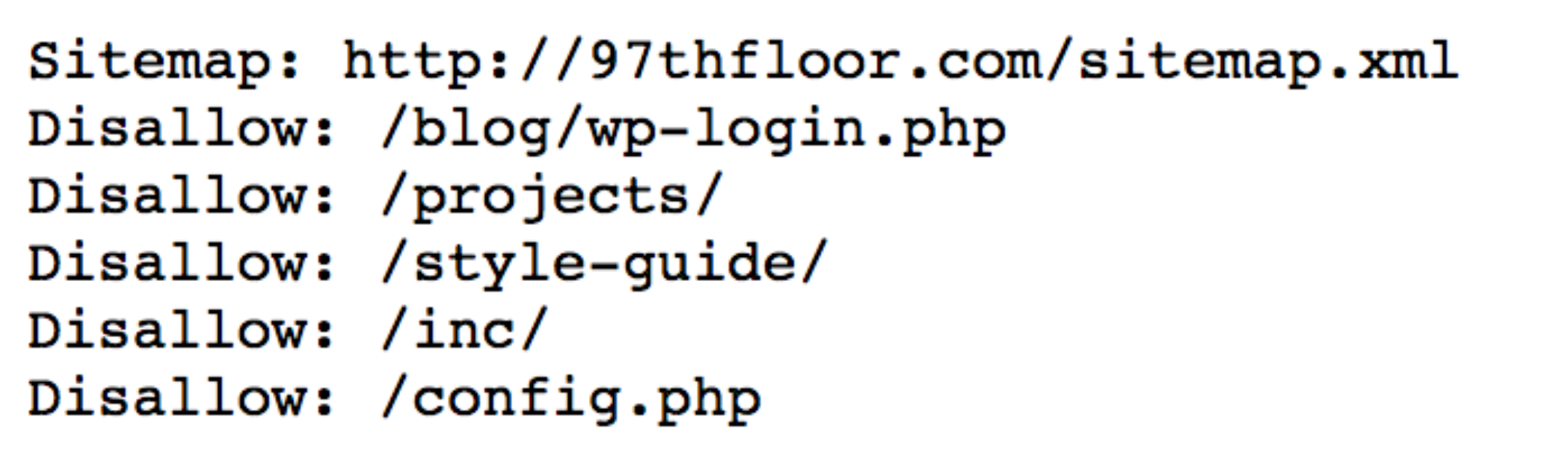
Your robots.txt file tells Google bots what they should and shouldn’t index on your website. Any pages that you don’t want showing up in the SERPs should be added as a Disallow. Such pages include: login pages, internal assets, or any page not needing indexation by Google’s search engine. In the robots.txt file, you also want your sitemap listed for Google bots to easily locate and crawl.
What is a sitemap? A sitemap is your website’s repository of pages, neatly compiled for Google’s bots to crawl. In short, a sitemap is the file that can help Google bots navigate your website and find pages that you want indexed. Even without this file, Google can still crawl and index your website’s pages, but with a sitemap, you can make your pages easier to crawl and improve your chances of sending Google to the right pages.
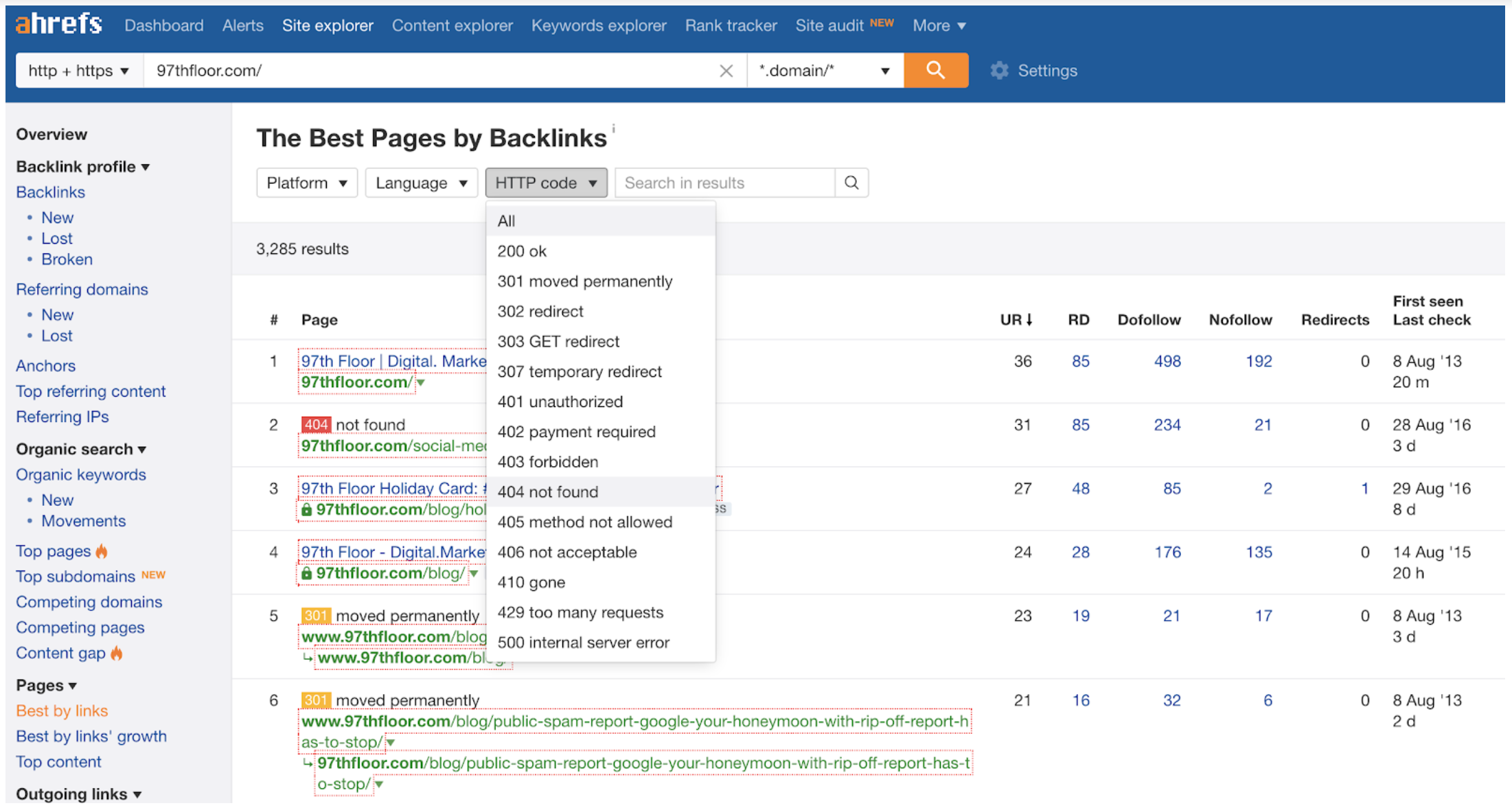
Another indexation problem that I have seen across a majority of sites is duplicate content. Duplicate content can happen in multiple ways and may cause Google to drop your keyword rankings because it’s not sure which page should rank for certain keywords. The first duplication issues to check are the URLs. Are there variations of the same page that are pulling up a 200 status code instead of redirecting to one page? Examples of potential duplicate URLs are below.
Each of these pages is the same, yet they show up as different URLs. This could be happening across your website and there are two ways to fix this issue. The first solution is to set up site-wide redirects to send any variation of a URL to one specific designation. If your website is ‘HTTPS’ without ‘www’ and contains a trailing slash, then set up all variations to redirect to https://yourdomain.com/.
If you’re unable to set up 301 redirects due to the platform you’re using, or if you need to keep those pages, then set up a rel=canonical tag. The rel=canonical tag signals to Google that a given page is a duplicate page, but to reference the rel=canonical URL as the first and main page when indexing.
Another problem that lowers your chance of showing up in Google SERPs is JavaScript. Google has a hard time reading JavaScript, so if you have on-page elements in JavaScript, it’s possible they may not show up for Google bots. Hubspot’s Matthew Barby explained this issue in describing a robust content category page that his team built that wasn’t showing up in Google’s SERPs. In troubleshooting the issue, they used a JavaScript Switcher extension to see what the page showed to Google and saw nothing. After recognizing this error, with a few tweaks to the page, they were able to rank for their focus keywords.
One of the last steps in reviewing the indexation of your website is checking your mobile-friendliness. Use Google’s Mobile-Friendly Test to see how Google values your mobile pages. With Google’s mobile-first index, the content on the mobile version of your website is going to affect how Google ranks your pages. If you’re not serving a mobile-friendly page, then you could be hurting your rankings.
After reviewing your analytics and the indexation of your website pages, it’s time to dig into the content on your website. When Google is crawling your website pages, you want to ensure everything is in working order and optimized to match the search intent behind searchers’ queries. When reviewing your on-page content, using Screaming Frog will help you uncover issues involving meta information. Run your domain through Screaming Frog’s spider tool and review the items below:
The last step in your SEO website audit is to review additional technical aspects of your website that might improve your website’s rankings. Identifying and fixing major technical issues on your website can be the difference between ranking at the top of page two, or reaching the top of page one in Google’s SERPs.
There are a few common mistakes made when conducting website audits. Look out for the following:
Keep an eye out for these pitfalls as you conduct your own website audit. They’re easily avoidable when you know what to look for.
Before you begin diving into new content and off-page optimizations, review this audit list to ensure the site’s health is in top shape. Once your site’s technical issues are in order, then you’ll be ready to crank out new content.
humility is about confidence. it's about knowing you're enough. it's not better than and it's not less than.
Welcome to the the 97th Floor Mastermind Interview Series where each week sit down with one of the makers, thought leaders and visionaries behind the biggest and/or up-and-coming brands around. We talk about everything from business and marketplace insights to personal journeys, successes, failures and legacy.
In this episode we’re talking to CEO and Co-Founder of Homie, Johnny Hanna. Homie is a platform where you can buy or sell your home online without an agent. In this interview, we talk about building a blue ocean within an old industry. Johnny shares his insight about educating on a new offering in a marketplace, scaling and living on the spectrum of “less than” and “better than.” We dive into the meaning of failure and what work-life balance really means. Let’s jump in!
0:10 Building a blue ocean
3:45 All about Johnny
6:15 Mentoring and giving back
6:56 What is Homie?
11:20 Educating on a new offering in a marketplace
12:43 Scaling requires education, data and nailing the “it factor”
18:18 The spectrum of “less than” and “better than”
22:23 Finding good fits within a team
24:33 Work-life harmony and defining seasons of business
28:53 What keeps Johnny up at night
30:00 Failure and solving one problem at a time
39:00 Johnny’s legacy
Learn more about Homie
Connect with 97th Floor on YouTube | Instagram | Facebook | Twitter | LinkedIn
What’d you think of the episode? The conversation continues in the comments below. Be sure to leave your insights.
Be sure to subscribe to our YouTube channel and get notifications - we’ll drop a new episode every week.
 |
 |
 |
Picking an agency partner is scary.
If marketing were a jungle with wild bloodthirsty beasts and treacherous weather conditions, picking the right guide would mean life or death. In a similar sense, the success of your brand — and maybe even your job — depends on picking the right marketing guide, and you’ve been burned in the past. If your agency screws up, you’re on the chopping block. It’s easy to see why you might feel tense.
You know your business well, and you know where you want to go. On the proverbial marketing journey, you wonder if it would be easier to just grab a field guide and a map and embark alone. After all, finding a good guide who is skilled and trained and knows the lay of the land takes considerable work, and you don’t have much time to spare. It may be easier to just get going; you could maybe tackle the journey on your own.
Maybe, but maybe not.
You see, you may love your business like no one else and know where you want to go, but that doesn’t necessarily mean that you’re the one who’s most qualified to get there. Effective marketing requires more than just heart; it requires training, experience, tools, and time, all qualities possessed by an experienced guide. And that’s what you get when you bring on 97th Floor.
The world of digital marketing is a jungle, so don’t go it alone; let us be your guides.
Think of this piece as if we were sitting down with you and preparing together for your journey. Naturally, you’ll want to know what we bring to the table as your guide. Thus, this post is not meant to be a platform to boast, but rather one to help you get to know us a little better as your potential partners.
Choosing a leader to help you navigate the mysterious wilderness of marketing means having the faith that they’ll get you to your destination. Your business is precious and it takes a lot of trust to hand it over to someone else. We understand your anxiety, and we know what your brand means to you. So let us just reassure you that concern for your business is at the heart of everything we do. Digital. Marketing. Elevated — It’s more than just a cute slogan. At 97th Floor, your vision is ours, and together, we can take your business to new heights.

Without a destination, you’ll wander aimlessly through the jungle. Your desired goal is what drives us as your guide. Every company is different. Every contract should be as well. We work closely with you to clearly understand your specific pain points and desired outcomes, and together we build a customized contract with KPIs and budget laser-focused around your unique needs. Tell us your destination, and as your guide, we’ll create a map that’ll get us through the weeds to where you want to go.
Getting through the jungle is about pushing through obstacles. And in the wilderness, it’s a matter of life and death. You choose a leader knowing together you’ll make progress, and that they will safely direct you around every danger along the journey, and get you to your destination. In short, you want results, and you want to reach your goals. As your guides, our whole culture at 97th Floor is built around results. Our Results Only Work Environment (ROWE) means that every employee is held accountable to the results they achieve for clients. That’s all we focus on, because ultimately that’s what really matters. You want results, and so do we; that’s why we live and die by them. Everything we do helps achieve the results set out in the contract, but we don’t stop there. In the jungle of marketing, one success must follow another until we reach our destination.
Just as an experienced guide wouldn’t just get you to your destination alive, but rather mentor you and help you feel comfortable along the way, we go beyond simply hitting KPIs. We are your agency partner in all things digital. Whether it’s copywriting, design, SEO strategy, or anything else that might play a part in defining your digital presence, we are always available to help you find the right solutions. In addition to regular emails, we hold weekly meetings to keep you updated on everything we’re doing to get you results. Thanks to our culture of transparency and communication, you’ll never feel left out of the loop. We know the lay of the land, but we’ll help you understand it as well. At the end of our journey, you’ll emerge more seasoned and better equipped to navigate the treacherous and perplexing marketing jungles you’ll encounter in the future.

You’d never hire an untrained guide to get you through the perils of the jungle. All of our marketers are certified in Google Analytics, Hubspot Content Marketing, and Hubspot Inbound Marketing, but that’s only the beginning; they are also required to complete another marketing certification course of their choice, and are expected to remain up to date on all new advances, theories, and strategies related to digital marketing. We value education, and by evaluating trends, sharing insights, and learning the newest technologies and tools, we keep 97th Floor at the forefront of the marketing expedition.
You’ll want a guide with a proven and recognized track record of success. That’s exactly what you’ll get with 97th Floor. The proficiency of each individual employee contributes to our overall agency expertise. We’re the only agency in Utah on the Moz recommended list. We’ve been honored to receive numerous awards and accolades from business publications such as Fortune and Inc., and many of our employees have received individual recognition for their work and the results they’ve brought to clients. But even with so much recognition for the work we do, some of the awards we are most proud of relate to our culture. We’ve been featured on numerous “best place to work” lists. This gives us more than just bragging rights (and don’t get us wrong, bragging rights are pretty great), but it also enables us to retain top talent and provide our clients with the best results. When it comes to blazing trails and getting places, we’ve been through the process.
You want a guide who is a leader, not a follower. You want a guide who is organized, exceptionally knowledgeable, and mingles with other experts. We do just that. Our annual Mastermind conference brings together a speaking lineup of the industry’s best, headlined in 2018 and 2019 by author and marketing thought leader, Seth Godin. We believe that knowledge should be shared. That’s why we openly offer regular tips on advanced digital marketing tactics and technical SEO strategies. In our Mastermind Interview Series, we interview key influencers from the biggest and brightest up-and-coming brands to uncover the most groundbreaking marketing strategies. Our leaders and employees have spoken in conferences all over the world.
A good guide understands their relationship to the earth and gives it the respect and gratitude it is due. Just as the land provides him with water and food, so he gives back. We pledge 1% of our revenue to charitable causes and let each employee individually decide to which charity their portion of the funds will be allocated. We sponsor the AF Canyon Run Against Cancer and invite our clients to run with us free of charge. We run the board for the Silicon Slopes marketing chapter, and our VP of Operations sits on the board of the Utah Digital Marketing Collective. We give back to the marketing world that has given us so much.

Getting through the jungle with a guide is the experience of a lifetime. Just so, working with an agency should be an elevating experience in every way. That’s why we treat our clients to experiences that go beyond just elite-level results. The “wow” factor isn’t just something extra; it’s what drives us. In everything we do, we deliver the best. From corporate ski passes to priority access to our annual Mastermind conference, we take every available opportunity to delight our clients. After all, customer satisfaction is only the first step. At 97th Floor, we embrace the idea of an experience economy, and when it comes to how we treat our clients, “good enough” is never good enough. We’ll get you through the jungle and to your journey’s end better than you were when you started and you’ll have some unforgettable experiences along the way.
Simply put, when you take 97th Floor as your guide, something just feels different.
We spend time doing the dirty work. In the crazy jungle of marketing, we are your boots on the ground, your trailblazers in the weeds. Your vision is our vision and we will help you get there. The online marketing world is a vast and complicated one, but we will be your guides.
Let’s start our journey today!
At first glance, comparing value is pretty easy. For example, if one restaurant is offering a $13.00 burger and another has one for $7.00, then it doesn’t take an economist to see which is the better option.
But there's usually more to it than just price. Maybe the $13.00 burger comes with a drink and your choice of sides. Maybe it’s made from higher quality beef. Maybe it’s assembled by a skilled chef, who puts their own unique artisan touch into every bite… and maybe the $7.00 burger fell on the floor.

The point here is that there’s more to value than just the initial price tag.
When figuring out a marketing strategy, a business usually has two options: building their own in-house marketing department, or hiring an agency. And often the deciding factor is cost — which option will save the company more money right now? But like burgers, marketing options are made up of a lot of factors, and when it comes to value, initial cost is only the tip of the bun.
So, before you put in your order, let’s do a quick breakdown/comparison of the actual costs, and shine a heat lamp on the the other ingredients that an effective marketing agency brings to the table.
Let’s be clear on one point before we dive into things: There are some advantages to keeping your marketing in-house. Your team probably won’t have to deal with as much of a learning curve regarding your products, services, and brand, and they’ll be able to focus all of their energies on marketing for a single client (i.e. you). What we’re trying to say is that the comparison to the less-than-appetizing $7.00 burger isn’t totally accurate.
However, at the same time, cost isn’t quite as clear cut either. Sure, the hourly rates associated with marketing are generally lower when you keep everything in the family, but hourly rates don’t tell the whole story.
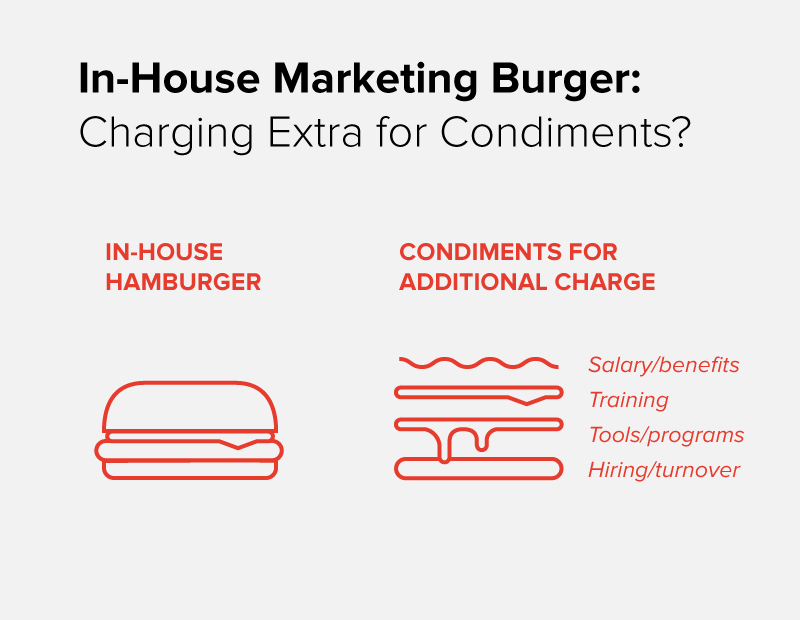
For every employee on your marketing team, you’ve got an entire host of associated costs. Salary and benefits are two obvious ones, but what about training expenses? What about expensive tools and analytics programs? What about the hiring costs, particularly when you’re trying to assemble a talented team from scratch? Don’t forget that “marketing” is an umbrella term that includes specializations in SEO, content and copywriting, analytics, design, link development, strategy, paid search and paid social ads; just finding the right people is going to cost you time and money, and keeping them up to date on best practices is going to cost you even more of both.
And once you’ve got your team assembled, there’s always the threat of turnover. Hey, just because you brought them on and trained them up, it doesn’t necessarily mean that they won’t leave and take their new skill sets with them. That means the possibility of recurring costs, and no clear idea of how much you’ll be needing to invest until the money is already leaving your pockets.
So maybe an in-house marketing department isn’t a floor burger, but it is a burger that costs an undefined heck of a lot to make, may end up costing you an undefined heck of a lot more as you go, and that still might not satisfy your marketing hunger.
So, how does that compare to the cost of hiring an agency?
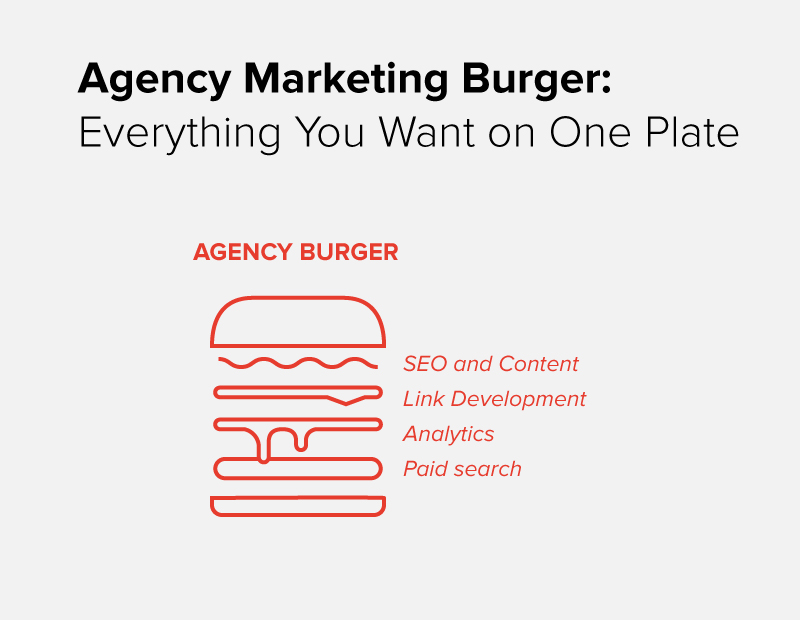
Big companies looking for aggressive growth are usually allocating $25 – $40k/mo in digital marketing spend with agencies, while small and medium sized businesses are investing between $5 – $15k/mo into digital marketing. That probably sounds like a lot, but what’s worth recognizing is that it’s all-inclusive.
With the right marketing agency, everything is so much more concrete, and that goes double for cost. The hourly rates are probably higher than what you’d be spending with an in-house marketing department, but the hidden costs are non existent. It’s a burger with everything on it, and you’re not going to get billed extra for your pickles somewhere down the line. No to mention the sides, not just french fries—we have the premium sides, all-inclusive.
You don’t have to worry about hiring specialists or assembling a team, because the agency takes care of all of that on their end. The same goes for training and tools. All you have to do is pick from a menu of services, and you’ll always know exactly how much those services are going to be impacting your budget. And if contract-renewal time rolls around and you want to switch things up, scaling to meet your changing needs is just as easy. With agency marketing, you only pay for what you want.
To top it all off, let’s not forget the real value that comes from experienced digital marketing. As the co-founder of SEOmoz, co-founder of Sparktoro, and all-around marketing and SEO thought leader, Rand Fishkin enjoys a uniquely informed perspective on marketing agency services, and this is what he has to say:
I think a lot of web marketing agencies are undervaluing their work, or perhaps competition is getting more cutthroat. Back when SEOmoz was an agency (2005-2009), we were generally charging in that $10-$25K/month bucket, and were by no means the most expensive group on the market.
The best agencies enjoy a time-tested, intimate understanding of the marketing universe — what’s come before, what’s happening right now, and what’s around the corner — so that they can tailor a marketing strategy to fit your business and your industry. And, with multiple clients, agencies also have nearly limitless opportunities to test and evaluate new ideas, advancing their capabilities with every new contract. In short, you end up getting back more than you give out.
Clear-cut costs, proven expertise, and ever-expanding skill sets — now that's a burger you can sink your teeth into.
Sometimes the less expensive option isn’t really the less expensive option. So, when you’re looking over the marketing menu and trying to decide which option is the best fit for your business (and your budget), consider all the costs. After all, you probably wouldn’t want to buy a burger without knowing exactly how much it’s going to set you back, and with a qualified marketing agency like 97th Floor, you’ll always be getting the best brand exposure for your buck.
Let us feed your business the results it craves; check out 97th Floor today, and see what we can cook up for you.
With shrinking attention spans and endless digital content in 2025, it’s harder than ever to stand out. Enter the infographic! A well-structured infographic turns complicated or “boring” information into something clear, engaging, and easy to digest in seconds. If you’ve ever wondered what makes a good infographic, you’ve come to the right place. In this article, we’ll go over 7 tips for making your infographics picture-perfect. Done right, an infographic can make your content unforgettable.
In 2025, people want answers fast. Long reports and walls of text often go unread, but visuals cut through the noise. Infographics present data and insights in a format that’s quick to scan, easy to share, and simple to remember. Infographics double as pretty visuals and communication tools that help your audience grasp complex information at a glance. From social media to sales decks, a strong infographic can extend the reach and impact of your message.
An infographic distills complex data into a structured visual format that the brain can process faster than text alone. Studies in cognitive psychology confirm that people retain information more effectively when it is paired with visuals, because the human brain processes images up to 60,000 times faster than text. That means your audience can understand trends, relationships, and comparisons at a glance rather than working through pages of copy.
From a marketing perspective, infographics are also highly versatile. They can improve on-page engagement by breaking up content, drive backlinks as shareable assets, and perform well across platforms, from LinkedIn posts to conference presentations. When designed with accessibility and mobile in mind, they increase reach even further by ensuring clarity across devices.
So, what makes a good infographic stand out from the rest? The best designs share a few common elements: credible data, clarity, storytelling, smart visuals, simplicity, breathing room, and adherence to design standards. Together, these elements form the foundation of an infographic that catches readers’ attention. Let’s break down each one.
The key to a good infographic is using relevant, focused, and reliable data. Before you write or design, get to know your audience. Why are they interested in your topic? How much do they already know? Do they have preconceived ideas or opinions about your topic? Answering these questions will help form more relevant data and visuals. An infographic should be a visual presentation of evidence, with purpose and direction, not just an excuse to use pretty pictures. Don’t include facts just to up your word count. Make sure your facts and data support the overall story and have a purpose.
Especially when choosing a controversial topic to be thorough and speak to both sides of the story. Think through the topic’s possible arguments and counterarguments. Use facts, statistics, and authoritative quotes that are unbiased.

Use as little text as possible and let the visuals do the rest of the talking. Present the data in a visually pleasing way, stating hard evidence. Facts, statistics, and quotes from authorities should be used more than lengthy sections of text. Cite your sources. Always give credit where credit is due, and use reputable sources.
Thinking outside the box is great. Just make sure you are still making sense. Don’t use confusing comparisons or complicated visuals. Lead the audience through the infographic using both text and visuals.
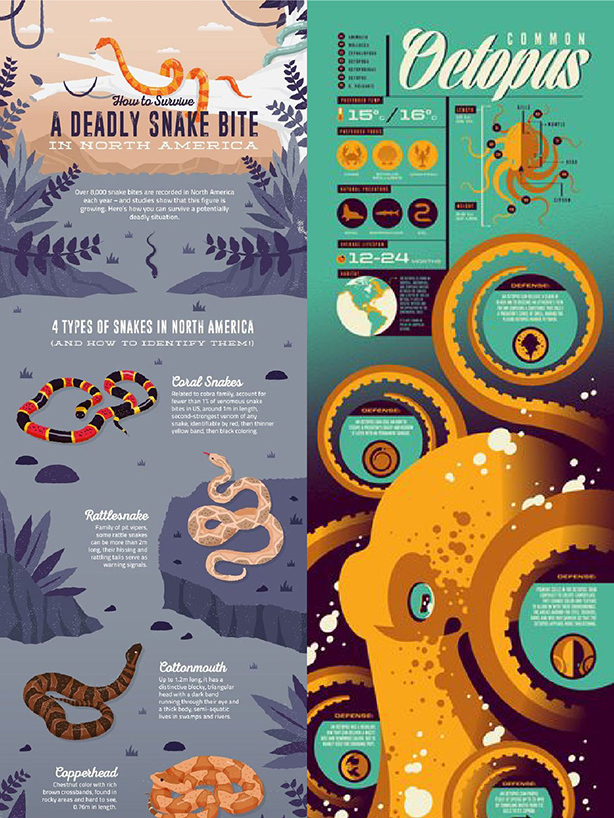
An infographic should not just make data interesting, but help the reader understand it better than text alone. Don’t rely on the reader to do the work. Guide them through the information as clearly and simply as possible. Data visualizations draw attention and give importance to seemingly boring facts. The right visuals can distill a difficult concept or lots of data into an easily digestible image that should only take 5 seconds to understand.
“An infographic is 30 times more likely to be read than a purely textual article.”

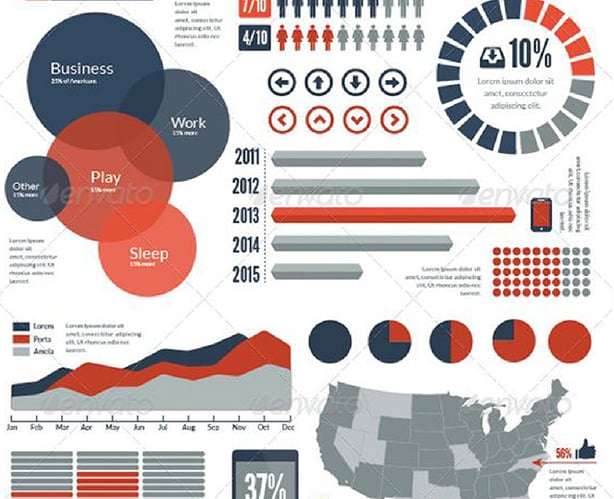
Display the data using a variety of charts and graphs. Make sure to choose the right graph or format for the data you are sharing. Always check that the graph makes sense visually, without the need for extensive knowledge on the subject or heavy reading. Below are a list of a few types of graphs and charts that can be used in creating an infographic.
More doesn’t always mean better. In fact, clutter is the fastest way to lose your audience. A simplified infographic strips away distractions and highlights only the essentials. Stick to one main point per section. Use a limited color palette. Don’t let decorative elements compete with your data. Remember, an infographic is meant to clarify, not complicate. Consider color theory. Do the colors help tell the story? Why?

White space isn’t wasted space; it’s breathing room. It separates ideas, guides the eye, and makes complex information feel approachable. Imagine walking into a crowded room vs. one with open pathways; which feels easier to navigate? The same principle applies here. Use white space to group related visuals, emphasize hierarchy, and keep the design from overwhelming readers.
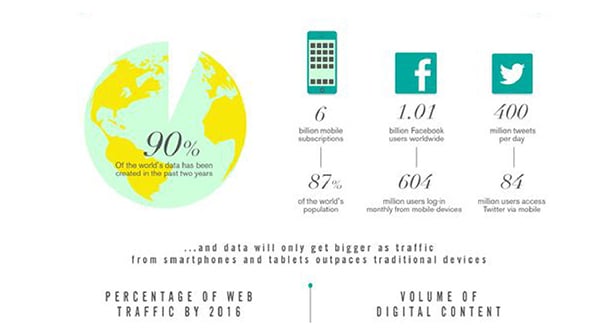
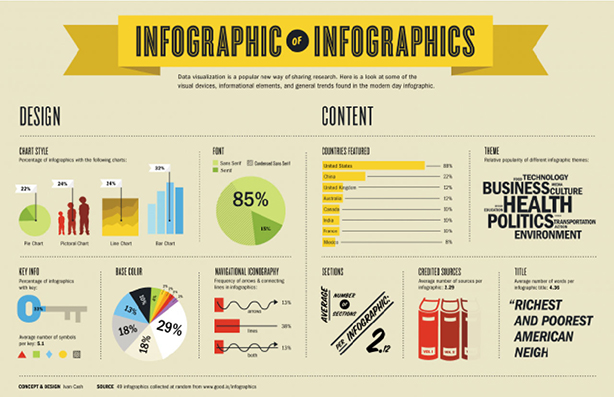
The typical infographic should be no more than 5000 pixels tall. This size allows for easy reading and sharing; anything longer will likely lose the audience's attention. Make sure the font is a healthy size and easy to read. An infographic is NOT an entire article with icons and images sprinkled in. As one marketer said,
“‘Infographics’ is one efficient way of combining the best of text, images, and design to represent complex data that tells a story that begs to be shared." - Jeff Bullas
Infographics, if created and used correctly, can communicate complex data in a visually pleasing way that can get you more clicks, views, and shares.
Infographics done right can transform complex information into stories people actually want to read and share. At 97th Floor, we’ve helped brands of every size turn data into designs that spark attention and drive results. Whether you need a one-off infographic or a full content strategy powered by design, our team can help.
See how an audience-first approach translates to bottom-line results.
Depending on who you ask (or which result you click in Google), the years of birth to be considered a Millennial range somewhere between 1980 and 2000. So being a proud 1986er myself, I’m perfectly qualified to chime in on what Millennials expect from work.
When I first started hearing about Millennials and their stereotypes, I figured the term referred to people much younger than myself. Teenagers. The kids that had cell phones in elementary school. The kids on Snapchat. They couldn’t be talking about my age group. I used payphones in high school, after all! And of course I didn’t pay for the payphone...like anyone my age knows, I used the Collect Call trick. (My parents received and declined a lot of phone calls from “HeymomitsWayneI’mreadypickmeup!” and I always got picked up.) I had dial-up internet in high school. And no, we didn’t pay for it...like anyone in the economic situation like I was growing up knows, I kept taking the free AOL CDs from Walmart to use the free hours, and then once that was out we’d pop in a new one with a new email address.
I was wrong, though. I am in fact a Millennial, and those “kids” are part of a new generation called Generation Z.
To be honest, for these last seven or so years, I’ve been slightly ashamed of being a Millennial. Maybe embarrassed is a better word for how I felt. Everything I read, heard, and watched made Millennials seem pretty terrible. Especially in the workplace. What Millennials expected from work was bean bag chairs, video games, snacks and a keg. Oh and don’t forget about the ping pong table. For all of that time spent having a party at work, we wanted immediate raises and promotions.
Well, I didn’t feel like I fit this narrative. Sure, I came across a handful of Millennials that matched the profile, but I was somehow lucky enough to mostly surround myself with and know Millennials like me. They didn’t expect those types of things from work, either; nor did they/we necessarily want them.
I’ve come to find out in recent years that all of that was a myth. Click bait. Attention-grabbing consultants. There were a few studies that seemed to prove those stereotypes were facts, but the research was poor. They mainly tried to show the differences between generations. Academics have looked at these so-called studies and have concluded that there have been “gross generalizations based on weak survey research, and the speculations of profit-oriented consultants should be treated with extreme caution.” A group of researchers from George Washington University and the Department of Defense concluded that “meaningful differences among generations probably do not exist in the workplace.” While there are some differences, those have more to do with age and the stages of life people are experiencing. You can read more about how Millennials don’t differ much from other generations in this great article published on Harvard Business Review by Bruce N. Pfau.
Below are results from two studies that actually show Millennials to be pretty much the same as Baby Boomers and Gen Xers when it comes to what they want out of work. While all generations were very similar, it is interesting to see Millennials cared the least about having a fun place to work. If your company is spending more attention and/or money on video games and ice cream parties than it is on trainings and education, you have a problem.


I’m no longer embarrassed to be a Millennial. We’re not much different from other generations when it comes to the things that really matter, especially in our careers. We want to do great work. We want to continue to learn. We want to add value to our companies. We want to work with great colleagues. We want to grow and take on new challenges. We want our work to positively influence our lives outside of work and vice versa.
At 97th Floor, we’re mostly made up of Millennials. We do have some Gen Xers on board, and in the past there have been other Gen Xers and even Baby Boomers. When I heard those people describe the company culture at 97th Floor as the best they’ve ever been a part of, I figured they were just Millennials at heart and were finally at a company geared towards Millennials. But over the last couple of years, I’ve realized it’s because a great company culture like the one we have at 97th Floor doesn’t only appeal to one specific generation. I believe that, now that there is more transparency (the internet in general and specifically Glassdoor), companies need to focus on company culture to stay competitive. This is a good thing, of course, and all generations are benefiting from the change.
My dad used to tell me to be my own boss when I grew up. At a young age, I figured he said that because bosses are the ones that make a lot of money. As I became a teenager and young man, I started to realize that his advice didn’t really have much to do with making a lot of money. His advice was to stay away from the typical company that controlled their employees and created a labor force of disengaged employees. We still have plenty of these types of companies today.
At 97th Floor, we essentially want people to be their own bosses. We want them to receive the benefits of being their own boss without having to deal with the accompanying downsides. To me, it comes down to giving our employees five things that most companies don’t allow them to have. That lack often leads to disengaged employees or employees who leave for a company that provides those benefits, or even start their own company. Each of these points could be the basis for a whole article in itself, but for now, I’ll just share a couple thoughts on each.
1. Autonomy
As Dan Pink teaches in his book Drive, autonomy is one of the things that truly motivates people. Traditional company cultures strip autonomy away from people. Autonomy in the workplace encompasses the employee’s time, team, task, and technique. We try our best to give each employee at 97th Floor 100% autonomy over these things. We allow people to choose the teams they want to be a part of. It’s not uncommon for teams to make offers to one employee and the employee chooses which one they want to take. This is similar to the open market, except that it is happening within our company. We also are a ROWE organization, which really helps us give employees 100% autonomy. We just demand 100% accountability in return.
The ‘time’ part of autonomy seems to be a particularly important factor for Millennials, though it’s really important for everyone. A survey by Intelligence Group found that 74% of Millennials want flexible work schedules and 88% want “work-life integration.” If you’re your own boss, you work when you want to, so long as you can achieve the necessary results.
In the same survey by Intelligence Group, 87% of Millennials said professional development was an important part of their job. From my experience, most companies do a pretty good job with helping their employees develop their knowledge and skills. However, one thing few companies do a good job at is allowing employees to expand their knowledge and skills outside of their position. As a business owner, you learn and develop skills in pretty much every facet of business. While not every employee will care to learn a lot about every part of the business, it’s important for the company to provide those opportunities for their employees. It separates the person from the position, which is a good thing. The company pays the employee for the position they fill, and at the end of the day, the company judges the employee on how they perform in that position; but the employee needs to know that they are viewed and treated as an individual and not just a role.
As a business owner, your income is 100% tied to your work. As an employee, it sometimes doesn’t feel this way. Too often, you feel like you’re taking a lot more work and not seeing more income. While it’d have to be a very dumb company or manager to not recognize a star performer and then compensate them, there is a lot of room for improvement for most companies. At 97th Floor, we have a financial structure for almost all of our employees that rewards them for their productivity and efficiency. It’s not perfect, but it’s an attempt to make employees think like business owners, and it’s helped us a lot over the last few years. We allow employees to decide if they need to hire another person on the team or if they really need that new tool. If they can be more efficient and not hire that person or buy that tool, that money comes back to the team. However, if those type of decisions hurt their productivity, that will hurt their earnings potential. So it’s a constant balance of productivity and efficiency—just like a business owner has to do. While that’s a challenge, it does give control to the employees and allows them to feel that they have a say in their compensation.
As part of our ROWE certification, we were trained to call managers (or bosses) by a new name: “Results Coach”. While we’re not perfect and you’ll still hear “manager” and “boss” being used at 97th Floor, we do a pretty good job of acting like results coaches. The basic difference is that, as results coaches, we set the results we want our team to achieve and the timeframe to achieve them. From there, we get out of their way, help when needed, and give advice. There isn’t the stereotypical boss attitude of “my way or the highway.” In the previously-mentioned survey by Intelligence Group, 72% of Millennials would like to be their own boss, but if they have to work for a boss, 79% of them would want that boss to serve as more of a coach or mentor.
Most people care about more than just money. However, many companies focus almost entirely on revenue. So when you’re an employee, there’s a good chance you’ll end up at a company where your only purpose is to drive revenue. In the Intelligence Group survey, 64% of Millennials say that making the world a better place is a priority for them. If your employees don’t feel that they are accomplishing this, they’re going to leave and find a company where they can feel that purpose. Barring that option, they’ll start their own companies so that they can be their own boss and direct the purpose of the company themselves.
In a world where information moves faster than the speed of light and is produced almost as fast, it is important to stand out. The key to standing out is a well designed visual. Humans not only respond faster but also retain more information from images and graphics than from text alone. Visuals are also easily shared, which leads to more views, links, and better search engine optimization.
Studies have shown that humans process and respond to visual data better than any other type of data. The human brain is capable of processing images 60,000 times faster than text. Additionally, 90% of information transmitted to the brain is visual. Visuals capture and hold viewers’ attention.

Information is more likely to stay with you when presented visually.

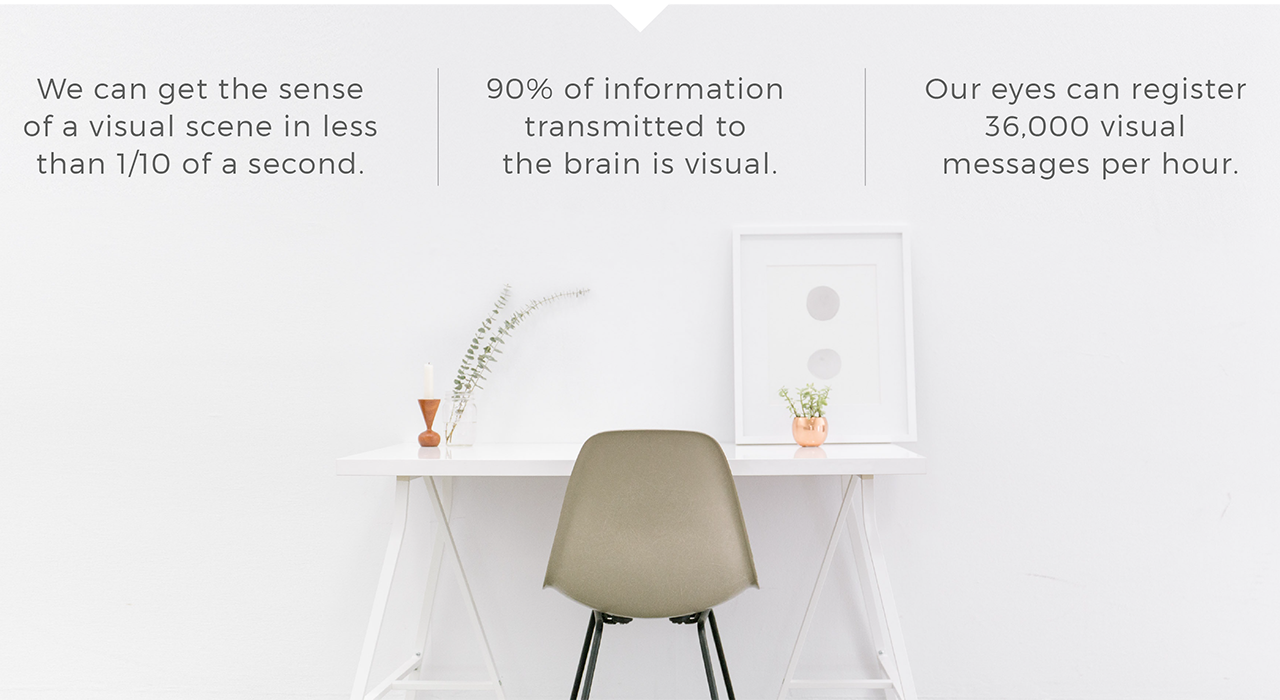
Eye-tracking studies show internet readers pay close attention to information-carrying images. In fact, when the images are relevant, readers spend more time looking at the images than they do reading text on the page.

Visuals help tell your brand’s story in a memorable way and demonstrate your brand as an authority in your industry, building brand awareness.

Visuals are easy to digest, and transmit data faster and easier, which means they stay with you longer than text. If a relevant image is paired with that same information, people retained 65% of the information three days later.
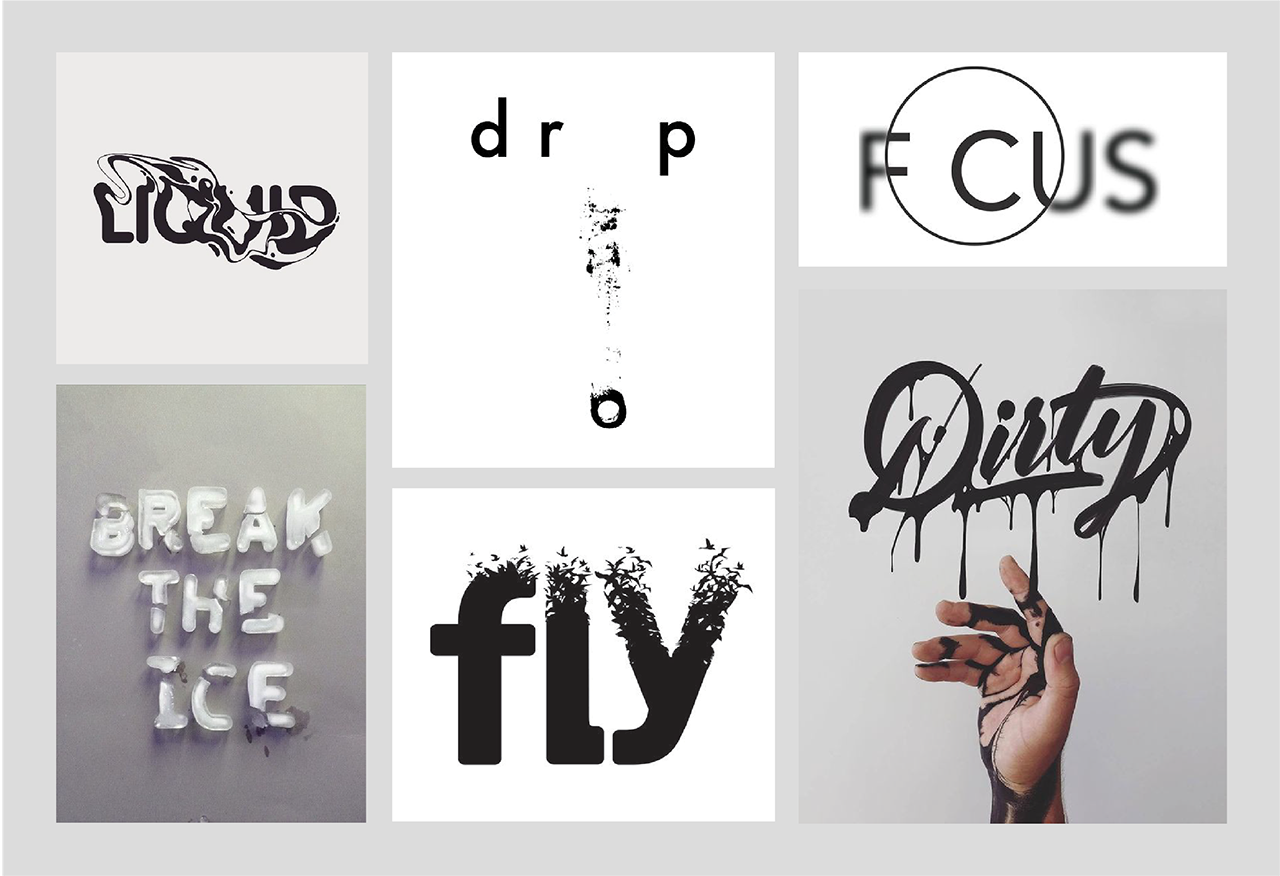
Graphics are more convincing and influencing. Visuals trigger emotions and motivate the audience. The emotional power comes from the ability to show you an idea, relationship, or how something works.
People that follow directions with text and illustrations do 323% better than people following directions without illustrations.

Visuals are easy to share and drive traffic. Visually appealing graphics are more likely to be shared on social networks and become viral compared to ordinary text content. Graphics create more opportunities for link-building, which also impacts your site’s search engine optimization.
