



Conversion Rate Optimization, often abbreviated as CRO, is the practice of increasing the percentage of website visitors who take a desired action on a webpage or “convert” as we Marketers like to say. This action could range from making a purchase, filling out a form, signing up for a newsletter, or engaging with site content in a meaningful way. Many marketing leaders focus their attention on widening the funnel and increasing their volume of traffic, but by optimizing for conversions, businesses can enhance the value they receive from their audience without needing to increase traffic, thus making better use of existing resources.
Competition for your audience’s attention is fierce and Conversion Rate Optimization is a critical step to attracting and retaining your share-of-market. It not only improves the efficiency and effectiveness of your website, but also unearths insights about your audience. When a website is optimized for conversions, every visitor is more likely to take the desired action, which in turn, contributes to the business's goals. It not only reflects on the bottom line, but also on user satisfaction and engagement.
Calculating the Conversion Rate is straightforward—you divide the number of conversions by the total number of visitors and then multiply the result by 100 to get the percentage. This percentage, the Conversion Rate, serves as a measure of your site’s effectiveness in leading visitors to the desired action. Monitoring this rate over time can provide valuable insights into how well your optimization efforts are faring, and where there might be room for improvement.
The journey towards effective Conversion Rate Optimization involves several elements. It begins with understanding your audience's behavior and preferences. Data analysis and user feedback play crucial roles in forming a clear picture of what works and what doesn’t on your website. Furthermore, creating compelling and clear Calls-to-Action (CTAs), designing intuitive navigation, and providing value through content are indispensable components of CRO. Every touchpoint on a website should be scrutinized for its potential to drive conversions, making CRO a comprehensive, ongoing process rather than a one-time task.
The advantages of Conversion Rate Optimization (CRO) extend beyond merely boosting conversion rates.
CRO is a pathway to achieving a better return on investment (ROI) for every other marketing channel you’re engaged in—whether it’s advertising, SEO, email, or any other growth strategy. The web interactions that these channels generate can all be optimized by closely analyzing a user’s process and making it better. As for ROI, most marketing leaders are willing to spend immensely on their growth channels, but far less likely to put forward the comparatively minimal efforts and resources into CRO—a critical mistake.
The data collected through CRO efforts provides invaluable insights into user behavior and preferences. Nearly every aspect of a website can be tested, from core brand messaging to a CTA’s button placement and the learnings gained can teach you what your audience cares most about. For example, you could create three nearly identical pages, but with one single benefit statement swapped out for each page. By running traffic to these three pages, you can identify the “winner” and proceed with confidence in that messaging.
A website optimized for conversions invariably cultivates a more engaging user experience. By aligning webpage elements with user expectations and preferences, businesses increase the likelihood of interaction and engagement. Increased engagement often translates to higher conversion rates as visitors find value and relevance in the content and offers presented to them.
CRO lays the foundation for scalability. As conversion rates improve, marketing teams can expand their operations with the confidence that their digital assets are optimized to deliver desired outcomes. Marketers are often asked to “do more with less” and while this can often be an unfair request, CRO stretches a marketing team’s capabilities.
Embarking on the journey of Conversion Rate Optimization (CRO) requires a blend of analytical and creative approaches. Starting with a solid understanding of your audience and the goals of your website, you pave the way for a structured and impactful optimization process.
There are many tools that can help you conduct successful Conversion Rate Optimization campaigns. Many testing tools are already embedded into marketing software you likely use (your marketing automation platforms, advertising platforms, or website CMS). Here are some of the most popular tools:
It’s essential to begin testing pages that have both a significant amount of traffic and the greatest ability to impact on your company’s bottom-line. If you choose pages that rarely see traffic, it could take weeks or even months before the data you collect is conclusive. If you focus on pages that don't have a direct impact on your marketing goals, it could be difficult to obtain buy-in for future testing. Generally speaking, the following opportunities are great places to start:
After selecting CRO tools as well as the pages you would like to test, it’s time to make educated guesses about what will increase your conversion rate. We encourage marketers to write hypothesis statements like this:
Writing these statements will ensure that every test has a specific metric of measurement, and that success is clearly defined. It will also help you understand your priorities—if not all of these tests can be conducted at once, listing them will help you know which tests matter most to your company’s bottom line.
A/B testing stands as a cornerstone in the realm of CRO. It involves comparing two versions of a webpage to see which one performs better in terms of conversions. It’s critical to only change one element of the test page at a time, ensuring you know what specifically led to the results of your test. That said, you can select one element of a page (a CTA button’s copy, for example) and send traffic to 5 or 6 pages with different variations of that copy. After your test period is over, you will have a clearer idea of which messages were most successful.
Multivariate testing helps marketers systematically evaluate and optimize multiple elements on a webpage simultaneously. This approach involves testing various combinations of changes to elements like headlines, images, and call-to-action buttons to discern the most effective combination for improving conversions. Multivariate testing is particularly beneficial when marketers seek to understand how different elements interact with each other and impact user behavior. However, it may not be the ideal choice for smaller-scale campaigns or when there's a need for quick insights, as multivariate testing requires a larger sample size to yield statistically significant results.
The efficacy of your Calls-to-Action (CTAs) and forms significantly influences the conversion rate. A clear, compelling CTA can guide your visitors smoothly along the conversion path. It's imperative to use persuasive, action-oriented language, and a design that stands out yet remains cohesive with the overall site aesthetics. Similarly, forms should be intuitive, easy to fill out, and only ask for necessary information to reduce friction and encourage completion. A blend of compelling design, clear instructions, and an assurance of value or security can significantly elevate the performance of your CTAs and forms.
Social proof and lead magnets are potent tools in the CRO toolkit. Displaying testimonials, reviews, or social shares can build trust and persuade visitors to take the desired action. Lead magnets, on the other hand, offer something of value in exchange for contact information or other actions. Crafting enticing lead magnets that address your audience’s needs or pain points, and showcasing authentic social proof, can drastically improve your conversion rates.
Speed is of the essence. A slow-loading site can deter visitors and impede conversions. It's crucial to optimize site speed by minimizing HTTP requests, optimizing images, and leveraging browser caching among other tactics. Similarly, landing pages should be optimized for clarity, value proposition, and a clear path to conversion. A well-designed, fast-loading landing page that resonates with the visitor’s intent and provides a seamless user experience can significantly boost conversions.
Pay-per-click (PPC) campaigns are a significant driver of traffic. However, attracting visitors is only part of the equation. Conversion Rate Optimization (CRO) tailored for PPC campaigns is crucial to ensure that the traffic translates into desired actions.
A harmonized experience between PPC ads and the landing pages they lead to is essential for high conversion rates. Ensure that the messaging is consistent and that the landing page delivers on the promises made in the ad. A clear and compelling value proposition, coupled with a straightforward call to action, can significantly enhance the likelihood of conversions. Additionally, optimizing the landing page for speed, mobile responsiveness, and user-friendly navigation further supports a seamless user journey from the ad click to conversion.
Effective conversion tracking is paramount to measure the ROI of your PPC campaigns accurately. Utilize tracking tools and features provided by PPC platforms, such as Google Ads Conversion Tracking or Facebook Pixel. Implement tracking codes correctly on your website, and define conversion goals clearly. Analyzing the conversion data in conjunction with ad performance metrics provides a holistic view of your PPC campaign effectiveness. Over time, this analysis will guide data-driven optimizations to both your ads and landing pages, fostering better conversion rates and campaign ROI.
Conversion Rate Optimization (CRO) stands as a pivotal process in bolstering the effectiveness of your online presence. By honing in on user behavior and preferences, marketers can significantly enhance their site's ability to turn visitors into customers.
Conversion Rate Optimization (CRO) is a systematic process aimed at increasing the percentage of website visitors who take a desired action, such as making a purchase, signing up for a newsletter, or filling out a contact form.
CRO is essential as it helps maximize the value of your existing traffic, improve user experience, and enhance the ROI of your marketing efforts without the need to increase your advertising spend.
The Conversion Rate is calculated by dividing the number of conversions by the total number of visitors to your website and then multiplying the result by 100 to obtain a percentage.
Some popular CRO tools include Google Analytics, Hotjar, Optimizely, and Unbounce. These tools provide insights into user behavior, facilitate A/B testing, and help analyze conversion data.
Common methods include A/B testing, multivariate testing, usability testing, and creating compelling calls to action. Additionally, improving site speed, mobile responsiveness, and utilizing user feedback are vital for CRO.
Begin by identifying key pages or elements on your website that could influence conversions. Develop hypotheses, design tests, collect and analyze data, and then implement changes based on the insights garnered.
Landing pages play a crucial role in CRO as they are often the first point of interaction with potential customers. Optimizing landing pages for clarity, relevance, and ease of action can significantly boost conversion rates.
Enhancing CTAs involves using persuasive, action-oriented language, making them visually prominent, and ensuring they clearly communicate the value proposition to encourage users to take the desired action.
With a significant portion of internet usage on mobile devices, mobile optimization is crucial for CRO. It ensures a seamless user experience, which in turn, positively impacts conversion rates.
Success in CRO is typically measured by monitoring key metrics such as conversion rates, user engagement rates, bounce rates, and the ROI of marketing campaigns. Utilizing analytics tools and continuously analyzing performance data will provide insights into the effectiveness of your CRO strategies.
A conversion pixel is a small, often invisible, piece of code placed on a website that tracks user interactions after they click on a digital ad. Whether it’s a purchase, a sign-up, a web page visit, or any other form of engagement, the conversion pixel captures it and turns it into data marketers can use to see how effective their ads are in real-time and perform lower funnel remarketing campaigns.
Conversion pixels offer invaluable insights into customer behavior and ad performance. By understanding which ads lead to conversions, marketers can optimize their campaigns for better results, ensuring that every dollar spent on advertising is an investment toward measurable success.
When a user clicks on an ad and lands on a website, the conversion pixel, embedded in the website’s code, is triggered. This pixel then sends information back to the ad platform about the user's actions on the site. This could include various interactions such as filling out a form, completing a purchase, or downloading a brochure.
This process involves a smooth exchange of data, allowing for real-time tracking and analysis. By using conversion pixels, marketers gain a clear understanding of how users interact with their website after clicking an ad. This is one of the best tools to evaluate the effectiveness of ad campaigns and make informed decisions on future ad spend and strategy.
One of the most compelling benefits of using a conversion pixel is the significant increase in Return on Investment (ROI) and overall ad performance. By providing detailed insights into which ads are converting and at what rate, conversion pixels enable marketers to fine-tune their strategies. This optimization leads to more effective ad targeting, reducing wasted ad spend on audiences that do not convert and reallocating budget towards more profitable segments.
By tracking user interactions, these conversion pixels help in building detailed audience profiles based on real behaviors. This data is crucial for retargeting campaigns, where ads are specifically shown to users who have previously interacted with the website but did not convert.
What's more, this audience data can be used to create lookalike audiences—new groups of potential customers who share similar characteristics with those who have already converted.
This approach expands reach and drives engagement, by targeting users who are more likely to be interested in the product or service, based on the behavior of existing customers. The use of conversion pixels thus opens up new avenues for reaching and engaging with both existing and potential customers, enhancing the overall effectiveness of advertising campaigns.
Standard events refer to the common actions users take on a website that marketers often want to track. These include actions like making a purchase, signing up for a newsletter, or adding items to a cart. Conversion pixels designed for standard events are typically pre-defined by the advertising platforms and are easy to implement. They offer a straightforward way for marketers to begin tracking basic user interactions that are directly tied to their digital advertising efforts.
For more nuanced insights, custom events and conversions come into play. These are tailored to specific actions or series of actions that are unique to a particular business or marketing strategy. Custom conversion pixels allow marketers to go beyond standard tracking, providing the flexibility to monitor unique user interactions that are critical to their specific business goals.
Whether it's tracking how long a user watches a video, interaction with a specific feature on a site, or any other bespoke action, custom conversions offer a deeper level of understanding and engagement tracking. This customizability is crucial for businesses with unique conversion paths or specialized products and services.
Offsite conversions refer to user actions that occur outside of the website but are still important to track. These could include phone calls, app downloads, or in-store visits that are prompted by digital ads. Offsite conversion pixels are designed to capture these types of interactions, providing a more comprehensive view of how digital advertising influences customer behavior across different channels.
Tracking offsite conversions is key for businesses that have significant customer interactions outside of their website. It ensures that the full impact of digital advertising campaigns is measured, taking into account both online and offline customer engagement.
Implementing conversion pixels is not just about placing code on a website; it’s about strategic placement and usage to ensure accurate and meaningful data collection. Here are some best practices to maximize the effectiveness of conversion pixels:
Integrating conversion pixels with various advertising platforms is a crucial step in creating a cohesive digital marketing strategy. Let's explore how this integration works with some of the major platforms.
Integrating a conversion pixel with Facebook Ads involves using the Facebook Pixel, a powerful tool for tracking user actions on your website and optimizing Facebook advertising campaigns. The pixel helps in tracking conversions from Facebook ads, optimizing ads for better performance, building targeted audiences for future ads, and remarketing to people who have already taken some kind of action on your website. Setting up the Facebook Pixel correctly ensures that you can measure the effectiveness of your ads and understand the actions people are taking on your website. Learn more about setting up the Meta conversion pixel here.
For Google Ads, conversion tracking involves setting up a Google Ads conversion tracking tag or pixel on your website. This pixel enables you to see how effectively your ad clicks lead to valuable customer activity, such as website purchases, phone calls, app downloads, newsletter sign-ups, and more. The data gathered from the pixel is vital for understanding the ROI of your Google Ads and for making informed decisions on ad spend and strategy. Learn more about setting up the Google ads conversion pixel here.
The LinkedIn Insight Tag is a piece of lightweight JavaScript code that adds conversion tracking capabilities to LinkedIn ad campaigns. By adding the Insight Tag to your website, you can track conversions, retarget website visitors, and gain valuable insights about your LinkedIn ad campaigns’ audience. This data is essential for refining your targeting on LinkedIn and for understanding how your LinkedIn ads drive valuable actions on your website. Learn more about setting up the LinkedIn Insight Tag (conversion pixel) here.
For Pinterest, the Pinterest Tag is used to track the actions people take on your website after viewing your Pinterest ads. This tag allows you to see what people do on your website after they’ve seen your ads across Pinterest. The data collected from the Pinterest Tag is crucial for measuring the effectiveness of your Pinterest ads and for optimizing your Pinterest marketing strategy. Learn more about setting up the Pinterest Ads conversion pixel here.
Integrating conversion pixels with these platforms provides a comprehensive view of how each channel contributes to your overall marketing goals and helps in optimizing each platform's unique strengths.
Setting up a conversion pixel typically follows a similar process across various advertising platforms. Here’s a general step-by-step guide to get you started:
Even with careful setup, issues can arise with conversion pixels. Common problems include placing the pixel in the wrong section of the website, pixel not firing due to code errors, or discrepancies in conversion data. To troubleshoot, check the following:
Regular monitoring and testing are key to ensuring that your conversion pixels are working as intended and providing valuable data.
Conversion pixels provide invaluable insights into customer behavior and the effectiveness of online advertising campaigns. By accurately tracking conversions and user interactions, conversion pixels enable marketers to optimize their campaigns, increase ROI, and make data-driven decisions.
The integration of conversion pixels across various platforms like Facebook, Google AdWords, LinkedIn, and Pinterest offers a comprehensive view of marketing efforts, ensuring that each channel's contribution is effectively measured and optimized.
A conversion pixel is a small piece of code that you place on your website to track user interactions following an ad click. This helps in measuring the effectiveness of your digital advertising campaigns.
By tracking which ads lead to conversions, conversion pixels enable you to optimize your campaigns, target your ads more effectively, and allocate your budget more efficiently, thereby increasing your return on investment.
Absolutely. Conversion pixels collect data on user behavior on your website, which can be used to create retargeting campaigns that target users who have shown interest in your products or services but haven't converted yet.
Standard events are pre-defined actions like purchases or sign-ups, while custom events are specific to your business needs, like tracking interactions with a unique feature on your site.
Yes, you must be aware of and comply with privacy laws like GDPR and CCPA. Ensure your use of conversion pixels respects user privacy and data protection regulations.
You generate the pixel code from your ad platform, then place it on your website, typically in the header section or on specific pages where you want to track conversions. Testing is crucial to ensure it’s working correctly.
Yes, some conversion pixels can track offline events like phone calls or in-store visits that are influenced by digital ads, offering a holistic view of your advertising effectiveness.
It’s relatively straightforward. Each platform provides a step-by-step process for generating and placing their respective pixel codes on your website.
Avoid incorrect placement, ignoring code errors, not testing the pixel, and neglecting privacy compliance. Regular monitoring and testing are crucial.
Regularly. Continuous monitoring helps you make timely adjustments to your campaigns and stay informed about your ad performance and user interactions.
Churn rate, often referred to as customer attrition rate, is a critical performance metric for businesses, especially those operating in the subscription-based or retainer-based business models. It measures the percentage of customers or subscribers who cease their relationship with a company within a given period.
This metric is not merely a numeric representation but a reflection of customer satisfaction and product or service value. It serves as a diagnostic tool, helping businesses identify issues in customer retention and evaluate the effectiveness of their customer engagement strategies.
High churn rates can indicate underlying problems in a business, such as poor customer service, lack of product value, or ineffective marketing. Conversely, a low churn rate suggests strong customer loyalty and satisfaction, vital components of sustainable growth. By monitoring and analyzing churn rates, businesses can gain insights into customer behavior, refine their marketing and retention strategies, and ultimately enhance their revenue stream.
The formula for calculating churn rate is relatively straightforward —to determine your churn rate, you divide the number of customers lost during a specific period by the number of customers you had at the beginning of that period. The formula is often expressed as:
Churn Rate = (Number of Customers Lost during Period / Number of Customers at Start of Period) × 100
This calculation provides a percentage that represents the rate at which customers stop doing business with you.
Understanding the difference between gross churn and net churn is crucial for an accurate assessment of customer retention. Gross churn measures the total revenue lost from all customers who cancel or downgrade their services. It does not account for new or upgrading customers. Net churn, on the other hand, considers the revenue lost from churned customers, offset by the revenue gained from new or upgrading customers. It provides a more comprehensive view of how churn impacts the overall revenue.
The distinction between customer churn and revenue churn is also significant. Customer churn refers to the percentage of customers who stop using a company's products or services. In contrast, revenue churn measures the loss of revenue due to customers leaving or downgrading. For businesses with a varied customer base or tiered pricing models, revenue churn can be more insightful than customer churn, as it reflects the actual financial impact of customer turnover.
Churn MRR is a specific type of revenue churn used by subscription-based businesses. It calculates the monthly recurring revenue lost due to churn. This metric is vital for understanding how churn affects a company's predictable revenue stream and can be crucial for making informed financial and strategic decisions.
Several key elements often lead to increased churn rates:
Effective churn analysis typically includes:
By thoroughly analyzing churn, businesses can gain actionable insights that lead to more effective customer retention strategies and overall business improvement.
Interpreting churn rate and customer attrition involves more than just understanding the numbers. It requires a deep dive into what these figures signify for the business's health and future strategies. Key aspects include:
Determining what constitutes a "good" churn rate depends on several factors, including industry standards, business models, and the maturity of the company. However, some general guidelines can provide context:
Knowing some of the common culprits for churn (as listed above), you can proactively deploy several strategies to minimize customer attrition:
The analysis of churn rates in B2B (Business-to-Business) and B2C (Business-to-Consumer) reveals distinct differences due to the varying nature of customer relationships and sales cycles in these domains.
Exploring real-world examples helps in understanding how churn rate impacts businesses and the strategies they employ to manage it. With acknowledgement that companies do not always publish their churn rate, here are a few examples with churn rate estimates:
These examples illustrate how different businesses experience and address churn, highlighting the importance of industry-specific strategies and continuous innovation in customer engagement.
Understanding and analyzing churn rate helps in identifying the strengths and weaknesses of a business's customer relationship strategies. The importance of contextual analysis cannot be overstated, as churn rates vary significantly across industries and business models.
To effectively manage and reduce churn, businesses must focus on enhancing customer experience, understanding customer needs, and continuously innovating their products and services. Employing targeted strategies based on churn analysis, such as improving customer support, personalizing experiences, and leveraging predictive analytics, can lead to significant improvements in customer loyalty and long-term profitability.
Churn rate measures the percentage of customers who stop using a business's products or services over a given period. It's crucial as it reflects customer satisfaction and the effectiveness of retention strategies.
You can calculate churn rate by dividing the number of customers lost during a period by the number at the start of that period, then multiply by 100 to get a percentage.
Customer churn measures the percentage of lost customers, while revenue churn tracks the loss of revenue due to these customers leaving or downgrading.
Customers churn for various reasons, including dissatisfaction with the product or service, better offers from competitors, pricing issues, or changes in their own needs or circumstances.
Businesses can reduce churn by improving customer service, personalizing experiences, offering flexible pricing, engaging customers regularly, and acting on feedback.
Excellent customer service can significantly improve customer satisfaction and loyalty, thereby reducing churn rate.
While generally unfavorable, a high churn rate can also indicate opportunities for improvement or market shifts, prompting businesses to innovate and adapt.
Predictive analytics can identify at-risk customers, allowing businesses to proactively address their concerns and potentially prevent them from leaving.
A good churn rate varies by industry and business model but is generally one that aligns with the company's strategic goals and allows for sustainable growth.
B2B churn rates are often lower due to longer sales cycles and contractual agreements, while B2C churn rates can be higher due to the ease of switching services and higher competition.
Brand recall represents the ability of a consumer to recognize and remember a brand under different conditions. This concept plays a pivotal role in a brand's market presence and consumer perception. When a brand is easily recalled, it signifies a strong connection with its audience, often leading to higher consumer trust and increased brand loyalty.
Understanding and measuring brand recall is crucial for businesses. It provides insights into how memorable and influential their brand is in the minds of consumers. In an era where brand differentiation is key to success, being top-of-mind can be a major competitive advantage. It's not just about being known; it's about being thought of first when a consumer is ready to make a purchase.
The 95-5 principle in marketing reveals a crucial insight: 95% of potential buyers are not ready to make a purchase immediately, but will likely be in the market in the future. This underscores the importance of brand recall as a strategic focus.
For the 95% who are not currently purchasing (those who are “out-market”), strong brand recall ensures that when they transition to being 'in-market', your brand is at the forefront of their minds. This is where the ability of a consumer to remember your brand without prompts becomes a powerful tool.
It’s about creating a lasting impression that endures beyond immediate buying cycles. The goal is to be the first brand that consumers think of, not just when they need a product immediately, but also when they become ready to purchase in the future.
Branded search volume is a critical metric for assessing brand recall. It involves monitoring the frequency with which consumers search for your brand or related keywords on search engines. A high volume of branded searches indicates strong brand recall, as it shows that consumers remember your brand and actively seek it out.
Social media mentions and engagement serve as another vital metric. By tracking how often your brand is mentioned across social platforms and the nature of these interactions, you can measure the extent of your brand's presence in public conversations. Engagements such as likes, shares, and comments further reveal the resonance your brand has with its audience. This metric is not just about quantity but also the quality of interactions, reflecting the depth of your brand's impact.
Website traffic analysis involves examining the number of visitors to your brand's website, their behavior patterns, and how they interact with your content. High traffic volumes, especially direct visits, indicate strong brand recall, as it suggests that consumers remember your brand and choose to visit your website directly. Analyzing visitor behavior on your site can also provide insights into which aspects of your brand are most appealing and memorable to your audience.
Brands need to be remembered for something specific—they need a strong, opinionated position. A well-told brand story not only engages and entertains but also fosters an emotional connection with your audience, leading to higher recall. By weaving your brand's values, mission, and unique selling propositions into compelling narratives, you can make a lasting impression that stands out in a crowded marketplace.
Remarketing campaigns are an important recall strategy. They involve targeting users who have previously interacted with your brand, with tailored ads to remind them of your products or services. This continuous engagement helps keep your brand top-of-mind and encourages repeat visits and conversions. Remarketing can be particularly effective because it targets users who are already familiar with your brand, thereby reinforcing their recall and association with your brand.
By ensuring that your brand ranks high in search engine results for relevant keywords, you increase the likelihood of your brand being seen and remembered. Effective SEO strategies not only improve visibility but also help in building credibility and trust, which are essential components of brand recall. Remember, the easier it is for potential customers to find you, the more likely they are to remember you.
Implementing web analytics effectively is key to understanding and improving brand recall. Here are some best practices:
Enhancing brand recall is all about creating meaningful, memorable interactions. These strategies, underpinned by the best practices in implementing web analytics, empower businesses to not only measure brand recall but to actively shape it.
Your company’s ability to stand out in the minds of consumers is more crucial than ever. By focusing on brand recall, companies can ensure that their brand resonates with customers, fostering loyalty and driving growth.
Brand recall refers to the ability of a consumer to recognize and remember a brand without any significant prompts. It measures how memorable and impactful your brand is in the consumer's mind.
Strong brand recall means your brand is likely the first to come to mind in a buying situation, leading to increased brand loyalty and higher chances of consumer choice.
High volumes of branded search referrals indicate strong brand recall, as it shows that consumers are specifically searching for your brand, implying they remember and prefer it.
Yes, an active and engaging social media presence can significantly enhance brand recall. The more consumers interact with your brand on social platforms, the more likely they are to remember it.
SEO helps in making your brand more visible on search engines. The easier it is for people to find you online, the more likely they are to recall your brand.
Web analytics provide insights into how consumers interact with your brand online. By understanding these interactions, you can tailor your strategies to enhance brand recall.
Narrative marketing involves telling your brand's story in an engaging way. A compelling narrative can create a memorable brand experience, thereby improving brand recall.
Remarketing campaigns are highly effective in reinforcing brand recall. By targeting consumers who have previously interacted with your brand, these campaigns keep your brand's message and identity fresh in their minds, increasing the likelihood of recall and subsequent engagement.
When implementing web analytics for brand recall, focus on metrics that indicate brand awareness and engagement, such as time spent on the website, repeat visits, branded search volume, and user interactions on social media. Understanding these metrics can help tailor content and strategies to boost brand recall.
Regular analysis of brand recall metrics is crucial for timely strategy adjustments. A monthly or quarterly review is recommended, depending on the scale of the business and the dynamics of the industry, to monitor trends and measure the impact of marketing efforts on brand recall.
What is Enterprise SEO?
Enterprise SEO is the process of managing and improving search visibility for large, complex websites. It focuses on aligning technical foundations, content strategy, and organizational workflows to drive consistent, scalable growth. Enterprise SEO ensures that the site structure, team resources, and strategic priorities of large brands all work together to capture demand and increase revenue.
The best SEOs know that with scale comes complexity. The longer timelines required for enterprise-level SEO often collide with the fast pace of organizational change. Fewer than 20% of Senior SEOs hold their positions beyond 2 years before changing jobs. Juxtapose this with the lengthy time it can take for SEO programs to be executed, and SEOs (and the organizations that employ them) are in a crunch.
For over 18 years, 97th Floor has partnered with forward-thinking CMOs and SEO leaders on some of the internet’s most challenging websites, including Adobe, Symantec, Oracle, and Zoom. From these experiences, we have seen the same core challenges surface again and again:
We understand these challenges because we face them every day. This playbook shares the methods, tools, and practices we use to overcome them, complete with templates, never-before-released resources, and actionable strategies to strengthen your enterprise SEO.
Enterprise SEO operates on a different scale than traditional SEO. While the principles are the same, the execution involves far more complexity. Large organizations manage thousands of pages, multiple content types, and often several teams or departments with their own priorities.
Normal SEO focuses on optimizing a single page or a small group of keywords. Enterprise SEO manages site architecture, coordinates with development, segments keyword tracking, and reports on performance across many different parts of the site. It builds systems that handle this scale, making every effort measurable and repeatable.
Understanding the differences between enterprise SEO and traditional SEO might help you choose the right SEO approach for your brand, but long-term success comes from following through on a clear, actionable plan.
We’ve crafted this playbook outlining the strategies and processes we use to help enterprise brands grow. Each section focuses on a core area of enterprise SEO, with specific actions you can take to strengthen your program and see measurable results.
James Clear famously says, "We fall to the level of our systems." When it comes to SEO at this scale, everything falls to the level of site architecture.
Our SEO experts offer three exploratory exercises.
You’ve undoubtedly run these before, but we strongly recommend a site architecture review on at least a quarterly basis.
Site segments or categories may seem obvious based on your product/service offering; in other cases, segmentation requires more brain power.
Topical or product splits are most common. In the case of Ancestry, they have a few diverse "products'' including DNA Testing and Ancestry Tree mapping. In addition, their "products" are databases. (The "Surname" database is so gargantuan that it requires its own crawl.)
Product offering alignment looks at the same products by their commonality. Under Armour may split its site by footwear vs. activewear or by sport.
In larger companies, we’ve seen organizational structures impact an SEO’s decision on segmentation. Each sub-organization may have entirely different marketing/dev teams handling their many offerings, perhaps due to acquisitions or the sheer size of the company. In these cases, it makes sense to segment accordingly to match each of those different departmental processes.
However you're currently segmenting your website, consider segmenting it even more to make crawling, indexing (and really everything else) easier to manage.
If you’ve segmented your site as described above, you’re ready to begin prioritizing audits.
It’s impossible to fully audit your website without the help of tools—and we use just about all of them. Tools like Moz, Ahrefs, Semrush, Conductor, etc. provide the symptomatic data needed to dive deeper. That said, no tool can completely provide the context of what should be prioritized and what will move the needle. There needs to be a manual and investigative human touch to utilize the data, which is what we do at 97th Floor.
97th Floor uses a workflow for site audits, conforming the cadence of each audit to the business goals and site structure of each client.
No matter what site segment you begin in, we recommend that the first step in each audit is to find out if a site is being indexed. Without indexation, no SEO tactic can make your pages rank.

Once you’ve gone through your site with a fine-toothed comb, the last piece of the status quo puzzle is understanding how well it’s showing up on the SERPs.
As all SEO roads lead to (ideally the top of) the SERP, tracking your performance is essential for you to:
1. Assess the impact of your efforts and
2. Identify new opportunities and avenues for success.
To get the most out of your rank tracking, we recommend an expertly tailored keyword segmentation strategy.
Enterprise sites often involve hundreds of products, thousands of pages, and multiple locations. If you’re tracking hundreds of thousands of keywords without meaningful segmentation, you're facing torrents of data with no way to spot useful patterns and trends — you simply can't make sense of what you see.
After you’ve reviewed your site’s underlying architecture, evaluated its segmentation, conducted a thorough audit, and now have a laundry list of things to do, consider how to align your keyword tracking in a way that lets you monitor these individual efforts. For example:
Match your keyword segments to your site segments. If Under Armour is splitting their site by footwear vs. activewear, they should be grouping their keywords by footwear and activewear to assess the search visibility of these product categories separately.
Create segments for landing pages, subdomains, and other important URLs. If you’re rolling out new pages or setting up redirects, these segments will let you know if the right keywords are ranking for the right pages. If you’re fixing crawl issues or making substantial on-page changes, they’ll show you any resulting increases (or decreases) in rank.
Group keywords by location. Even if you’re not servicing brick-and-mortar businesses, tracking in and grouping keywords by different locations will help you understand the nuances in your various search markets.
Taking on an enterprise site is a huge endeavor, which is why you should have a rank tracker that can support large-scale SEO with ease. We use STAT Search Analytics as it helps us manage the tracking needs of multiple enterprise sites.
After a thorough study of your site and current rankings, your next quest is to find opportunities to boost organic traffic on your site. It’s not a question of whether you will find opportunities, it’s a matter of gathering all potential opportunities and learning to prioritize.
97th Floor has built a Ranking Potential Report tool that uncovers which of your URLs have the shortest ramp to traffic increases.
The Ranking Potential Report takes otherwise common keyword data and displays it in actionable and revealing ways. The process allows enterprise SEOs to readily see how many pages are on a site, how many keywords each page ranks for, what positions these keywords hold, and most importantly, where immediate opportunities are.
Possibly more important, the Ranking Potential Report displays opportunities in a way that key stakeholders can understand. It's a highly effective tool for leveraging support for leadership because they can see the vision and potential.

Curious about your site's potential? Go deeper than this enterprise SEO playbook and request a Ranking Potential Report here.
Ahrefs is another great tool for finding growth opportunities, particularly keywords. Here's how:
By now, you should have a manageably-sized and curated list of keywords.
Search individual keywords in the keyword explorer to find difficulty scoring and complete your search for keyword ideas.
Enterprise sites face the ultimate challenge when it comes to content— managing quality at scale. Both programmatic and non-programmatic pages need attention in different ways.
Programmatic content is created from a data source. For companies like Airbnb, this looks like programmatic pages with a series of data pulls from an index.

To succeed here, you must craft page structure so that newly created pages are consistent for end users. We’re not just talking about how it looks and where the image goes versus where the text goes. There are lots of page elements to consider, in addition to the user experience on a given page.
For templated pages, consider:
But how do you scale programmatic pages for a massive site? Projects of this size are near-impossible to scale and atrociously expensive.
AI-assisted content presents an alternative.
While we’re not suggesting that you let AI write for you, enterprise SEOs should be open to ways that AI tools can share the load.
Jimmy Wales, Wikipedia's founder, has watched 88 billion AI-generated views flood the internet — and he's not staying quiet about it. He breaks down what that scale actually means for anyone trying to build content that lasts.
AI can identify trends and keywords to focus on, generate topics, uncover what competitors are saying, and identify high-value content for your audiences. It can analyze tremendous amounts of data—even open-ended data—with speed and efficiency, delivering key insights to decision makers before a decision is made.
AI-assisted content is limited to smaller quantities and requires review by content teams. Still, consider where you might plug AI into programmatic content. Perhaps an outline—getting started can be so difficult—could speed up the writing process and put content hours ahead.

Non-programmatic pages will require more time and attention. Reserve these limited VIP spots for core pages—maybe starting with the top 100 or so. These pages deserve a manual review and in-depth optimizations.
And what’s the best way to generate non-programmatic content? The answer is a blend of two things that 97th Floor excels at: keyword data analysis and consumer personas.
97th Floor uses Palomar, a patent-pending software for analyzing contextual, semantic data in real-time. Palomar’s SERP Intelligence crawls through all competing web content and, after thorough analysis, will not only tell you what to speak about but also how to speak about it.
After semantic analysis and keyword research, marketers need to pair this data with in-depth persona research to ensure the content serves both crawlers and end users.
Most marketers have personas but never use them. Often, personas are old, assumptive, and too generalized to impact decision-making. 97th Floor has mastered the persona creation process, and this particular concerted effort has led to not only our most successful campaigns but also to our most creative and exciting campaigns to run.
97th Floor recently took on a client facing unfounded public criticism and negative press,
desperately in need of reputation management. We learned from Semantic Analysis in Palomar that a specific thought leader’s writing was negatively impacting public sentiment. We learned from SparkToro where specifically our audience was consuming this content. Our content teams knew that in order to rank on this issue and correct the misinformation, we had to debunk what was coming from these sources. Over the course of ten months, this research-backed content helped pull our client towards a positive public sentiment. Without this intelligence, our content could not have correctly identified and addressed the issues threatening our client.
Finally, SEOs need to consider various content types and where they will live on a site.
Manual, one-off link-building campaigns are essential for going after specific “money” pages and keywords, especially for long-tail keywords with less competition. Guest posting can help in these individual URL scenarios, but it won't boost overall domain authority.
Your best play for a massive site is to run large campaign-level link-building campaigns. We’re recommending full-funnel brand awareness campaigns that will earn organic links as you pull tons of visibility. But these aren't simple.
This kind of work is unpredictable and nuanced and requires skills not typical for enterprise SEO work.
These kinds of links require way more than technical consideration. There's no way to force these campaigns. They are highly situational. There's no formula for making these campaigns happen, but these principles put you in the best place for success:
Be curious. Ask yourself questions and go through the mental exercise of finding insights in data. These link building opportunities will not arrive pre-packaged. Be constantly exploring via Ahrefs' Content Explorer, Google Analytics, or any other source of valuable data. We recommend scheduling time daily or weekly to do this.

The heart of any successful marketing campaign is audience. You need a pure and dedicated understanding of your audience so that you know what they care most about and can create link building campaigns combining this persona knowledge with current events and opportunities. This is where all of our strongest brand and linking campaigns have come from, including this one for Revver (Formerly eFileCabinet.)
Revver is a document management software company that hired 97th Floor when they had no marketing team and were losing market share daily. Our campaigns were a success, but when Revver expressed that their trade show presence has been a little lackluster, we took that as a challenge.
The Rage Cage is an award winning full-funnel brand awareness campaign that drove the highest influx in MQLs in a single month, resulting in the following:
You need a group that understands the value of SEO that you can bounce ideas off of. This may include SEOs, but you can also extend this group to your PPC counterpart, to someone in development, or to a highly supportive leader.
Get everyone looking at the data, and exploring and refining opportunities.
Once you’ve run your site audit and uncovered growth opportunities, you’ve likely got a long list of projects. Lean on the RICE scoring model to prioritize these without bias.
Developed by business communications software company Intercom, RICE is a model for quantifying and prioritizing projects. RICE is an acronym for four evaluation factors:
You can then calculate a RICE score using this formula:
RICE Score = (Reach x Impact x Confidence)/Effort
Alternatively, you can throw your scores into our customizable RICE template and let a formula do the work for you.

Remember that RICE should not make prioritization decisions for you. It is just one of many tools for evaluating benefits against cost, empowering your team to grab impactful and realistic projects.
The final boss—literally. Getting leadership buy-in on the long game of enterprise SEO can be hard, especially when other channels are more quickly proven. Use these three quick tips to help you sell your strategy.
You’ll be a whole person ahead if you have someone in leadership who believes in the massive potential of SEO. Which decision maker seems the most interested in SEO? Who can be a voice for enterprise SEO in decision-making meetings?
Identify this stakeholder and then involve them in your SEO work. Consider pitching this executive first, or otherwise involving them in your strategy development. Communicate with them often and be sincere in your efforts to collaborate with them.
This individual’s enthusiasm for SEO, strengthened by their invested time with you in strategy, can make all the difference in prioritizing enterprise SEO projects and getting you budget.
A 97th Floor survey of SEOs revealed that "not enough leadership support" is the biggest challenge enterprise SEOs face in getting projects moving. The second biggest obstacle, "not enough budget", is often a byproduct of leadership support.

To increase the resources coming towards enterprise SEO efforts, you need to create urgency by showing the consequences of neglecting enterprise SEO—the opportunity cost.
What’s the best way to show leadership the lost potential (read: revenue) of failing to start? We recommend a story in which your company is the hero and enterprise SEO is the guide.
In his book Building a StoryBrand: Clarify Your Message So Customers Will Listen, Donald Miller explains, "In stories, the hero is never the strongest character. Heroes are often ill-equipped and filled with self-doubt. The guide...has conquered the hero’s challenge in their own backstory."
Show that you understand company goals. Position enterprise SEO as a guide in your company's growth story. Communicate understanding of the leadership's concerns, and establish your own authority as an enterprise SEO expert who can help guide the company to greatness.
This authority can come from case studies, competitive research, and analysis of market share, and education in enterprise SEO.

A strong way to introduce this lost opportunity is with competitive research.
(We have found that competitive comparison, as quantified by market share, is one of the most effective ways of demonstrating the opportunity cost of neglecting enterprise SEO—market analysis is one of the most important jobs of top-level leadership.)
You can also demonstrate the opportunity cost in terms of savings.
Enterprise SEO is a long game. If you want to minimize the irritating “are we there yet” conversations, consider handing leadership a map.
Based on your strategy, identify what immediate wins (or signals) leadership can expect, and how long it will take for enterprise SEO efforts to reach the bottom line. Set expectations for reporting frequency and metrics.
Perhaps most importantly, acknowledge to leadership that enterprise SEO is impacted by many things that are not in an enterprise SEO's control.

It is imperative that you clarify the difference between branded and non-branded keywords. Distinguishing between the two will help you explain variation in traffic that is unrelated to your enterprise SEO work. Branded keywords are heavily dependent on external factors like PR, TV, and advertising. Non-branded keywords are in the scope of enterprise SEO, so try to delineate and report the traffic, keywords, and revenue for non-branded keywords.
By keeping goals specific, timelines clear, and confidently pitching enterprise SEO as an important strategy supported by your SEO stakeholder champion, you can win leadership favor and a signed check for your great work.
If you’re managing a massive site, you’re not new to SEO.
While you’ve got all the tools and experience to succeed, you cannot bring a small site mindset to a large site. Ironically, the larger the site, the narrower your enterprise SEO focus needs to be.
Using the tools in this enterprise SEO playbook, focus on the specific. Get into the details. Identify KPIs, set extremely specific baselines, and focus on making incremental changes for (eventually) explosive results.
When evaluating enterprise SEO services, look for a partner who can handle both strategy and execution at scale. They should understand large site structures, work across multiple teams, and find opportunities that deliver meaningful results.
A strong enterprise SEO partner will:
At 97th Floor, we’ve built enterprise SEO programs for some of the internet’s most complex websites. Our approach integrates directly with your organization, aligns with your goals, and delivers measurable growth over time. Let’s talk about how we can put our enterprise SEO solutions to work for you.

Successful SEO and development collaboration starts with understanding how your dev team works. Learn their processes, tools, timelines, and preferred ways to receive requests. Adjust your technical strategy so it fits their workflow. Speak their language by framing optimizations in familiar terms and using user stories that explain the functionality and benefit of each request. Be specific about scope to avoid delays, and provide clear examples — such as live links or gifs — so developers know exactly what you need.
Enterprise SEO is the process of managing and improving search visibility for large, complex websites. It aligns technical foundations, content strategy, and organizational workflows to drive scalable growth.
Traditional SEO focuses on optimizing a smaller set of pages and keywords. Enterprise SEO manages thousands of pages, multiple teams, and advanced site structures, requiring systems that can operate at scale.
Enterprise SEO services include technical audits, site architecture optimization, keyword segmentation and tracking, content strategy for large sites, link acquisition, and cross-department collaboration to move projects forward.
At 97th Floor, we integrate trusted industry platforms like STAT Search Analytics and Ahrefs with our proprietary Ranking Potential Report and proven enterprise workflows. This combination gives large brands the precision, scalability, and cross-team alignment needed to grow in competitive markets. Let’s design a unique enterprise SEO solution that fits your brand.
Enterprise SEO ensures that large websites can capture search demand, maintain visibility across markets, and turn complex site structures into a competitive advantage. Without it, opportunities are lost to better-organized competitors.
Common challenges in enterprise SEO include aligning with leadership goals, working effectively with development teams, maintaining site architecture at scale, producing high-quality content in volume, and building authority in competitive markets.
A/B testing is a user experience research method testing the difference in outcomes between two or more variants.
A/B testing can be applied to almost anything - a website, online ad, or email headline. By comparing how users respond to two versions of a webpage or marketing asset, version A and version B, marketers can make data-driven decisions to improve strategy.
A/B testing allows businesses to improve conversion rates, reduce bounce rates, and increase user engagement. It provides actionable data that informs future marketing campaigns and helps optimize budget allocation.
One of the primary benefits of A/B testing is its ability to improve conversion rates. By systematically testing different variations of elements on your website or advertisement—such as headlines, call-to-action buttons, and visuals—you can determine which variation resonates better with your audience. Through this process, you can make data-backed changes that lead to higher conversion rates and, ultimately, improved marketing return on investment (ROI).
Bounce rate refers to the percentage of visitors who leave a website without engaging further. A high bounce rate indicates a lack of relevance or an unappealing user experience. A/B testing enables you to identify the factors contributing to a high bounce rate and make necessary modifications. You may test different layouts, navigation options, and content placement to tailor a user’s experience and keep them on your site for longer.
Engaging site visitors is key to building a loyal customer base. A/B testing allows you to experiment with what drives user engagement. By testing variables like interactive elements, content formats, and personalized recommendations, you can identify the elements that resonate most with your audience, resulting in increased user engagement and interaction.
A/B testing provides actionable data that can guide your marketing strategies. Test results can provide valuable insight into customer preferences and behavior. These insights, recorded in buyer personas, can inform future campaigns, enabling you to create more targeted and effective messaging, appeal to specific segments of your audience, and improve ROI.
Budget allocation, particularly for advertising, can feel mysterious. Using systematic A/B testing, you can confidently redirect budgets to the highest-performing version of an ad or site. The time and expense of an A/B test are well worth the investment to wisely optimize marketing budgets going forward.
To make the most of your A/B testing, follow these best practices:
Don't limit your A/B testing to just one aspect of your marketing strategy. Experiment with different elements such as headlines, images, button placements, or even entire landing pages to uncover new opportunities for optimization.
However, be careful not to change more than one variable per test. Testing multiple elements will make it unclear which change led to the result.
Ensure that your sample sizes are large enough to provide statistically significant results. Smaller sample sizes can lead to unreliable data and inaccurate conclusions.
With that being said, gathering data from a large sample size will require more time and money than from a smaller sample size.
As for calculating what that sample size may be? This requires some statistics and, to do it right, previous data about the variability of whatever metric you’re measuring.
Fortunately, there are lots of tools available to calculate all this for you. At 97th Floor we rely on VWO, a software company built entirely to help marketers complete experiments and optimize for conversions.
Be cautious about changing multiple elements at once, as it can make it difficult to determine which specific change influenced the results. Additionally, avoid premature conclusions based on short testing durations. Give your tests enough time to gather sufficient data for analysis.
The A/B testing process typically involves the following steps:
Before beginning any A/B test, it is crucial to establish clear and measurable goals. Determine the specific metrics you want to improve, such as click-through rates, conversion rates, or average order value. By setting clear goals, you can monitor your progress and assess the effectiveness of your tests accurately.
Next, identify the elements you want to test within your digital marketing campaign. These elements could include headlines, call-to-action buttons, landing page layouts, imagery, or even color schemes, and more! Remember to choose elements that align with your goals and have the potential to make a significant impact on your desired metrics.
Once you have identified the elements to test, it's time to create hypotheses. Hypotheses are educated guesses about the potential impact that altering specific elements may have on your desired metrics. For example, you may hypothesize that a more prominent call-to-action button will increase conversion rates. The clearer and more specific your hypotheses, the easier it will be to measure and interpret your results.
With your hypotheses in mind, it's time to create variants for your A/B test. Develop alternate versions of the elements you identified in step 2. Ensure that each variant represents a different approach or change from the original. For example, if you are testing headlines, create different versions with varying tones, lengths, or messaging.
Before launching your A/B test, it is essential to ensure that your test groups are randomized. Randomization helps eliminate bias and ensures accurate results. Divide your audience into two or more groups, with each group receiving a different variant. Make sure each group is similar in size, characteristics, and behavior. Deploy the test and start collecting data.
Collecting data is at the core of A/B testing. Monitor the performance of each variant over a period of time, paying close attention to the metrics you established as your goals. Use robust analytics tools to track and measure user behavior, conversions, and engagement. The larger the sample size and the longer the duration of the test, the more reliable and accurate your results will be.
After gathering sufficient data, it's time to analyze the results of your A/B test. Compare the performance of each variant against your established goals. Determine if any statistically significant differences exist between the variants. Statistical significance will indicate whether the observed differences are genuinely the result of the changes you made or merely due to chance.
Again, this is a spot where it is really great to have a tool like VWO.
Based on your analysis, identify the winning variant that outperformed the others in achieving your goals. Implement the winning variant into your digital marketing campaign, replacing the original element you were testing. By doing so, you can ensure that you are continuously optimizing your campaigns and maximizing your marketing efforts.
VWO offers a suite of conversion optimization tools, including A/B testing, heatmaps, and user behavior analysis. Its drag-and-drop editor and robust targeting options enable you to test and refine your digital marketing campaigns effectively.
Trusted by leading brands, Optimizely provides a comprehensive platform for A/B testing and personalization. With its visual editor and advanced targeting capabilities, you can effortlessly create and run experiments across different channels, including websites, mobile apps, and email campaigns.
Known for its heatmap and scroll map features, Crazy Egg allows you to visualize user behavior and identify areas for improvement on your website. By understanding how users interact with your pages, you can make informed decisions about where to focus your A/B testing efforts.
A/B testing is an indispensable tool for marketers seeking to optimize their digital marketing efforts.
By following the procedure outlined in this article, marketers can elevate their campaigns to new heights and achieve their objectives with confidence. Look at you go.
A/B testing, also known as split testing, is a method used in digital marketing to compare two different versions of a web page or marketing asset. It works by dividing the audience into two groups and exposing each group to one version (A or B) of the asset. The performance of each version is then measured based on specific metrics, such as click-through rates or conversions. By analyzing the results, marketers can determine which version performs better and make data-driven decisions to optimize their marketing strategies.
A/B testing offers several benefits for marketers. It helps improve conversion rates, reduce bounce rates, increase user engagement, and optimize overall marketing return on investment (ROI). By testing different elements, marketers can gain valuable insights into customer preferences, behavior, and preferences, which allows them to create more targeted and effective messaging for specific segments of the audience.
A/B testing allows marketers to identify which variations of marketing assets or web pages resonate better with the audience, leading to higher conversion rates. By systematically testing different elements like headlines, visuals, and call-to-action buttons, marketers can make data-backed changes that drive better results and ultimately improve the overall marketing ROI.
A high bounce rate indicates that visitors are leaving a website without further engagement. A/B testing helps in reducing bounce rates by identifying factors that contribute to a poor user experience. By testing different layouts, navigation options, and content placement, marketers can optimize their websites to provide a more engaging and relevant user experience, encouraging visitors to stay longer and explore further.
Yes, A/B testing can increase user engagement with marketing content. By experimenting with various interactive elements, content formats, and personalized recommendations, marketers can identify which elements resonate most with their audience. By implementing successful variations, they can drive higher user engagement and interaction with their content.
A/B testing provides actionable data by presenting clear and measurable results for each tested variation. Marketers can analyze the data to gain valuable insights into customer preferences and behavior. This data guides future marketing campaigns, enabling marketers to create more targeted messaging and optimize their strategies based on evidence.
Some best practices for conducting A/B tests include testing various elements to uncover new opportunities, ensuring sample sizes are large enough for statistically significant results, avoiding changing multiple elements at once to identify specific influences, and allowing sufficient time for tests to gather reliable data.
The A/B testing process involves setting clear goals, identifying test elements, formulating hypotheses, creating variants, randomizing and deploying the test, collecting data, analyzing results for statistical significance, and implementing the winning variant into the marketing campaign.
To analyze the results of an A/B test, marketers compare the performance of each variant against the established goals. They assess whether any statistically significant differences exist between the variants. Statistical significance helps determine whether the observed differences are genuinely the result of the changes made or merely due to chance.
Gigamon is an analytics network vendor providing hybrid cloud infrastructure, security, and observability solutions for the world’s most demanding enterprises.
Gigamon was doing everything right in pursuit of first-page rankings for their industry's coveted keyword - "network security" - but they weren’t seeing any progress.
A top-10 spot for this keyword would give Gigamon serious edge.
When 97th Floor stepped in, we decided to optimize Gigamon's focus page for a lower-volume keyword.
Page and domain-level reports as well as semantic and technical SERP analysis alerted our team that a series of small optimizations in a holistic SEO strategy could be the counter-intuitive solution to ranking for "network security.”
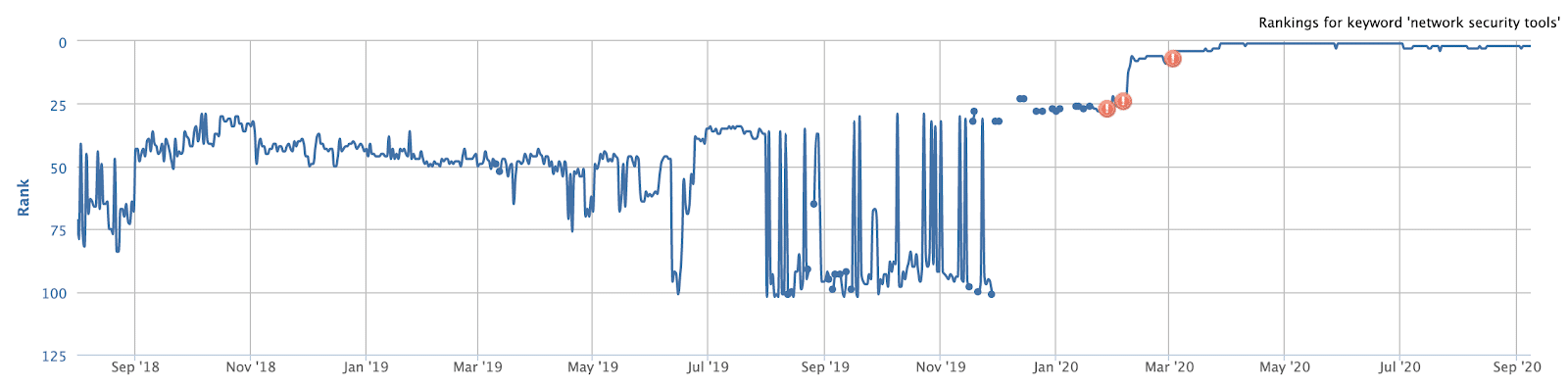
We strategically switched our focus to the keyword “network security tools,” which gets searched just 600 times each month.
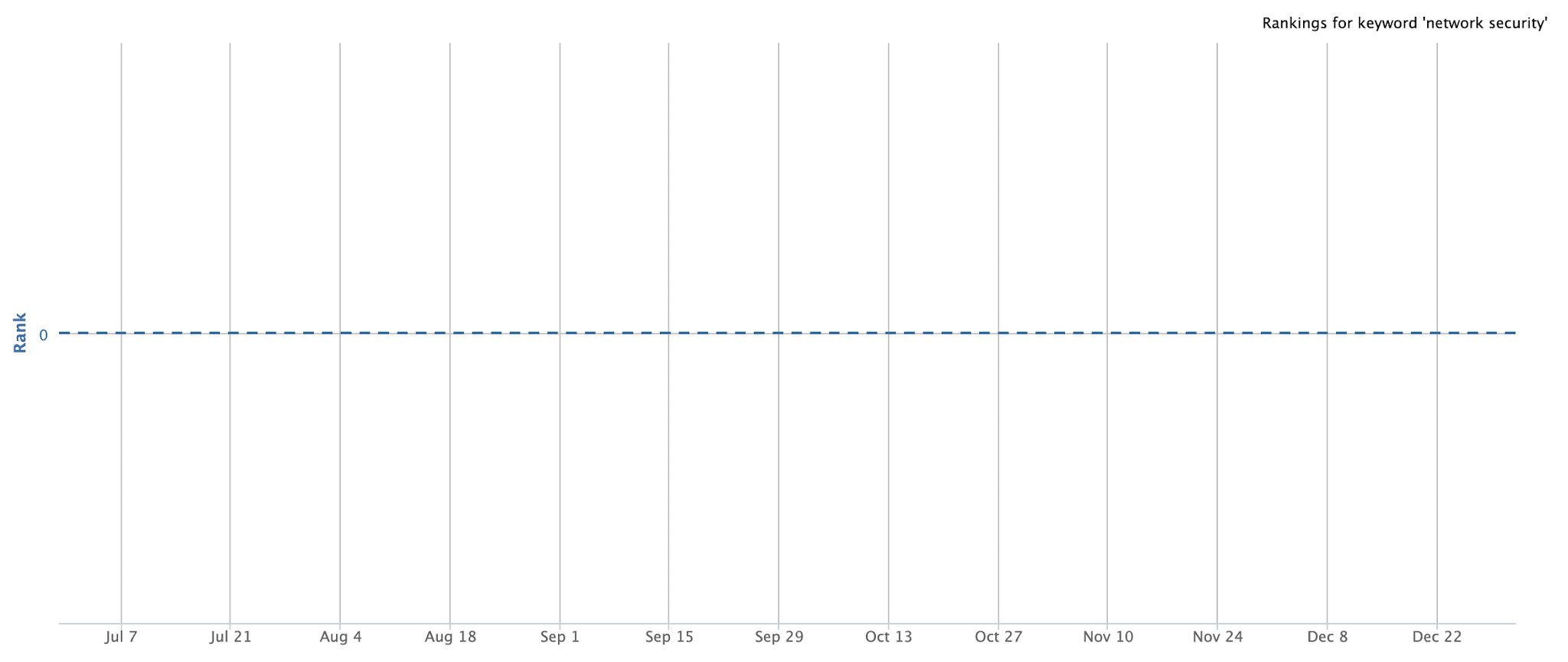
Our targeted optimizations quickly propelled Gigamon to the front page for "network security tools" within a month, and to the top position the following month. Concurrently, we secured 40 new domain links in a single month.
Our dual approach effectively boosted Gigamon's SERP standing. Remarkably, the very next month we secured the 5th spot for "network security", the ultimate goal.
This strategy led to a significant 94% increase in sessions for Gigamon. Today, this page continues to attract more organic traffic than any other on their site, playing a pivotal role in their impressive 50% year-over-year increase in organic traffic.
User-Generated Content (UGC) is any form of content—text, videos, images, reviews, etc.—created in support of a brand by individuals rather than brand themselves. This content is shared publicly, often on social media platforms or dedicated sections of a website. UGC is pivotal for brands, as it serves as a raw, authentic testament of customer experiences and perceptions. It's the digital equivalent of word-of-mouth, which has been a cornerstone of trust-building in marketing for ages.
The significance of UGC lies in its authenticity and ability to resonate with other consumers. When people see real users engaging with a product or service, it fosters a sense of trust and reliability. This authentic portrayal often influences purchasing decisions more effectively than traditional advertising, as consumers tend to trust fellow consumers over corporate messaging.
Moreover, UGC provides invaluable insights into customer preferences and behaviors, aiding brands in tailoring their offerings and communication strategies.
There are many benefits to deploying a UGC strategy for your brand—here are just a few:
Visual content, such as photos and videos, is among the most engaging forms of UGC. It's visually appealing and can convey a message more effectively than text alone. Brands can leverage user-generated photos and videos in numerous ways, such as showcasing real-life applications of their products, highlighting customer satisfaction, or simply adding a human touch to their marketing materials. This type of UGC is particularly impactful in B2C on visual platforms like Instagram, Pinterest, and YouTube.
Testimonials and reviews are powerful forms of UGC that offer firsthand accounts of customers’ experiences with a brand's products or services. They play a crucial role in the decision-making process of potential customers. Positive testimonials and reviews build trust and credibility, while negative ones, though seemingly undesirable, provide brands with honest feedback that can be used to improve products or services.
Testimonials and reviews are also beneficial for SEO, as they often contain relevant keywords and phrases used by consumers. This can help improve a brand’s search rankings and visibility online.
Social media posts and shares are another vital type of UGC. When customers share their experiences, opinions, or content related to a brand on social media, it amplifies the brand's reach and can attract new audiences. These posts can be in the form of status updates, tweets, stories, or even live videos.
This type of UGC is particularly effective because it's organic and appears in a consumer's natural social media environment, making it feel more genuine and less intrusive than traditional advertising. Moreover, when these posts are shared or liked by others, they gain an additional layer of endorsement.
The key to acquiring high-quality UGC is to actively engage and motivate your audience. It may sound simple, but asking for UGC is the best way to get it. Encourage them to share their experiences and thoughts about your brand. To increase the likelihood of success, it's crucial to create a community atmosphere where users feel valued and heard. Responding to UGC, highlighting exceptional contributions, and maintaining an active and responsive social media presence are effective ways to foster this community spirit.
Offering rewards or incentives is a highly effective method to encourage UGC. These rewards could range from discounts, featured spots on your website or social media, to entries in contests with attractive prizes. The key is to provide value that resonates with your audience.
This approach not only motivates your current customers to participate but also attracts potential customers who see the benefits of engaging with your brand.
Creating experiences and events that are inherently shareable can naturally prompt UGC. This could be anything from an exclusive product launch event to an online challenge or hashtag campaign. These experiences should be unique, engaging, and aligned with your brand identity to encourage maximum participation and sharing. Remember, the goal is to create moments that your audience wants to be a part of and, more importantly, share with their own networks.
Each of these strategies plays a crucial role in acquiring UGC. They not only encourage content creation but also deepen your engagement with your audience, creating a loyal community around your brand.
Determine what you aim to achieve with UGC—whether it's increasing brand awareness, driving sales, or improving customer engagement. Once your objectives are clear, plan how UGC will be integrated into your overall marketing strategy. This includes deciding on the platforms where UGC will be showcased, the type of content you wish to encourage, and how it aligns with your other marketing initiatives.
Different social media platforms and marketing channels have distinct audiences and formats, and UGC should be tailored accordingly. For instance, Instagram is visually driven, making it ideal for photo and video content, while LinkedIn might be more suited for professional testimonials and thought leadership. Consider the strengths and user behavior on each platform to maximize the impact of UGC.
It's crucial to obtain explicit permission from users before repurposing their content for marketing purposes. This not only shows respect for their intellectual property but also builds trust within your community. Always credit the original creator, which not only adheres to ethical standards but also encourages others to contribute, knowing they’ll be acknowledged.
While positive UGC is invaluable for promoting your brand, negative UGC should not be ignored. Use it as a learning tool to understand customer pain points and improve your offerings. Address negative feedback promptly and constructively to demonstrate your brand's commitment to customer satisfaction.
Implementing these best practices ensures that your use of UGC is respectful, effective, and aligns with your marketing goals, ultimately leading to a more engaged and loyal customer base.
Coca-Cola's "Share a Coke" campaign is a stellar example of UGC done right. The campaign featured bottles with popular names and encouraged people to share a Coke with someone they knew with that name. This simple yet personalized approach led to a surge in customer engagement, with people sharing pictures and stories on social media of themselves and their friends enjoying a Coke. The campaign successfully created a sense of community and personal connection, driving both online engagement and sales.
Burberry’s “Art of the Trench” campaign revolutionized the use of UGC in luxury fashion marketing. The campaign invited customers to upload photos of themselves wearing Burberry trench coats. These images were then showcased on a dedicated website and social media. This approach not only celebrated the brand’s heritage but also allowed customers to become part of Burberry's story, creating an emotional bond with the brand.
Lululemon’s #thesweatlife campaign encouraged customers to share their fitness journeys and how Lululemon products were a part of that journey. By focusing on real-life experiences and stories, the campaign resonated deeply with the brand’s target audience, creating a community of fitness and wellness enthusiasts bonded by their love for the brand.
T-Mobile’s unique campaign invited users to share their “break-up letters” with their previous mobile carriers. This humorous and relatable approach allowed customers to vent their frustrations in a creative way, while also promoting T-Mobile’s services as a better alternative. The campaign was highly successful in driving engagement and highlighting customer satisfaction with T-Mobile's services.
Each of these campaigns demonstrates the power of UGC in creating authentic, engaging, and customer-centric marketing strategies.
Building a strong community of users is essential for generating consistent and quality UGC. Encourage the formation of user groups, online forums, or social media communities where customers can share experiences and engage with each other. These communities can become hotbeds for UGC, providing a platform for your most loyal customers to become brand advocates. Engaging with these communities, highlighting their content, and showing appreciation can further motivate users to generate UGC.
Social media campaigns are perfect for encouraging UGC. Create campaigns that are easy for users to participate in and share. These could include challenges, hashtags, or contests that prompt users to create content related to your brand. Make sure these campaigns are fun, engaging, and aligned with your brand's values. Showcasing the best submissions on your social media channels can also encourage more users to participate.
Contests and challenges are highly effective in encouraging UGC. They can create excitement and a sense of competition, prompting more users to participate. Ensure that the rules are simple and the rewards are attractive. Contests can range from photo or video challenges to writing testimonials or creating art. The key is to make it relevant to your brand and accessible to your target audience.
Incorporating UGC into your product design or packaging can be a powerful strategy. This could mean featuring customer photos or quotes on your packaging or creating products based on customer suggestions and feedback. This not only generates UGC but also makes customers feel like an integral part of the brand’s journey.
While UGC can be highly beneficial, it's essential to ensure that the content aligns with your brand's standards and values. Implement a moderation process to review UGC before it's featured on your platforms. This process should assess the quality, relevance, and appropriateness of the content. It's crucial to maintain a balance between encouraging creativity and expression while ensuring that the UGC upholds your brand's image and ethos.
When using UGC, it’s important to navigate legal and ethical considerations. Always obtain explicit permission from the original creators before using their content, especially for commercial purposes. Be transparent about how the content will be used. Additionally, respect privacy and intellectual property rights. This not only avoids legal complications but also builds trust and respect with your audience.
Developing and implementing best practices for UGC moderation is key to maintaining a positive and safe environment for your community. This includes establishing clear guidelines for what constitutes acceptable content, training your team on these guidelines, and using tools to help manage and moderate content efficiently. Regularly review and update your moderation practices to adapt to changing trends and community feedback.
Integrating UGC directly onto your website and product pages can significantly enhance the user experience. Featuring customer photos, videos, or reviews next to your products can provide a more authentic and relatable perspective, aiding potential customers in their decision-making process. This not only enriches the content on your site but also improves SEO by updating your site with fresh, relevant content.
Transform UGC into a shoppable experience by linking user-generated images or videos directly to products. This approach bridges the gap between inspiration and purchase, allowing customers to easily buy products featured in UGC. It’s a powerful way to leverage social proof while simplifying the customer journey from discovery to purchase.
Utilize UGC in live or virtual events and on digital signage to create a dynamic and engaging atmosphere. Showcasing real customer stories and experiences can add a personal touch to your events, making them more relatable and memorable. This also encourages attendees to create and share their own content during the event, further amplifying your reach.
Reposting UGC on your social media channels can significantly boost your content strategy. It shows appreciation for your customers and provides diverse and authentic content for your followers. Always credit the original creator and ensure the content aligns with your overall social media strategy and brand voice.
Incorporating UGC into email campaigns can make your communications more engaging and personalized. Featuring customer stories, reviews, or images in your emails can add a level of authenticity that resonates with recipients, potentially increasing open rates and engagement.
By strategically incorporating UGC across various channels, you can create a cohesive and engaging brand narrative that leverages the power of your community’s voice.
The power of User-Generated Content (UGC)lies in its authenticity and the genuine connection it fosters between brands and their audiences. By embracing UGC, brands not only enhance their marketing strategies with content that resonates deeply with consumers, but they also build a community rooted in trust and mutual respect.
UGC will undoubtedly continue to play a crucial role in shaping brand narratives and driving consumer engagement. It's not just about showcasing products or services anymore; it's about weaving the customer's voice into the very fabric of a brand's identity. UGC, therefore, is not just a tool in the marketer's arsenal—it's the cornerstone of a brand's relationship with its customers.
UGC refers to any content created and shared by consumers or end-users about a brand or product. It's important because it serves to increase authentic social proof, enhance brand credibility and trust, and can significantly influence consumer behavior and decision-making.
UGC can improve SEO by generating fresh, relevant content for your website. This includes customer reviews, comments, and social media posts, which can increase your site's visibility in search results and drive organic traffic.
The most effective types of UGC include customer reviews and testimonials, social media posts, user-generated photos and videos, and blog posts. The effectiveness can vary based on your industry and target audience.
You can encourage UGC by creating engaging campaigns, offering incentives, hosting contests, and actively interacting with your audience on social media. Providing excellent products and customer service also naturally prompts users to share their positive experiences.
Best practices include setting clear guidelines for acceptable content, regularly monitoring submissions, respecting users’ privacy and copyright, and obtaining permission before using UGC for commercial purposes.
Measure UGC impact by tracking metrics such as impressions, engagement rates, conversion rates, website traffic from UGC sources, and the sentiment of the UGC. Also, monitor changes in brand perception and customer loyalty.
While UGC can complement traditional marketing, it shouldn't completely replace it. A balanced approach that includes both UGC and professionally created content is often the most effective strategy.
Verify the authenticity of UGC by checking the source, engaging with the user, and using tools to detect fraudulent or manipulated content. Authenticity is key to maintaining trust in your brand.
Be aware of copyright and intellectual property laws, and always get explicit consent from content creators before using their UGC. Also, be mindful of privacy concerns and data protection regulations.
Integrate UGC by featuring it on your website, social media channels, email campaigns, and advertising. Align UGC with your brand goals, and use it to complement other marketing efforts for a cohesive strategy.
The customer should be at the center of every marketer's strategy, but most marketers rely exclusively on quantitative data from the many tools at their disposal. Customer interviews expert, Ryan Paul Gibson, breaks down we need customer interview programs, how to build them, and how to share learnings across our organizations.
For experienced marketers, the clock is ticking for the day you'll be asked to leave the comfort of familiarity behind and jump into the role of Team Leader. This step requires new skills and perspectives, and can be challenging. Paxton Gray, CEO at 97th Floor, walks through key points on how to beat your obstacles, develop trust, and ultimately create a world-class marketing team.
Feature Image photo by Markus Spiske on Unsplash.
B2B marketers know the importance of capturing their upper-funnel audience, but foggy attribution and the ease of spending for these non-search ads makes this endeavor feel risky.
To understand how cybersecurity companies are approaching this challenge, we analyzed the upper-funnel advertising strategies of 15 cyber companies.
In our analysis, we’ve identified 4 industry outliers whose distinct upper-funnel ad plays are worth study:

Founded in Romania in 2001, Bitdefender’s now global presence serves small and medium business, mid-market enterprises and consumers. Bitdender is proud of its over 440 patents for core technologies, “including machine-learning algorithms to detect malware and other threats and anomaly-based detection techniques vital to detect and prevent new and unknown threats.” Their guiding mission is to be the most trusted cybersecurity provider.
| Software Development | 1,001-5,000 Employees | $100M-$500M | Founded 2001 |
BitDefender is vastly outspending every other company in our sample, claiming 60% of both spend and impression share over a 12 month period.

They also outpace competitors in number of creatives, totaling 1,112 varieties in 12 months. The runner-up in this category ranks at only 554 unique creatives.

In late September 2022, Bitdefender announced a multi-year partnership with Scuderia Ferrari, the Formula One racing division of Ferrari. Bitdefender’s logo made an appearance on Ferrari cars, helmets, uniforms, and on the SF-23 single-seater days later on October 2nd at the F1 Singapore Airlines Singapore Grand Prix.
While the relationship may seem shallow at first, Co-founder and CEO of Bitdefneder Florin Talpes makes a clear connection between the two industries:
“When every second counts, only the most advanced cars win races on the track, and only the most advanced technology has the power to effectively prevent, defend and respond to cyberattacks."
By partnering with the powerhouse of racing, Bitdefender earns coverage and status as a powerhouse in cybersecurity.

FireEye - now Trellix - was founded in 2004 and quickly earned a reputation uncovering high-profile hacking groups. The company notably participated in taking down Ozdok, a botnet that at its strength accounted for 32% of spam worldwide; detected previously unknown vulnerabilities in Microsoft products; and traced nearly 50% of all 2022 state-sponsored hacking campaigns to China and Russia.
| Computer and Network Security | 1,001-5,000 Employees | $500M-$1B | Founded 2004 |
Trellix boasts the most diverse allocation of budget to different platforms and devices.
While most cyber companies heavily prioritize desktop display advertising, Trellix targets users via Facebook, Instagram, Twitter, YouTube, OTT, Desktop Video, Mobile Video, Desktop Display and Mobile Display.


Trellix also claims the largest OTT spend in our sample at 10% of their budget. We applaud this strategy, as our own strategic OTT spend for cyber clients has paid off big time.

One of Trellix’s top creatives is a video advertisement showing how shockingly calm a security operations team can be when relying on Trellix.
This footage also happens to resemble the internal marketing teams for those brands trusting 97th Floor with their ad spend… just a coincidence, then!

Cybereason is an endpoint protection platform. Their company page describes them as a “new kind of cyber security company -- one that delivers future-ready attack protection that ends cyber attacks on the endpoint, across the enterprise to everywhere the battle is being waged.”
| Computer and Network Security | 1,001-5,000 Employees | $20M-$50M | Founded 2012 |
Cybereason is the only company in our sample whose impression volume outpaces their spend. However, there is a simple explanation for this: 99% of Cybereason’s non-search ad spend is devoted to Desktop Display ads. Display ads always guarantee high impressions, but is this the best way for Cybereason to be spending their budget?
One possible interpretation of this strategy is that Cybereason is playing by the 95-5 rule. The rule supposes that at any given time, only 5% of buyers are in the market and looking to buy. Conversely, 95% of buyers are not looking to buy. However, buyers hold strong biases for companies they already know when preparing to make a purchase decision. Investing in the 95% of out-of-market “future buyers” with brand awareness advertising can yield large dividends down the road as the 95% eventually rotates into the buying stage.

Since its founding in 2012, an owl has been the center of Cybereason’s brand identity. When Cybereason began a rebranding process in 2020, conversations with stakeholders revealed that the owl would stay.
Chief Marketing Officer Meg O’Leary says, “The reality was that our customers and partners not only liked the owl as a part of our visual identity. They felt it reflected their own identity as cyber defenders. They too must be wise thinkers and shrewd hunters who adapt as they go, cutting through darkness and complexity to zero in on and neutralize their targets. The owl symbolized the best in all of us as defenders.”
Cybereason’s owl appears on all the creatives we pulled, featured on a black background to remind audiences that both owls and Cybereason see in darkness to detect and destroy threats. The ‘E’ in End found in the design seems to mimic an owl’s three talons slicing through enemies.
In 2020, the rebrand introduced the League of Defenders - a group of owls with distinct looks and abilities to encompass all of Cybereason’s abilities and services. You can meet the League here.
Cybereason stands out from competitors as a brand with strong visual identity, creating a mascot for the cybersecurity industry.
Founded in 1997 by Steven Thomas and his girlfriend Kristen Tally, Webroot’s first commercial product was a trace removal agent called Webroot Window Washer. Today, Webroot “secures businesses and individuals worldwide with threat intelligence and protection for endpoints and networks.”
| Computer and Network Security | 500-1,000 Employees | $100M-$500M | Founded 1997 |
In a drastic departure from the norm, Webroot spends a massive 88% of their budget on Meta. Perhaps they’ve got on that both B2B and B2C customers are real people who sometimes just love to scroll.

Campaign Highlight: Live a Better Digital Life with Webroot
Leaning heavily towards its consumer audience, Webroot's recent video ads focus on how Webroot protects everyday people from digital dangers like viruses and identity theft. The videos feel honest and relatable; one video features a mother whose daughter has just enabled a virus on their brand new computer. The scene is strewn with toys and other markings of a busy home. Each video is filmed in a set made mostly of Webroot's signature green, and a short jingle sums up the spot: "Live a better digital life with Webroot."
At 97th Floor, we're big believers that Extraordinary Marketing requires three things: deep audience understanding, bottom-line focus, and courageous disruption. Our analysis of these four bold cyber companies leaves us here:
Cybersecurity is a deeply competitive and complex industry for marketers. In this short webinar, we discuss some of the essential ways marketing leaders should approach their growth.
