



Google promises better results with just one click—“Apply All Recommendations.” But what if those recommendations aren’t actually in your best interest? At 97th Floor, we’ve seen firsthand how blindly following Google's automated suggestions can drain budgets and derail strategy. So we put it to the test. In a head-to-head experiment, we pitted Google’s recommended setup against our tailored, expert-built campaigns. The results were eye-opening—and could change the way you manage your ad spend.
We tested campaigns with three of our clients to compare the effectiveness of Google’s automated recommendations with the hands-on approach taken by our experienced advertising team at 97th Floor. Each campaign was structured to align with specific goals, but the key difference was in how they were managed:
| 97th Floor | ||
|---|---|---|
| Objective | Select one | Select one |
| Conversion actions | Auto-select | Manually select |
| Campaign type | Search | Search |
| How you reach goals | Visit website | Visit website |
| Bidding | Start with conversions | Start with clicks |
| Max CPC limit | Don’t start with one | Start with one depending on client; not too restrictive (e.g., under $10) |
| Networks | Allow Search partners and Google Display Network | Turn Google Display Network off; test Search partners if... |
| Location | Set a location as presence or interest | Set a location as presence only |
| Audience Segments | Observational targeting | Observational targeting |
| Broad match | On | Off |
| Automatically created assets | On | Off |
| Ad rotation | Optimize for best performance | Optimize for best performance |
| Ad schedule | None | Add if needed |
| Campaign creation | Go through Google's process | Go through 97th Floor's process |
| Ad copy | Use Google's suggestions | Written by expert content marketer |
| Budget | Equal budget | Equal budget |
| Optimizations | Turn on auto apply recommendations for this campaign | Optimize manually |
Here are the settings we kept the same between the control and test group. These are Google’s recommendations that we agree with.
| 97th Floor | ||
|---|---|---|
| Objective | Select one | Select one |
| Campaign type | Search | Search |
| How you reach goals | Visit website | Visit website |
| Audience Segments | Observational targeting | Observational targeting |
| Ad rotation | Optimize for best performance | Optimize for best performance |
| Budget | Equal budget | Equal budget |
When you feed a smart bidding system bad signals, you get bad results. We focus on signal quality to guide the algorithm toward actual business growth — not just form fills or button clicks that look good on paper.
| 97th Floor | ||
|---|---|---|
| Conversion actions | Auto-select | Manually select |
Smart bidding needs data to perform well. Jumping straight to "Maximize Conversions" without historical data is like trying to sprint before you've learned to walk. Our approach allows us to build a strong foundation — minimizing waste while setting the campaigns up for smarter automation later.
AI tools speed up the work — whether they're improving it is a different question. Whitney Goldstein draws the line, and this short video breaks down how to tell which one your workflow is actually delivering.
Without a CPC cap, Google can overspend on low-quality traffic. We applied reasonable limits to protect budget efficiency.
| 97th Floor | ||
|---|---|---|
| Bidding | Start with conversions | Start with clicks |
| Max CPC limit | Don’t start with one | Start with one depending on client; not too restrictive (e.g., under $10) |
The Display Network may offer more impressions, but not always better ones. Especially early on, we want every click to count — and that means keeping the focus tight on search intent, not expanding blindly into display.
Advertising to someone thinking about your market is not the same as advertising to someone in your market. Having your location set as presence or interest allows Google to waste your dollars on the wrong users.
Google's default runs ads 24/7. We customized schedules to align with peak engagement and business hours when necessary.
| 97th Floor | ||
|---|---|---|
| Networks | Allow Search partners and Google Display Network | Turn Google Display Network off; test Search partners if... |
| Location | Set a location as presence or interest | Set a location as presence only |
| Ad schedule | None | Add if needed |
Broad match can open the floodgates — sometimes usefully, sometimes recklessly. We prefer a controlled expansion. Typically, we prioritize stricter match types, like phrase or exact. We use broad match strategically, mostly on longer tailed terms since the intent is more spelled out. It’s important to test broader match types strategically—you don’t want to waste ad spend but you do want to take into account that 15% of searches every day are new. People could be in the market for your product or solution but type it in differently than your keywords. Broad match keywords are a good way to mine for new keyword ideas.
| 97th Floor | ||
|---|---|---|
| Broad match | On | Off |
Auto-generated ads often sound robotic and generic, or can state things that are outright wrong. We believe brand voice is too important to automate away — especially when you have just seconds to grab a user’s attention and build trust.
| 97th Floor | ||
|---|---|---|
| Automatically created assets | On | Off |
In every case, the campaigns managed by 97th Floor outperformed those set up using Google’s automated recommendations. Here's a breakdown of the results:
The data speaks for itself—relying solely on Google’s recommendations can leave performance on the table. While Google’s automation offers convenience, it lacks the precision and strategic insight required to maximize advertising budgets effectively. 97th Floor’s campaigns delivered better results, proving that expertise and human intervention are essential for optimal ad performance.
If you're relying entirely on Google’s automation, you could be spending more without seeing the results you deserve. At 97th Floor, we offer expert campaign management that outperforms Google’s one-size-fits-all approach. Contact us today to see how a professionally managed campaign can transform your advertising results.
See how an audience-first approach translates to bottom-line results.
"When I’m showing off our program to Sr. Leadership and the C-team, those are the metrics I turn to…I'm really thrilled with the results we're seeing and hope you guys know you’re killing it!" – Head of Organic Marketing, Point of Contact at B2B SaaS
Our client is a B2B SaaS customer management software used by small- and medium-sized healthcare businesses.
Our client needed an SEO strategy to break into four target verticals.
We conducted vertical-focused keyword research and created topic clusters for each of the client’s four focus areas. Based on our research, we began delivering 20 content briefs to the client each month.
Traffic and inquiries have increased in each of our four targeted verticals, with a 39% increase in organic traffic YoY; 28% increase in ranking keywords; and 77% increase in organic traffic YoY.
Andy Frisella is an entrepreneur, bestselling author, consultant and speaker. He is the CEO of 1st Phorm, a supplement company valued over $175 million, and has founded five other businesses that generate over $200 million in annual revenue.
Frisella created the 75 Hard Mental Toughness Challenge - “an ironman for your brain” designed to help people transform mentally over the course of 75 days.
After 75 Hard went viral, sites like Forbes, Today, and Healthline wrote about the program, and these sites began out-ranking Andy for valuable, high-volume secondary keywords. 75 Hard was a major traffic source for Andy’s site; losing the SERP for 75 Hard keywords hurt Andy’s brand and threatened revenue.
After bringing the issue to Frisella’s team, we began an integrated SEO and content strategy to make Andy’s site the authority on his program. The main page for 75 Hard on Andy’s site isn’t structured like a standard page, so intentional optimization and consideration of how to address the SERP and user needs was vital to our success. We used a hub & spoke approach and internal linking to connect low-ranking KW content back to the main page, and we created new content.
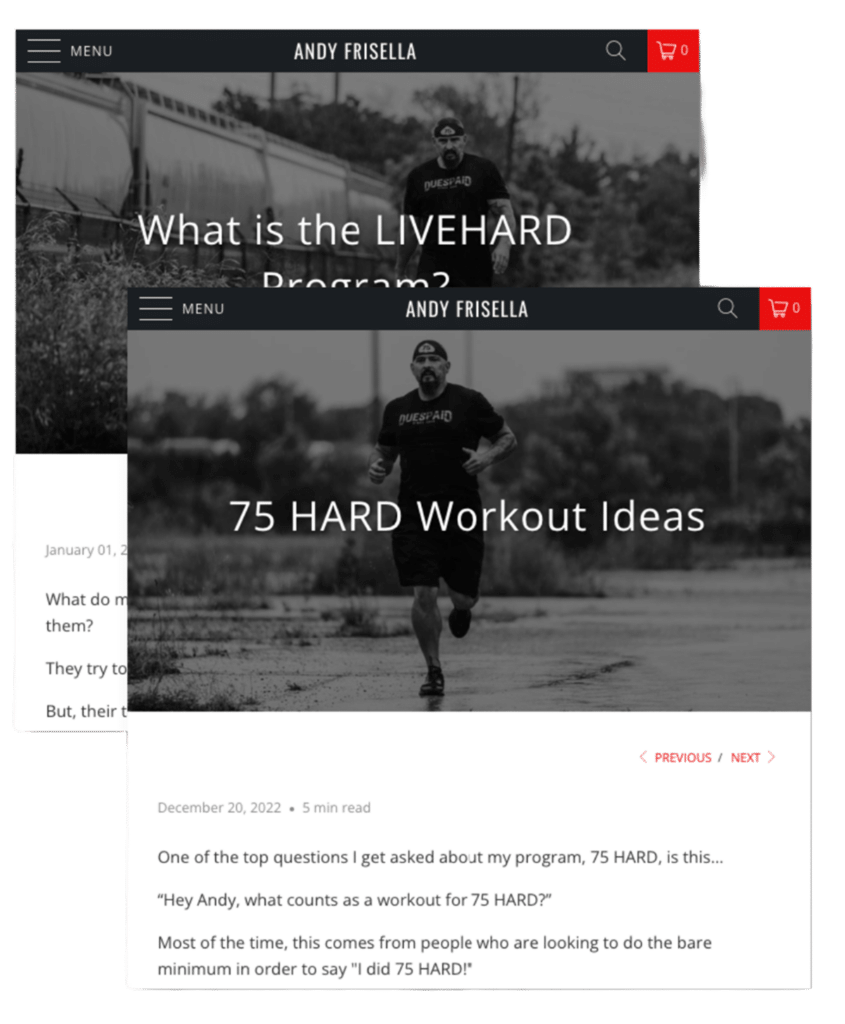
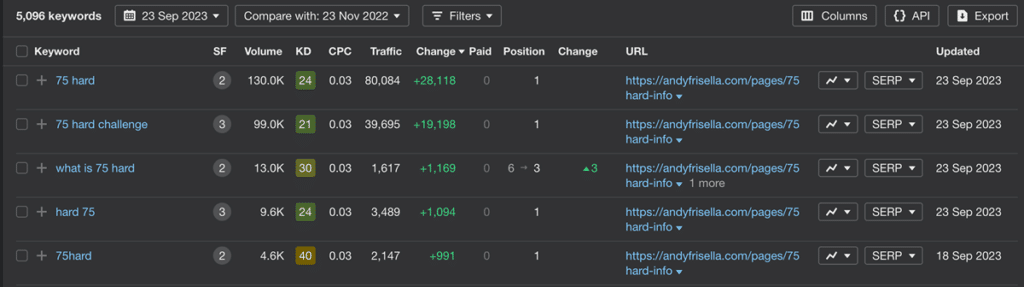
In just one month, our new content brought in 12,000+ sessions to Andy’s site. The SEO and content strategy has increased YoY traffic to Andy’s site by 37%, and YoY revenue by 23%.
Andy’s site is now ranking in position one for over 200 75 Hard related keywords, including 75 hard (MSV: 185.0K) and 75 hard challenge (MSV: 114.0K).
We expect continued growth as additional content and optimizations go live, and as we use the traffic momentum to connect visitors to Andy’s podcast. Once people engage with Andy, they become lifelong followers and customers – they buy his books, listen to his podcasts, and come to his events. Organic traffic and awareness are key for helping future customers have their first touchpoint with Andy. Our work had a direct, tangible impact on that traffic and awareness, which will only continue to grow in the future.
1st Phorm is a leading supplement company committed to producing quality products for fitness performance.
1st Phorm partnered with 97th Floor to increase profitable traffic to their site, and 6 years later the relationship is as strong as ever.
Through strategic optimizations, 97th Floor increased traffic to high impact /collections and category pages that drive real organic revenue.
Executing on intentional strategies focused on profit has paid out massively.
73% Increase in organic revenue
/collections/protein-bars saw a 98% increase in organic sessions (1.9K vs 3.8K)
/collections/mens-fat-burners saw a 6% increase in organic sessions (1.5K vs 1.6K)
1st Phorm’s organic traffic is actually at a 12% decline, while revenue is increasing at 73%, showing that the team is putting their efforts where it matters.
97th Floor is effectively addressing this with a strong blog strategy that is pulling in organic traffic to the blog at a 47% increase YoY.
Sword Health is a digital physical therapy platform that provides patients with access to physical therapy exercises and care from a remote physical therapist. The platform uses a combination of video, audio, and text to provide patients with personalized physical therapy exercises.
Sword Health was investing significant budget into its advertising programs with high click-through rates, but poor acquisition conversion rates. As we audited the existing buyer’s journey, it became clear that landing pages lacked critical information that would bring users the confidence they needed to take the next step.
Sword Health needed to significantly reduce the amount of wasted adspend on low-converting campaigns.
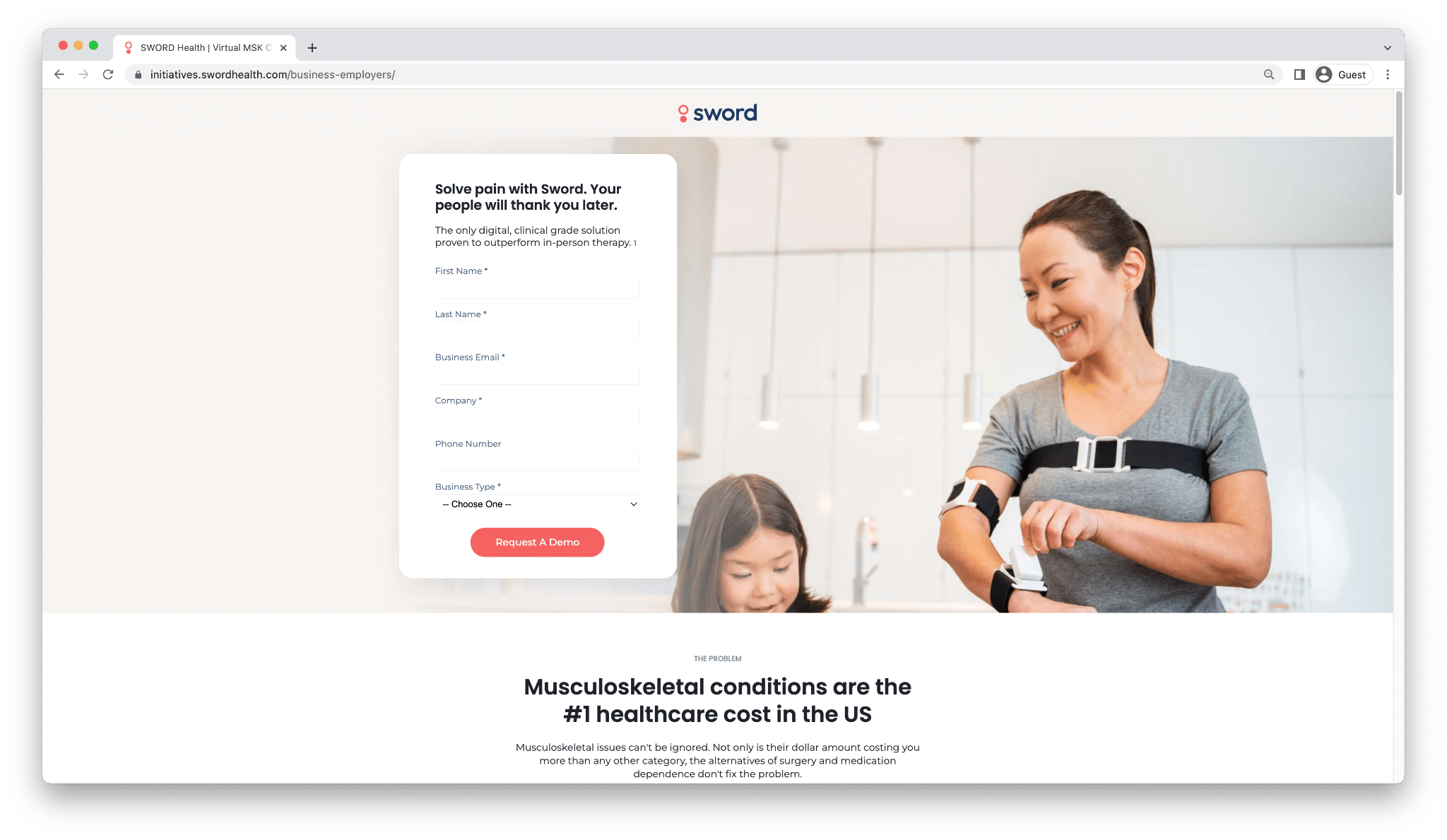
97th Floor began by performing the critical first step of enhancing Sword’s knowledge of its personas and buyer journeys, performing research into the process that patients with musculoskeletal pain dealt with as they sought solutions.
This informed a complete rebuild of Sword Health’s landing pages to explore the user challenge, demonstrate how Sword Health benefits address the challenge, and show proven results after implementation—all coinciding with a company rebrand.
After implementing the new strategy, Sword Health experienced remarkable improvements in their campaign performance. There was a significant 256% increase in leads, reflecting a jump from the previous period's figures. This was primarily due to a substantial 195% rise in the conversion rate, which soared to 1.8%.
These results were not just numbers; they represented a tangible shift in Sword Health’s approach to engaging and converting their target audience.
Vida Health is an online and virtual care platform that offers personalized health coaching and therapy programs tailored to each individual patient's’ needs and health goals, all through an easy-to-use mobile app and website.
Vida has two target audiences: a B2B target focusing on HR decision-makers who purchase Vida for their employees, and a B2B2C target focusing on driving up demand and engagement from the employees using Vida’s health programs. With these diverse targets and aggressive growth goals, Vida’s marketing team needed a marketing agency to partner with them in both advertising strategy and execution.
Vida knew how to reach their audiences but needed to discover the ideal combinations of messaging, content offerings, content types, and imagery that would resonate and drive growth—all tackling sensitive and regulated topics like obesity, mental health, and chronic disease.
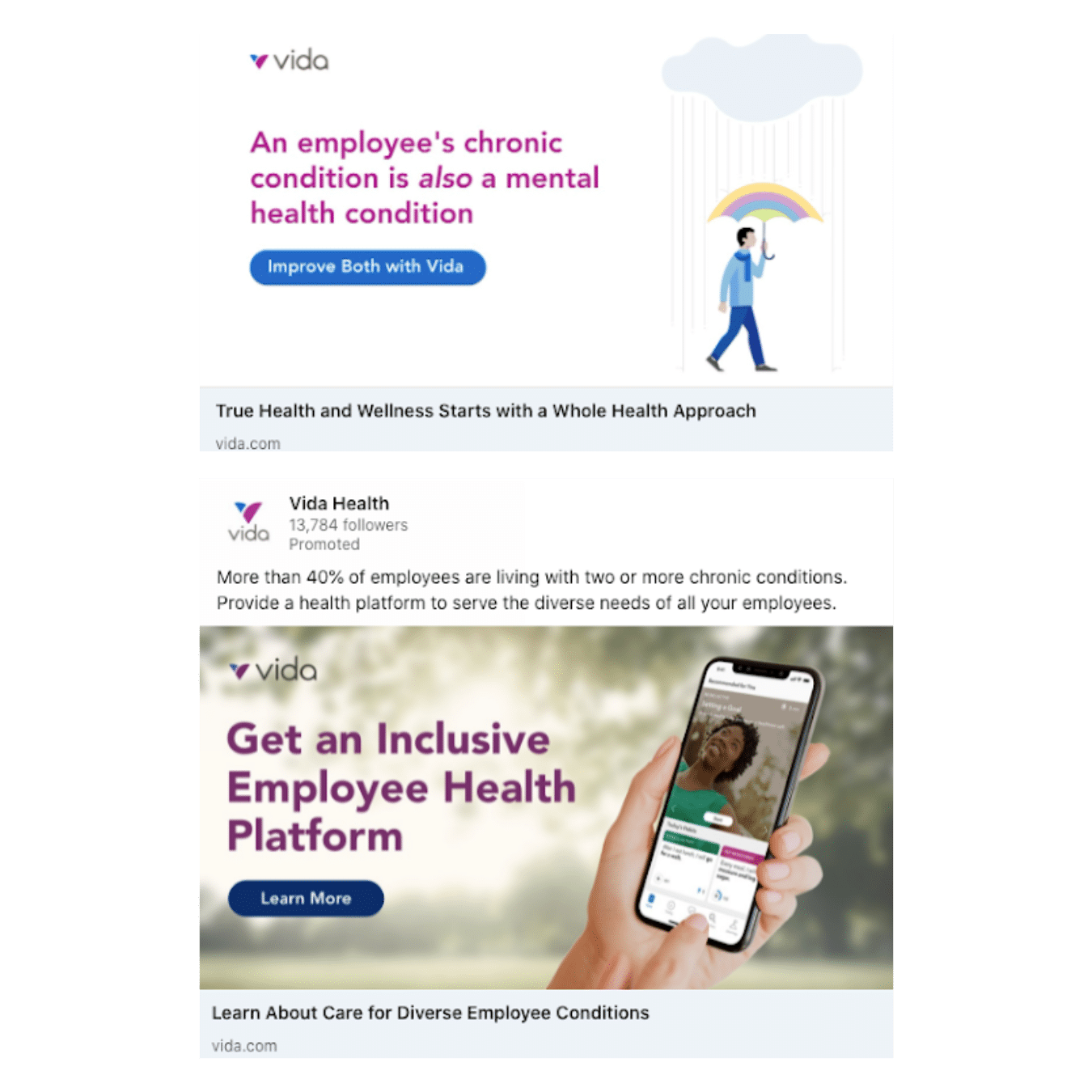
The first step was to explore Vida’s audience research and add to it with 97th Floor’s persona and buyer journey discovery process.
Next, we launched into a rigid experimentation phase, A/B testing every possible combination of message, image, and CTA—letting hard results drive each next step.
Finally, we created a series of infographics, illustrations, and content offerings to support our advertising campaigns.
Over the course of a 6-month period—thanks to our rigorous experimentation process—97th Floor’s ad campaigns helped Vida generate significant increases in leads (up 255 leads from previous period), while lowering the average cost-per lead by 22.56%, thanks to 25.79% increase in conversion rates.
Tuft & Needle is an American mattress and bedding brand. At its launch in 2010 T&N was among the first online, bed-in-a-box companies to disrupt the brick-and-mortar industry.
T&N approached 97th Floor to increase organic reviews and organic market share for the online sleep space. In addition to their 3 main mattresses, they also sell bedding products (blankets, pillows, duvets, etc.) and other sleep-related products (furniture, noise-canceling machines).
They wanted their blog to generate more revenue from the high traffic numbers they were seeing. The sleep space is full of very competitive KWs which made this all the more challenging.
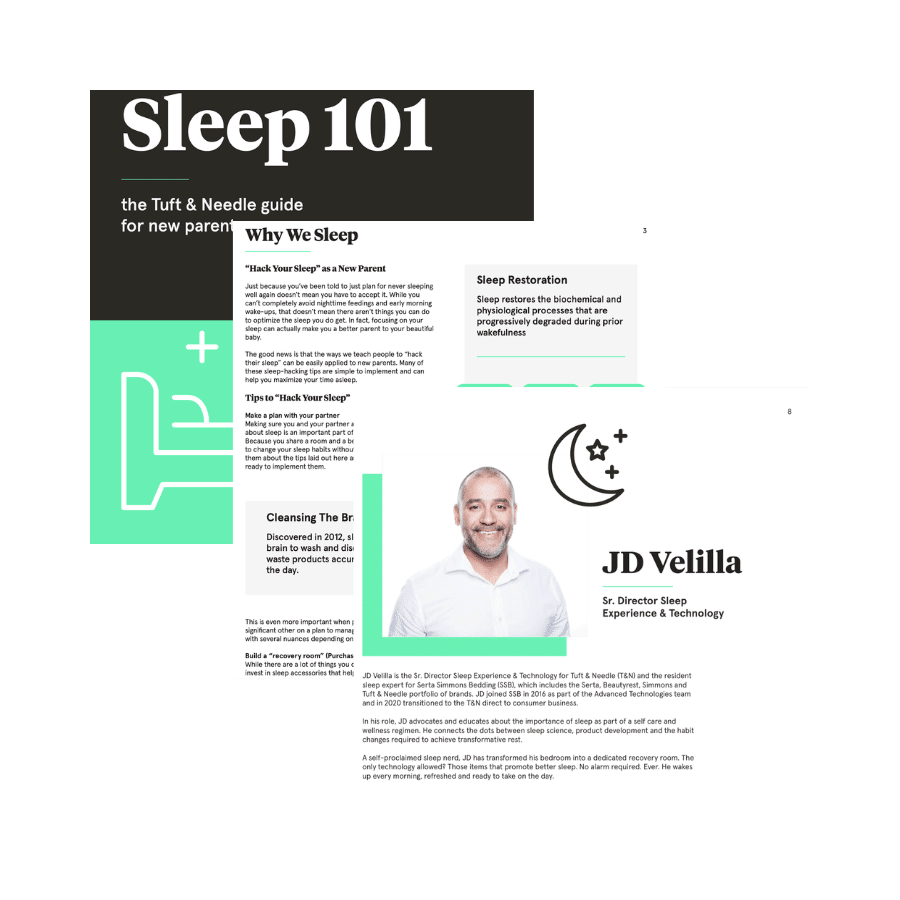
To address the prevalent issue of sleep deprivation on their blog, especially among parents, we partnered with T&N to refocus the sleep conversation. Understanding that mothers and fathers lose significant sleep in the years following childbirth, with only 10% getting the recommended rest, we saw an opportunity for impactful change.
Our response was the Sleep Ambassador Program, selecting 8 from 331 applicants to receive sleep enhancement products, expert consultations, and personalized sleep courses. Complementing this, we produced over 60 resources including blogs and infographics, all aimed at helping parents achieve better sleep.
Tuft & Needle saw a 57% increase in revenue compared to the same period the previous year. In addition, there was a 35% rise in total transactions. The campaign's reach was further amplified through social media, garnering over 529 million impressions in just 3 and a half weeks.
This extensive online presence was complemented by 93 unique earned media impressions across prominent platforms like Newsweek, MSN, Yahoo Finance, Tom’s Guide, Trend Hunter, and various CBS and ABC affiliates, showcasing the campaign's widespread recognition and impact.
Gympass is an all-in-one employee benefit that provides flexible access to a huge selection of gyms, studios, classes, training and wellness apps.
Gympass approached us for a strategic partnership to enhance their current strategy and contribute insights for future endeavors. Their objective was to establish themselves as a leading information resource for HR specialists. This required the development of substantial content aimed at ranking for high-difficulty keywords and accruing backlinks.
Our initial analysis revealed that Gympass' website had a strong domain rating but lacked a sufficient number of backlinks. We recognized the potential for a robust SEO strategy by focusing on acquiring quality backlinks, implementing optimizations and technical improvements, and producing outstanding content.
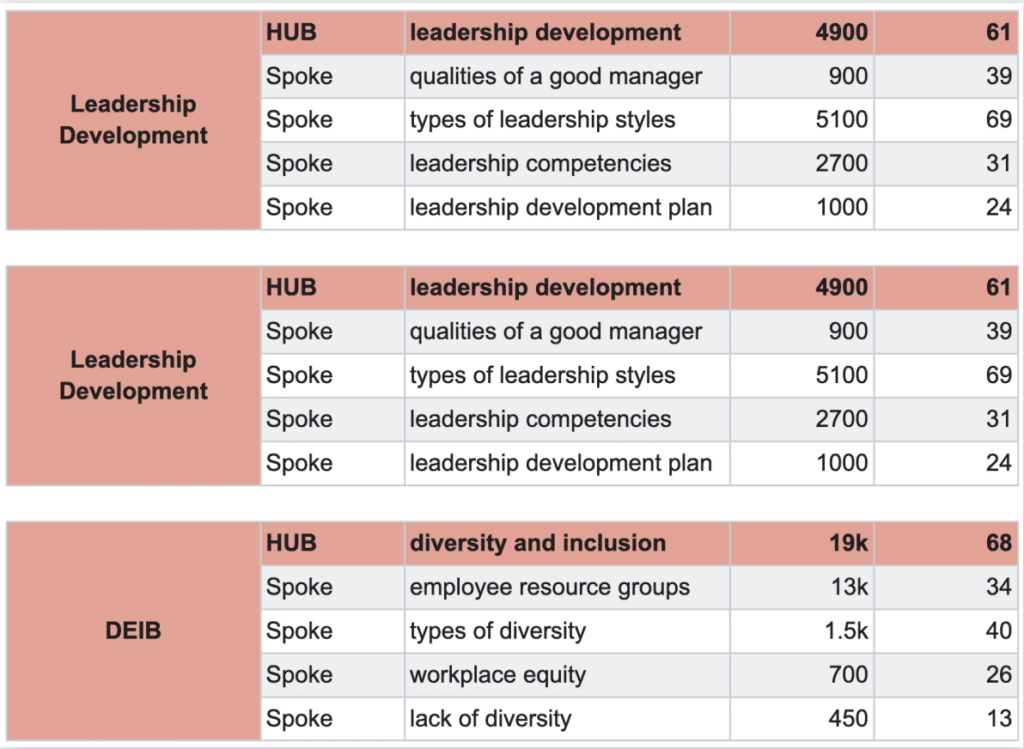
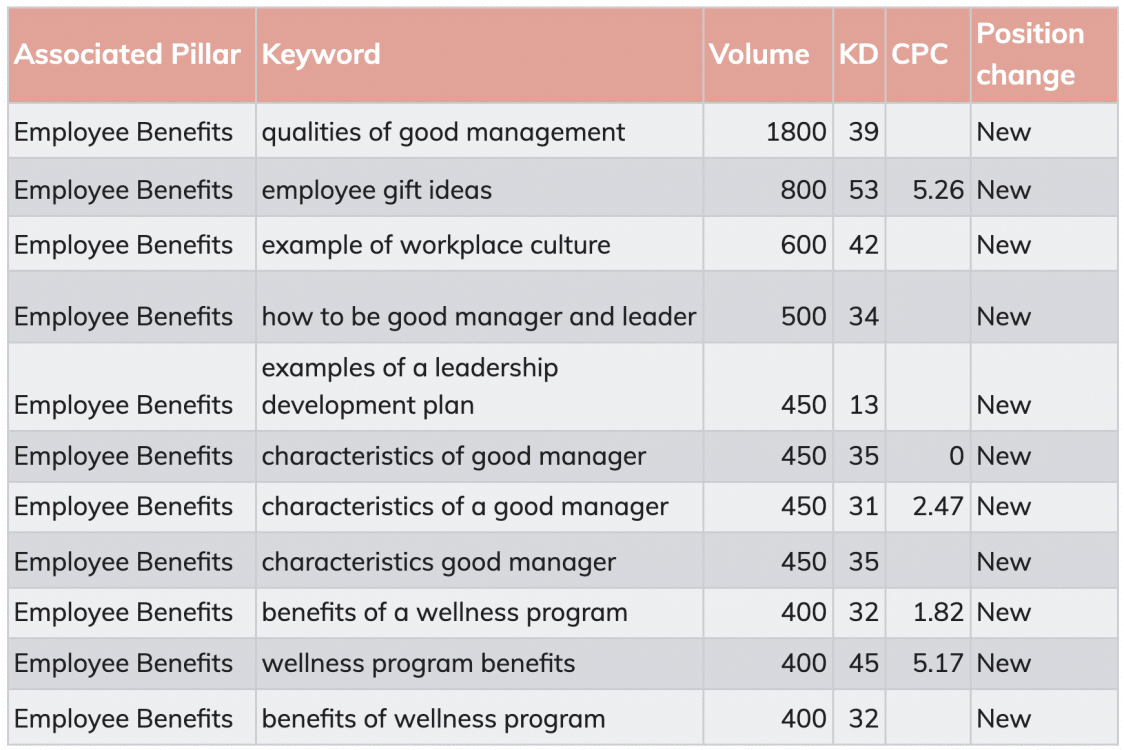
We opted for a hub and spoke model for content creation, focusing on internal linking to boost page authority. We built out a 3-month plan to produce 28 content pieces monthly, including 2 hubs and 26 spokes, ensuring a minimum of 3-5 spokes per hub. Our content selection was driven by high-volume keywords to maximize audience reach.
Internal linking works to boost authority to target pages by having pages with similar topics point to one page as an authority. A hub and spoke strategy would allow us to create content strategically in groups to maximize internal linking potential and boost key pages faster.
Each piece of content would be written with various organic tactics in mind to be competitive on the SERP, provide helpful content for the user, and maximize the page’s ranking potential.
Working in close collaboration with Gympass to align with their objectives and refine our strategy, we've achieved notable success in producing high-quality content. This content ranks prominently in the SERPs for strategically selected competitive keywords. Our accomplishments include the publication of 61 pieces of live content, the attainment of 193 keyword rankings, and the acquisition of 70 organic backlinks.
Zhou Nutrition is a supplements company committed to combining nature’s nutrients with science-backed formulas, offering a line of clean supplements to support an active lifestyle.
Zhou Nutrition’s products were about to perform a geographic test-launch in Target. In order to show their worth to the retailer, Zhou Nutrition wanted to boost sales not only through e-commerce, but also in-store Target, a digital campaign that can be challenging to track.
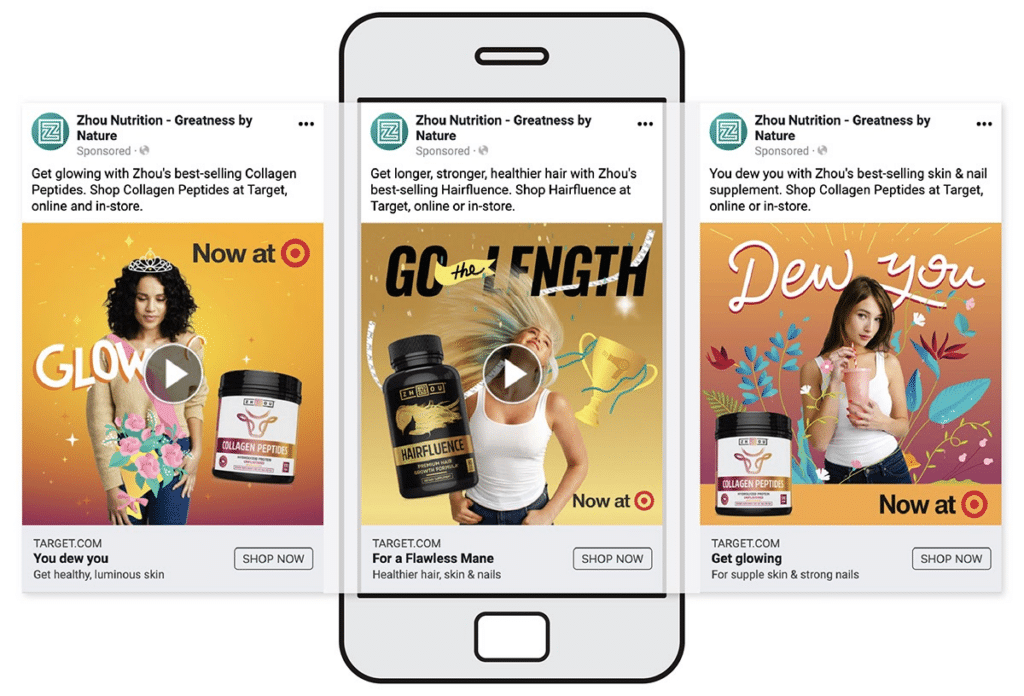
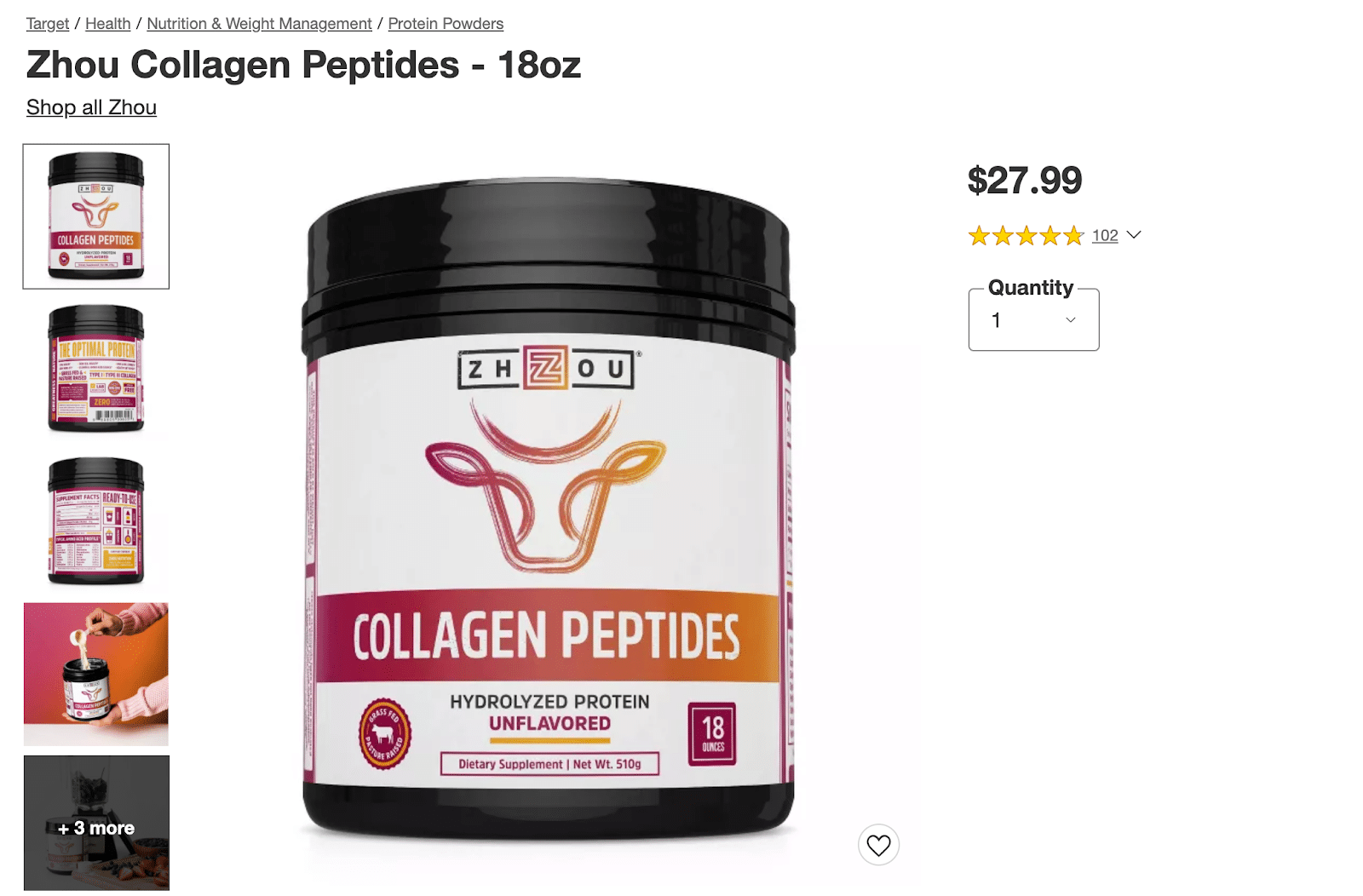
97th Floor targeted 430+ stores and created 160+ ad sets. As part of these ad sets, we targeted those individuals that lived or were recently in an area around the stores that Zhou’s products were in. $30,000 in ad spend was budgeted for these 433 locations meaning that each location only got $4.62 in daily ad spend.
In addition to this geotargeting, we retargeted women who were on customer purchase lists we got from Zhou and we also created a lookalike audience from those lists.
As the campaigns were running, we further optimized them by identifying underperforming stores & locations, shutting off low performers, and re-allocating budget from low performers to top performing segments.
These launched campaigns and optimizations resulted in week-over-week improvements in click-through rates and costs-per-click. Partnering with Zhou Nutrition’s partner at Target, we were also able to track improvements in foot traffic and in-store sales at Target.
Zhou Nutrition’s geo-targeted Target campaigns yielded profitable sales for Zhou Nutrition, while also leading to increases in non-Zhou Nutrition products, thus strengthening the relationship with Target.
EOS is a beauty and skincare company that uses playful design, sustainable ingredients, and delicious flavors to deliver products that feel like a treat for their consumers.
EOS is a highly creative brand with fun content, but when they came to 97th Floor they weren’t leveraging their audience to maximize website conversions. EOS needed real customer personas, a well-defined buyer journey, and an massive increase in awareness.
Using a series of tools and customer data analytics, 97th Floor built five EOS consumer personas. Each persona included personality traits, concerns, risks, influences, an analysis of the buyer’s current status with EOS, and solutions for improvement.
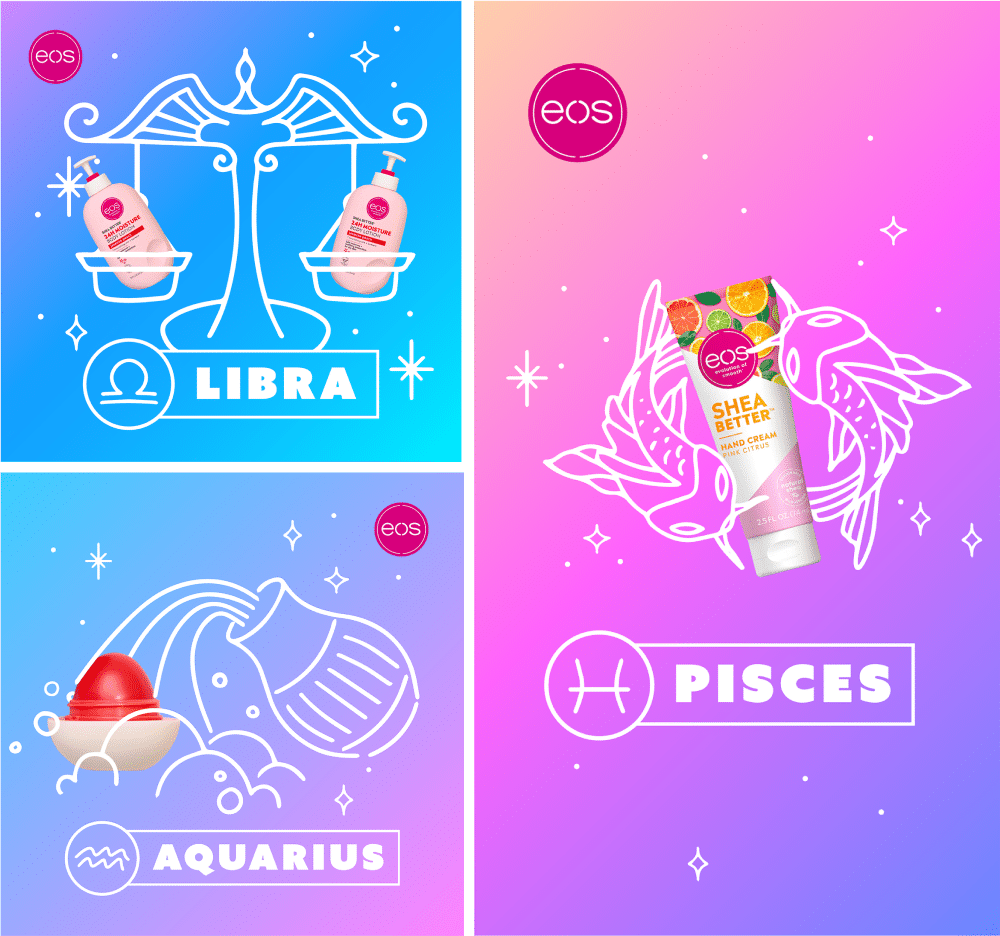
This in-depth analysis led to a full-funnel strategy, including launching on new platforms. Our research also inspired us to craft persona-focused messaging. For example, our discovery that certain personas were interested in astrology led to an entire zodiac signs campaign and targeting based on birth month.
This small but powerful insight paired with gorgeous, intentional design made for incredible performance.
When first launched, we only spent 4.1% of our Facebook budget on Zodiac ads. Despite that, 42.5% of EOS' total purchases came through Facebook during that time. These ads drove action with the highest volume of purchases and the highest historic ROAS. They encouraged engagement with 22.9% of our Facebook comments and 10.1% of our Facebook shares. Due to high performance, we allocated more budget for these ads.
Keyword research is a necessary step that you do to understand your market, and plan your SEO strategy. But what if you could use it to learn about user intent, restructure a whole site, and increase conversions as well as traffic? That’s exactly what we did with this client.
CBD American Shaman is a health company that sells CBD oils. While it’s a competitive market, their products have an edge on the competition because they’re water soluble. Despite this, they were struggling to capitalize on their great product with the kind of SEO traffic that it warrants.
Yet the potential was there: An audit revealed that the more specific SERPs previously targeted for the product had a pretty small search demand — but the right strategy could capture a large amount of traffic. Think “CBD oil” with 1 million searches versus “water soluble CBD oil” with only 1,300.
97th Floor was brought in with a clear business question to address: How do we capitalize on this great demand and become a breakout CBD shop?
Like much of SEO, the solution starts on the site-level. The CBD American Shaman site was hosted on a custom CMS (rather than WordPress, Shopify, or Hubspot, etc.), which always complicates technical SEO solutions. Their CMS was completely done by hand. The site organization was also done by hand, and more subject to human error.

They had a wide list of products, but their site wasn’t utilizing this wide variety to capture organic search. Their site’s architecture was flat, lacking the intuitive hierarchy that both Google and the user need to easily navigate and understand a site. In the beginning, there were only three categories on the CBD Shaman site: wellness, pets, and beauty. This organization made sense at the conception of the site, when the company offered few products. However, as their business scaled and expanded, that category structure no longer made sense, and in fact, felt difficult to navigate and drastically out of date.
It soon became clear that a total overhaul of the site’s organization was necessary. Any SEO tactics would yield mitigated returns unless the site was a complete, SEO-driven overhaul.
Just as a doctor treats a whole patient rather than a symptom, we chose to stop looking at each individual problem, and instead gather it all into one place and focus on the most essential and basic purpose of the site. In this process, keyword research and mapping were essential in understanding how to treat the site as a whole — curing all of its symptoms, rather than just hitting one at a time.
Keyword research is important, but like any data, it means nothing on its own. It’s what you do with the insights gleaned from research that matters. So — while sometimes all you need from your keyword research is a handful of new keywords to tackle — for CBD American Shaman, keyword research would go on to guide the entire reconstruction of their site.

We used our keyword mapping to guide the new site’s entire structure. By using keyword research as the foundation of the site, we captured more authority, and redistributed that authority back to the site’s most relevant and converting pages.
For example, the category page for /cbd-oils now houses all of the CBD oil products, allowing for more weight to target that high-volume keyword as well as an ease for the user in browsing the different oils available. In the previous version of the site, the following page was trying to rank for “CBD oil,” /vg-cloud-terpene-rich-cbd-oil-tincture. See the problem? Yes, it was a CBD oil product, but its strength was wasted in attempting to rank for “cbd oil” and it was poorly optimized for a user from coming form a Google SERP.
With the knowledge that these new category pages were much more likely to rank in Google SERPs, we followed our keyword research further. We used it to map and reorganize the entire site, categorically moving pages to align with relevant category pages rather than stand on their own. By connecting these further pages to those authoritative category pages, it allows us to pick up additional traffic from newly targeted keywords.
Evaluating the keyword landscape — which keywords ranked for which landing pages, and which keywords should be combined moving forward — was a BIG project. Pulling all of our ranking keywords, separating them by landing page, and creating new keyword groups took us a full month.
We had to determine what keywords should rank for a single landing page versus separate landing pages, which allowed us to find instances of keyword cannibalization. We also had to cross-reference each keyword within the designated SERP to identify whether a category page or an individual product page was needed to best fit the ranking criteria for that SERP. It was a lot of work, and a lot of detail, but it paid off.

Under the “shop” menu on the homepage, we added sixteen new categories, all based on newly selected high-potential keywords. It turned out that not only did search engine bots like this kind of layout, but users did too. Within weeks, CBD American Shaman saw a 13% increase in organic traffic, not only that, we saw an unexpected radical bump in conversion rates. Which makes sense when you consider how this also drastically improved navigation and the user experience.
CBD Shaman has an extensive product offering that is always being added to. With all of these choices, the shopping experience was previously overwhelming to users. Products were difficult to locate, and customers had no clear understanding of where to find certain products, or even what products were offered. Instead, the site was set up in such a way that they'd have to endlessly scroll through lists of product after product, without the ability to filter based on product type or use. It was hurting their sales, and alienating their customer base. So we knew it had to change.
They are constantly evolving their product catalog. With their previous strategy, a single product page may have built up a lot of authority over time, only to be taken down, and that authority would then be redirected to an unoptimized page or lost completely. With our new category-centric strategy, the business’s evolution is supported. No matter which products are added or taken away, the authority will remain in the category pages. These pages stay consistent in a constantly changing website, allowing users to always find their way.
The result is an SEO framework that not only worked on the onset, but it’s proven effective even a year later. This keyword mapping system has paved the way to double organic traffic for CBD American Shaman.
Many ecommerce businesses begin with a D2C model, selling quality products on their own site while dreaming of the days they’ll hit it big by getting serious traction in a major brick and mortar.
It’s a big step and an exciting achievement, but it also carries risk. As you push your product through bigger stores, you give up control over your brand and your ability to connect directly with your customers. It’s often a matter of trading control for (hopefully) greater volume.
This was Zhou — a nutrition brand thrilled to fulfill their longtime goal of seeing their product in 433 Target stores across the US, but worried about the new lack of control. They wanted to retain a hand in their own success, and see that their entrance to Target was a success in terms of actual foot traffic and revenue.

Zhou presented 97th Floor with a fixed budget for advertising in 433 specific locales. The task was one Zhou had never attempted before — drive foot traffic and sales with Facebook Ads to physical Target locations through geo-targeting, in addition to Target’s online landing page. Driving and tracking success via Facebook Ads to your own landing page is easy to track and control, but driving foot traffic to a secondary store is another story.
Ultimately, the strategy and results were so positive that after two weeks, Zhou found extra budget to push towards these ads.
It’s quite a triumph when longtime D2Cs enter big-time stores like Target. But success isn’t guaranteed. The D2C still has to do the work of getting their brand recognized in stores, and pushing foot traffic into those stores to actually buy the product.
In order to start off with a bang and keep the momentum going long term, Zhou allocated some budget to getting products moving in the locales they were entering. Pushing that traffic, especially in those first few weeks, would prove critical in making their transition into Target stores a success.

Zhou came to us with a moderate budget, but when split over 433 different markets even a sizable budget goes pretty fast. We began with a total budget of $30,000, which meant each store got only $4.62 in daily ad spend. This meant we had to be pretty picky and intentional about where we put our money. The tactics we used had to be effective and incredibly targeted. We also ran this project for just two weeks, so time was of the essence. After those first two weeks and initial $30,000, Zhou was so impressed with the results that they decided to push an extra $10,000 toward another five days of campaigning.
We decided that higher click through rates and lower cost per clicks would be the best markers for our success in this particular campaign. In addition to revenue information gathered from Target. This was because we weren’t trying to drive sales directly, but rather foot traffic to brick and mortar Target locations as well as their online landing pages.
The two products that Zhou placed in Targets were Collagen Peptides and Hairfluence supplements. The primary target for these products were women, so we catered our copy and ad images towards that demographic.

We built out a strategy with ads for 160 different geo-targeted markets, including up to 27 stores within each market. The Target logo was prominent in the ad visuals, highlighting that the product was now available at Target. That math adds up to thousands of different geo-targeted ads, each directed at their specific markets. And, to complicate things even further, we wanted all of them to go up within Zhou’s first few weeks inside Target.
With that great volume of ads to set up in such a short period of time, we knew we had to be careful how we approached their launch. If we put them all up at once there was a high likelihood that the Zhou account would be disabled. Which would throw a real wrench into the already time-sensitive campaign. So, we played it safe and uploaded them in batches, day by day.

This turned out to be a strategic advantage, because after the first week, we located the underperformers and pulled them, reallocating their budget to the highest performing ads and locales. This helped us make the very most of the budget, and see quicker and more substantial results from our efforts. It’s always a good feeling to put your money where the data is.
We also created a live dashboard with Google Data Studio so we could see the performance of our ad variants across all locations in real-time. We shared this with the executives at Zhou and their parent company (Nutraceutical) who then shared it with Target. Target was able to provide us with in-store conversion data, allowing us to truly see the impact of our efforts on the bottom line. At this point, Zhou, thrilled about the increasing conversion rates, sent that extra $10,0000 to continue the campaign.

Together, Zhou and 97th Floor truly revolutionized the process of entering brick and mortar stores as a D2C. Zhou kept control of their brand, and pushed customers toward their new Target locations. No longer do D2Cs just have to sit back and hope that greater volume will mean greater results. Instead, they can still have a hand in their own success.
And, it wasn’t just Zhou that profited. This strategy was a win-win for both Zhou and Target — Target gets customers in their doors, and Zhou gets revenue and product recognition. This ad strategy and real-time dashboard were so successful together that Zhou now uses this framework as a playbook when guiding new product lines to enter big retailers like Walmart, Sam’s Club, Costco, and more.
Ultimately, Zhou saw a 27.46% increase in in-store purchases in just one week of this campaign. Proving to themselves, and other curious D2Cs, that profitable partnerships with big-names like Target are not only possible, but probable, with the right ad strategies.

Often digital and brick and mortar marketing are seen as opposites rather than partners, but Zhou proved that it doesn’t have to be that way. Online shopping might be the new frontier, but there will always be a place for the convenience and experience of local brick and mortars. Zhou and 97th Floor’s partnership led to great results, revolutionary processes, and a successful start to Zhou’s product pushing in Target.
Zhou kept control, but was able to take advantage of Target’s wide reach. Now, Zhou is looking for even more products that they can push through this process and get inside of brick and mortar stores.
