A potential customer asks an AI tool for a recommendation. Your brand has the expertise, the service, the proof, and the answer they need. It seems like it’s a match made in search-marketing heaven. But then the AI response cites three competitors and leaves you out entirely.
That’s the kind of problem being faced by today’s marketers. Search visibility is no longer limited to rankings and clicks; it also depends on whether AI systems decide to highlight your contributions. And understanding how to encourage those systems to give you your shot means thinking beyond traditional search engine optimization (SEO).
Generative engine optimization (GEO) is a new frontier in search… one that requires not only a revised approach, but an updated marketing mindset.
Key takeaways
- The discussion surrounding GEO vs. SEO reflects a shift from not only ranking in search results but to also being cited in AI-generated answers, requiring a dual strategy.
- SEO and GEO are best understood as two distinct but connected parts of the customer journey, helping brands show up before, during, and after AI-assisted discovery.
- Brands that structure content for both discoverability and AI synthesis gain a competitive advantage in visibility and authority.
- SEO remains foundational, but GEO determines how content performs in zero-click, AI-driven experiences.
- The strongest search strategies are not exclusively centered on SEO or GEO; they are hybrid strategies, designed to own more SERP real estate, including AI Overviews, organic results, paid placements, and relevant search features.
- AI SEO agencies can help brands connect technical search, content strategy, authority building, and AI visibility into a single search framework.
Why GEO vs. SEO Matters for Modern Search Strategy
OK. If you’re reading this post you’re probably familiar with the idea of AI search, so I’ll just do a quick recap: Instead of sorting through SERPs, users can now ask ChatGPT, Perplexity, Gemini, Copilot, Claude, or Google’s AI-powered results for direct responses to their search queries. The answer may include citations, brand mentions, summaries, comparisons, or recommendations — but in more and more searches, one thing it doesn’t include is a click.
This has led to a sometimes heated (for marketers, anyway) debate that centers on GEO vs. SEO and whether traditional search strategy is still enough on its own. The answer, inconveniently, is no. SEO still does the foundational work of helping content get discovered, indexed, ranked, and clicked. But GEO determines whether that same content is clear, credible, and structured enough to be used.
In the new AI-centric search environment, your brand needs to establish its presence in more than one place. Ideally, that means being mentioned in the AI Overview, cited as a source, present in organic results, visible through search ads (where appropriate), and supported by any SERP features that help the user make a decision.
From search engines to answer engines
Traditional search engines provide options. Answer engines provide synthesis. They collect information, interpret the query, and return something that feels more like a destination than a map. The AIs aren’t standing between you and the solution; they’re sorting through the available info and presenting the (hopefully) best parts to you in a way that is much more accessible.
That does not mean traditional SERPs are dead. People still search, compare, click, skim, abandon pages for no clear reason, and return three days later from a different device like nothing happened. But AI platforms are increasingly becoming central to that journey. Especially when users want fast answers or support. Search is becoming less of a single path and more of an intricate spiderweb of touchpoints, with SEO and GEO helping brands appear in the various places where people now go to get answers.
Traditional SEO alone is no longer enough
The kicker is that ranking well does not guarantee inclusion in AI-generated responses. AI systems tend to favor content that is unambiguous, current, authoritative, and easy to interpret. If a page has strong rankings but buries the answer under meandering language and an early-2000s obsession with keywords, it still may not be useful enough to cite.
And just so we’re clear, a lot of those elements I just mentioned that AI systems gravitate toward are the same things that have always helped content rank well. It’s just that AI search has less patience for content that makes the answer difficult to extract. Traditional SEO may reward a strong page even when the good stuff is buried; AI systems are more likely to move on and cite the source that says the useful thing clearly. As a writer, I hate this (I think language should be a journey). But as a marketer I can see the value in getting right to the point.
AI Search requires information to be complete, unique and delivered efficiently to bots and agents. And that means being visible to potential customers now comes with the prerequisite of being visible to AI.
GEO vs. SEO: Core Differences in Goals and Outcomes
Like I said, the two approaches overlap. That’s good news for marketers! It means you can focus on strategy without having to pick one over the other. GEO and SEO should be working together to support the same customer journey. Even so, there are a few major distinctions you need to be aware of.
Ranking vs. AI citation goals
SEO focuses on rankings, impressions, organic sessions, click-through rates, and conversions. By comparison, GEO prioritizes inclusion in AI answers, citations, mentions, and accuracy of representation. That means that, in addition to standard keyword coverage, optimizing content for generative AI requires direct answers, consistent terminology, credible support, and information that can hold its shape outside the original page.
Click-based journeys vs. zero-click experiences
The goal of SEO is usually to get a user to click through to a website. GEO often operates in zero-click environments, where the user may get enough information directly inside the AI interface and thus never needs to visit the website at all.
But wait, if there’s no click to be had, why are we bothering?
The answer is that the value is still there; it just shows up differently. A buyer may see your brand in an AI-generated comparison, search for you later, revisit through branded search, and finally convert after talking with your sales team. And when your brand appears across multiple search surfaces — AI Overview mentions, citations, organic listings, paid ads, and SERP features — you create more chances to reinforce trust before the user ever reaches your site. But if your reporting only cares about the first click, that potential influence remains untapped.
Metrics that matter for each approach
For SEO, teams should continue tracking:
- Rankings
Rankings show whether your pages are gaining visibility for priority searches. They also help identify where content is close to earning more traffic with the right updates. - Impressions
Impressions help show how often your content appears in search results, even when users do not click. This can reveal growing visibility before that growth turns into traffic. - Organic traffic
Organic traffic shows how many users are reaching your site through unpaid search. It remains one of the clearest ways to measure whether search visibility is turning into actual visits. - Engagement
Engagement metrics help you understand whether visitors are finding the content useful once they arrive. If users bounce quickly, the page may be ranking without actually satisfying the need. - Conversions
Conversions connect SEO performance to meaningful user actions, such as form fills, demo requests, purchases, or content downloads. Without this layer, traffic can look successful while doing very little for the business. - Revenue contribution
Revenue contribution helps connect SEO to pipeline and business growth. It also keeps the conversation focused on outcomes instead of treating rankings like tiny golden trophies.
For GEO, the measurement model should expand to include:
- AI mentions
AI mentions show whether your brand is appearing in generated responses for relevant topics. This helps measure visibility even when the user never clicks through to your site. - Citations
Citations show whether AI systems are using your site as a source, not just mentioning your brand in passing. They also help identify which pages are strong enough to support AI-generated answers. - Share of voice in generated responses
Share of voice shows how often your brand appears compared to competitors across important AI-search prompts. This helps reveal whether your brand is becoming part of the category conversation or watching from the folding chairs in the back. - Branded follow-up searches
Branded follow-up searches can indicate that users first encountered your brand in an AI response, then searched for you directly afterward. AI systems should describe your products, services, differentiators, and competitor comparisons in a way that reflects what you actually offer. - Brand sentiment across LLMs
Brand sentiment indicates whether AI systems are presenting your brand positively across key topics. If the tone or framing varies between platforms, that can signal gaps in authority, consistency, or public-facing brand information. - AI system accuracy in describing the brand
Accuracy measures whether AI systems are correctly explaining your brand, products, services, locations, pricing, strengths, and limitations. This is especially important for competitor comparisons, where your site needs to clearly communicate your unique value propositions instead of leaving the AI to freestyle.
Taking this big-picture approach will help you answer the most important performance question in modern digital marketing. Namely, were you part of the answer that shaped the buyer’s next step?
The marketers who reach the C-suite aren't the ones who mastered a channel — they're the ones who could tie it to an outcome. This short video breaks down the specific gap that stalls talented marketers before they get there.
How Content Must Change for AI Search
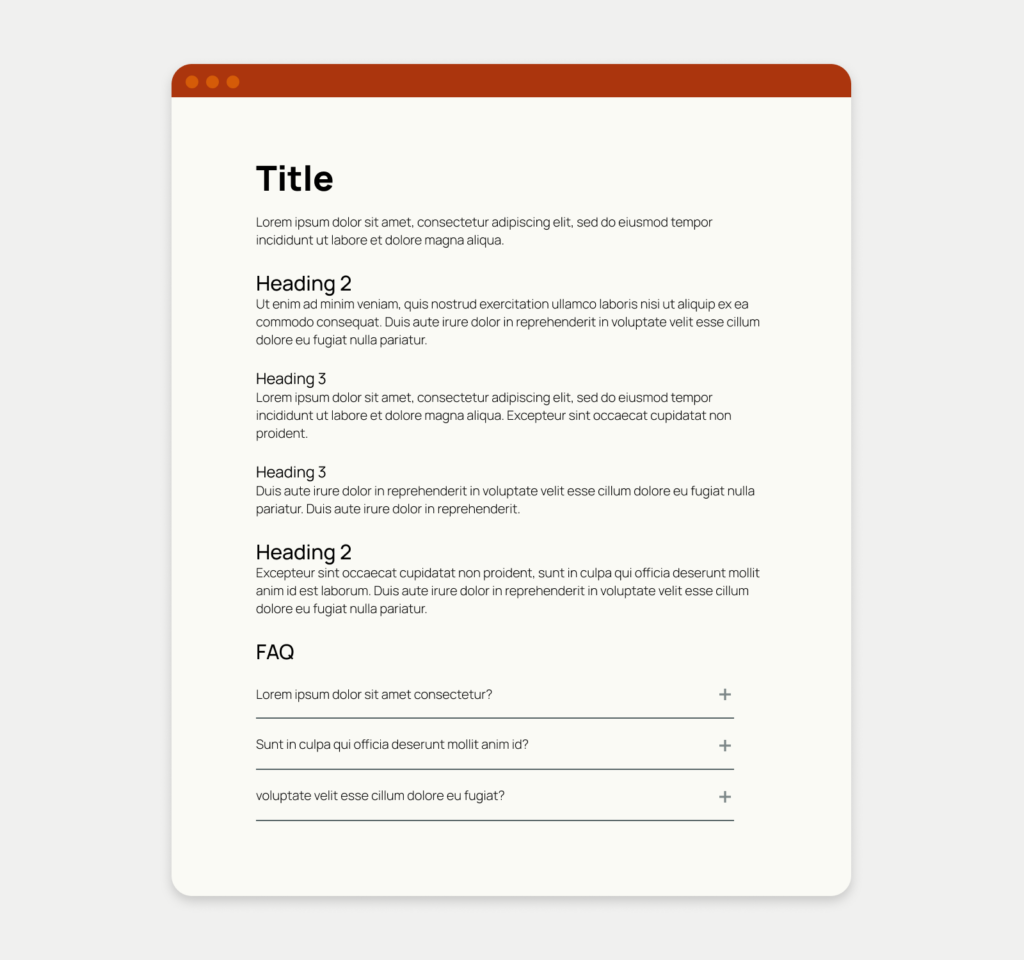
Content needs to be easy for AI systems to parse, summarize, and trust. But before you go draining your content of any semblance of personality, take a step back. Remember: The goal is to make the useful parts easier to find. There’s no reason you can’t do that while still creating something engaging, entertaining, and inspiring on a personal level.
So, if you’re asking how to optimize content for AI search, start here:
- Answer the actual question early
Don’t make readers or AI systems wander through five paragraphs of throat-clearing before they find the point. A short definition, summary, or direct answer near the top of a section can do a lot of work. - Use headings that describe the content clearly
It can be fun to get clever with headings. In fact, I wrote an entire guide on doing just that back in 2018 (might as well have been the Stone Age, considering how fast digital marketing evolves). But if the heading gives no useful signal about what follows, it is mostly decorative. Decorative is not the same as helpful. - Build around user intent, not just keywords
Keywords help clarify the topic, but they do not explain the user’s full need on their own. AI search is looking for the complete shape of the question: what the user is asking, what they probably need next, and what information would make the answer feel finished. Content should fully answer the question as early as possible, matching the instant-response experience users now expect from AI. - Support claims with evidence
Expert quotes, original data, case studies, credible external sources, and real examples all help establish authority and trust. Google’s E-E-A-T guidelines carry more weight in both SEO and GEO because search engines and AI systems need to know that your content comes from experts. Confidence may get you far in the real world, but AI wants to see some proof. - Make the page easy to extract from
Shorter sections, clear definitions, schema markup, FAQs, bullets, comparison tables, and concise summaries help AI systems identify which pieces of information answer which questions. I can’t believe I’m saying it, but don’t make the machine work too hard. - Keep content current
AI systems have fewer reasons to trust outdated content, especially in fast-moving topics like search, paid media, AI, analytics, or anything involving platform updates that arrive without warning. Revisit, revise, optimize, and keep your important pages fresh.
Why SEO Remains the Foundation of GEO
Weak SEO makes AI visibility harder. If your content is difficult to crawl, poorly organized, thin, slow, or disconnected from the rest of your site, you are asking AI systems to look someplace else for a source that knows how to cross its Ts. SEO helps build the technical foundation and broader web presence, while GEO helps that presence become clear enough to cite, mention, and reuse.
- Crawlability and indexability help content get discovered
AI systems operate best when content is already accessible, structured, and visible across the web. Strong technical SEO makes that possible. - Site architecture clarifies relationships
Internal links, topic clusters, category pages, and consistent navigation help search engines and AI systems understand how your content fits together. - Schema gives machines a better map
Structured data can clarify entities, authorship, products, FAQs, reviews, and business details. It can make strong content easier to interpret. - Backlinks and mentions still signal authority
High-quality links, reputable mentions, industry citations, and digital PR help establish that your brand has earned its place in the discussion, while giving AI more contextual evidence to work with when deciding which sources to mention or cite. - On-page optimization enhances clarity
Titles, metadata, headings, image alt text, and clean formatting provide the key details that show what a page is about. - Strong SEO data guides smarter AI-search work
Existing rankings, impressions, engagement patterns, and conversion data can be used to identify which pages are worth restructuring for AI.
Just to reiterate this point as explicitly clear as possible: SEO shouldn’t be fighting against GEO. A modern hybrid approach to search engine optimization is about optimizing for all parts of the journey — one that can easily start with an AI overview before transitioning onto more traditional search paths that ultimately lead into a conversion.
How to Evaluate Your Readiness
If your current SEO program is doing well, then good. That gives you a stronger foundation. But prominent spots on the SERP do not automatically mean your content is ready for AI search. That sucks, but here we are.
So let’s get introspective. Use these questions to assess where you stand:
- Are your most valuable pages structured for AI interpretation?
Look for clear headings, direct answers, summaries, schema markup, and sections that stay focused on a single idea. - Do your pages answer complete questions?
A page should not only define the topic; it should address the follow-up concerns that matter to a buyer, researcher, or decision-maker. - Are your authority signals consistent across channels?
AI systems may look beyond your website when deciding whether to trust your brand. Mentions in reviews, directories, podcasts, social platforms, and industry publications can all reinforce your authority — but only if they tell a consistent story. - Are you measuring visibility beyond traffic?
To understand AI visibility, pair SEO metrics with GEO signals such as AI mentions, citations, branded search growth, and sales feedback about how prospects are discovering your brand. - Which pages deserve priority?
Start with assets tied to revenue, sales conversations, category ownership, high-intent search, and brand differentiation. Not every page needs the deluxe treatment. - Is your content easy to verify?
Make claims specific. Use credible sources. Keep important pages updated. Add expert review where appropriate.
How 97th Floor Approaches GEO vs. SEO Differently
97th Floor approaches AI search as part of a larger search ecosystem for a truly hybrid digital-marketing strategy. The focus is on using SEO as the foundation of GEO and connecting the pieces that determine visibility:
- Technical SEO that keeps content crawlable, indexable, and easy to understand
- Content strategy built around clear answers, buyer intent, and topical authority
- Structured data and AI-ready formatting that help machines interpret the page
- Measurement that accounts for rankings, citations, branded demand, and business impact
- Search strategies designed to expand brand presence across AI Overviews, organic results, paid search, and relevant SERP features
We recognize that fragmented tactics create fragmented results. Strong rankings without AI readiness can mean your zero-click audience never sees what you have to offer. 97th Floor has the experience and innovative drive to connect the technical foundation of SEO with the answer-first demands of GEO, preserving your brand’s place in the conversation.
Contact 97th Floor today, and optimize your content for both search engines and AI.