



With shrinking attention spans and endless digital content in 2025, it’s harder than ever to stand out. Enter the infographic! A well-structured infographic turns complicated or “boring” information into something clear, engaging, and easy to digest in seconds. If you’ve ever wondered what makes a good infographic, you’ve come to the right place. In this article, we’ll go over 7 tips for making your infographics picture-perfect. Done right, an infographic can make your content unforgettable.
In 2025, people want answers fast. Long reports and walls of text often go unread, but visuals cut through the noise. Infographics present data and insights in a format that’s quick to scan, easy to share, and simple to remember. Infographics double as pretty visuals and communication tools that help your audience grasp complex information at a glance. From social media to sales decks, a strong infographic can extend the reach and impact of your message.
An infographic distills complex data into a structured visual format that the brain can process faster than text alone. Studies in cognitive psychology confirm that people retain information more effectively when it is paired with visuals, because the human brain processes images up to 60,000 times faster than text. That means your audience can understand trends, relationships, and comparisons at a glance rather than working through pages of copy.
From a marketing perspective, infographics are also highly versatile. They can improve on-page engagement by breaking up content, drive backlinks as shareable assets, and perform well across platforms, from LinkedIn posts to conference presentations. When designed with accessibility and mobile in mind, they increase reach even further by ensuring clarity across devices.
So, what makes a good infographic stand out from the rest? The best designs share a few common elements: credible data, clarity, storytelling, smart visuals, simplicity, breathing room, and adherence to design standards. Together, these elements form the foundation of an infographic that catches readers’ attention. Let’s break down each one.
The key to a good infographic is using relevant, focused, and reliable data. Before you write or design, get to know your audience. Why are they interested in your topic? How much do they already know? Do they have preconceived ideas or opinions about your topic? Answering these questions will help form more relevant data and visuals. An infographic should be a visual presentation of evidence, with purpose and direction, not just an excuse to use pretty pictures. Don’t include facts just to up your word count. Make sure your facts and data support the overall story and have a purpose.
Especially when choosing a controversial topic to be thorough and speak to both sides of the story. Think through the topic’s possible arguments and counterarguments. Use facts, statistics, and authoritative quotes that are unbiased.

Use as little text as possible and let the visuals do the rest of the talking. Present the data in a visually pleasing way, stating hard evidence. Facts, statistics, and quotes from authorities should be used more than lengthy sections of text. Cite your sources. Always give credit where credit is due, and use reputable sources.
Thinking outside the box is great. Just make sure you are still making sense. Don’t use confusing comparisons or complicated visuals. Lead the audience through the infographic using both text and visuals.
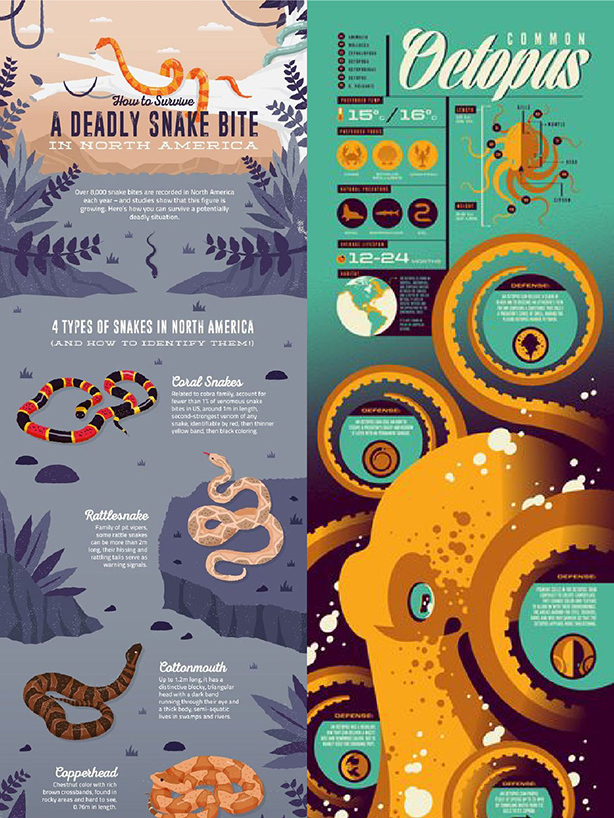
An infographic should not just make data interesting, but help the reader understand it better than text alone. Don’t rely on the reader to do the work. Guide them through the information as clearly and simply as possible. Data visualizations draw attention and give importance to seemingly boring facts. The right visuals can distill a difficult concept or lots of data into an easily digestible image that should only take 5 seconds to understand.
“An infographic is 30 times more likely to be read than a purely textual article.”

Display the data using a variety of charts and graphs. Make sure to choose the right graph or format for the data you are sharing. Always check that the graph makes sense visually, without the need for extensive knowledge on the subject or heavy reading. Below are a list of a few types of graphs and charts that can be used in creating an infographic.
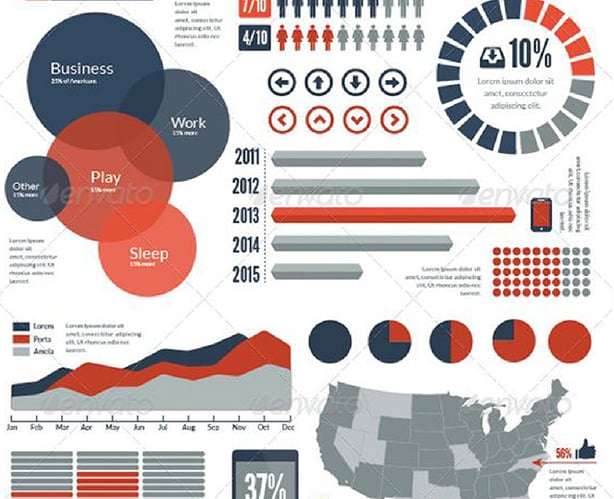
More doesn’t always mean better. In fact, clutter is the fastest way to lose your audience. A simplified infographic strips away distractions and highlights only the essentials. Stick to one main point per section. Use a limited color palette. Don’t let decorative elements compete with your data. Remember, an infographic is meant to clarify, not complicate. Consider color theory. Do the colors help tell the story? Why?

White space isn’t wasted space; it’s breathing room. It separates ideas, guides the eye, and makes complex information feel approachable. Imagine walking into a crowded room vs. one with open pathways; which feels easier to navigate? The same principle applies here. Use white space to group related visuals, emphasize hierarchy, and keep the design from overwhelming readers.
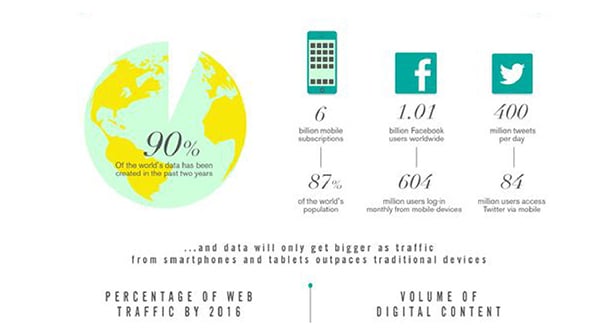
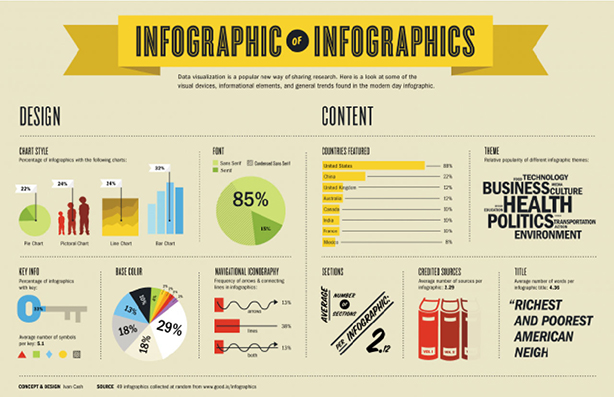
The typical infographic should be no more than 5000 pixels tall. This size allows for easy reading and sharing; anything longer will likely lose the audience's attention. Make sure the font is a healthy size and easy to read. An infographic is NOT an entire article with icons and images sprinkled in. As one marketer said,
“‘Infographics’ is one efficient way of combining the best of text, images, and design to represent complex data that tells a story that begs to be shared." - Jeff Bullas
Infographics, if created and used correctly, can communicate complex data in a visually pleasing way that can get you more clicks, views, and shares.
Infographics done right can transform complex information into stories people actually want to read and share. At 97th Floor, we’ve helped brands of every size turn data into designs that spark attention and drive results. Whether you need a one-off infographic or a full content strategy powered by design, our team can help.
See how an audience-first approach translates to bottom-line results.
Backlinks have always played a central role in SEO. But as search evolves, the types of backlinks that truly move the needle have changed. Authority alone isn’t enough. Relevance alone isn’t enough. And shortcuts that once seemed harmless now come with real risks.
The best SEO backlinks today are the ones that demonstrate trust, expertise, and real value to users. They come from sites that operate with high editorial standards, have real audiences, and treat links as references instead of transactions.
In this guide, we’ll walk through the full landscape of what the best backlinks look like in today’s environment, how Google and AI systems evaluate link quality, and the practical steps teams can take to earn backlinks consistently. We’ll also break down strategies, examples, and pitfalls to help you build a backlink plan that’s safe, effective, and scalable.
The best SEO backlinks are links from reputable and contextually relevant websites that point to your content because they interpret it to serve a clear purpose. That purpose might be educating readers, providing a unique data point, offering a fresh perspective, or supporting a larger narrative. Regardless of the specific reason, high-value backlinks function as editorial endorsements. They signal that your content is useful to viewers.
Backlinks remain one of the strongest indicators search engines use to evaluate the overall quality and reliability of a page. Google wants to surface information that people can trust, and backlinks help demonstrate that trust at scale. When authoritative sites consistently link to your resources, it strengthens the case that your content:
Here are the specific areas high-value backlinks help shape:
A backlink from a credible site acts as a vote of confidence. The more reliable the linking site, the stronger the trust signal you earn.
Links from relevant domains help establish what your site is about. This strengthens your presence within a topic cluster and reinforces your authority in that specific area.
When respected publications or brands reference your work, it positions your organization as an authoritative voice in your field.
Links often appear when your content is genuinely helpful. Search engines notice this pattern. When real people rely on your content, algorithms tend to do the same.
These signals have a heavy influence on rankings. Backlinks strengthen your entity profile, help AI systems understand what your brand represents, and improve how your content appears across emerging search surfaces. A single high-value backlink from a relevant, authoritative source can outperform dozens of lower-quality links, which is why quality-driven link building is more important now than ever.
Search engines and users both rely on certain characteristics to determine whether a backlink is trustworthy. The more of these qualities a link possesses, the more value it’s likely to provide. Here are a few of the most important qualities to pay attention to when adding backlinks.
Relevance is the foundation of link quality. A backlink from a site that operates within your niche carries far more weight than a link from a topically unrelated domain. Relevance confirms that your content belongs in the conversation and reinforces your association with the subject matter.
Authoritative backlinks come from well-established organizations that demonstrate expertise, editorial oversight, and clear quality standards. This includes major publications, universities, nonprofits, reputable companies, and industry-leading blogs.
The best backlinks can drive real visitors. If a link sits on a page that attracts meaningful traffic, the value is compounded. Search engines can detect when humans interact with your content, and referral traffic is a powerful indicator that the link is genuinely helpful.
Where a link appears matters. Links integrated directly inside informative content carry significantly more weight than links placed in author bios, footers, or lists with no contextual relevance. Search engines understand this difference, and readers do too.
If the page linking to you isn’t indexed by Google, it cannot pass authority. This is an often-overlooked element of link evaluation, but it’s essential. Even the highest-quality link is ineffective if search engines can’t crawl the source page.
Search engines consider the broader “neighborhood” a link lives in. If the linking site is surrounded by low-quality outbound links, link-selling schemes, or spam-heavy patterns, its credibility declines. The company your link keeps matters.
Google’s link evaluation has evolved significantly. Now, it focuses heavily on signals that indicate whether a link genuinely benefits users. Backlinks created solely to manipulate PageRank or boost rankings artificially are considered violations of Google’s guidelines, and patterns of these links can trigger penalties, algorithmic or manual.
Google evaluates link quality based on several factors:
A link from a topical neighbor carries more weight than a link from an unrelated source. Topical mismatch often signals artificial behavior.
Links that appear on sites with strong editorial standards are treated as more trustworthy. Google looks for signs that content is reviewed, moderated, and held to quality expectations.
Contextual positioning within the main body of an article is preferred. Links buried in sidebars, footers, or author bios are treated as lower-value.
A healthy backlink profile includes a variety of unique domains. Hundreds of links from the same site rarely indicate popularity or usefulness — more often, they suggest manipulation.
If Google can’t index the linking page, it can’t evaluate or pass any authority from it.
Patterns like excessive guest posting, scaled link schemes, article farms, or bought placements are easy for Google to detect. These tactics erode trust and invite risk.
The takeaway: strategies built on shortcuts or rapid link accumulation tend to lose ground quickly. Quality-first link-building remains the most sustainable approach.
Understanding what makes the best seo backlinks high-value is one thing. Actually earning those links, at scale, is another challenge entirely. There are dozens of ways to build links, but only a handful consistently deliver relevant, trustworthy, and sustainable results.
Guest posting is one of them.
Guest posting isn’t perfect, and like all link acquisition methods, it has its risks. In May, Google released a statement regarding poor-quality links found in contributor posts. Google warns that when the main intent is to build links in a large-scale way back to the author’s site, these practices are in violation of Google’s Guidelines. However, Google does not officially discourage guest posting, stating, “Google does not discourage these types of articles in cases when they inform users, educate another site’s audience, or bring awareness to your cause or company.”
So what’s the best way to gain backlinks through guest posting? Here are a few tips that stay within Google’s guidelines, benefit site owners, and most of all, provide results for your SEO efforts.
It is crucial to find sites within your niche or industry. Nothing screams spam like getting backlinks from a completely irrelevant site. For example, if you sell barn doors, then you want to get backlinks from sites about home improvement, interior designers, DIY blogs, etc. You wouldn’t want backlinks from sites about video games or fitness. The more relevant the site linking back to your site is, the more natural it will appear to Google.
So, how do you find sites to post to? There are numerous paid tools you can use to find sites. However, simply using Google Search can produce excellent results. Use search parameters in Google to narrow your search. These are a couple of search parameters that you can use:
By replacing keyword with your keyword, you’ll start to find sites that accept contributors. Again, ensure that these sites are relevant to your niche or industry. There are a lot of spam sites that will accept anything. You want to avoid these sites.
It’s important to evaluate your outreach strategy and adapt as necessary. Vary your search parameters depending on what results you’re finding and the niche or industry that you’re outreaching for. Simply switching between “insite” to “inurl” will display different results. If you’re still not finding sites, then just try a good old-fashioned Google Search without any search parameters. This usually produces a broader range of sites, but that might be just right for your industry.
The first thing to look for on a site that accepts guest posts is the posting guidelines. This usually gives a good idea about what the site expects from you and what you can expect from them. In addition, most guidelines will say something about including backlinks in your post. Some sites will not accept any articles with links, while other sites will remove links if they appear to be spammy. Never reach out to sites that ask for money in exchange for backlinks. This is specifically against Google’s guidelines, and if done enough, the site could be penalized.
Next, check the domain authority (DA) of the site. As a rule of thumb, never reach out to sites with a DA below 20. You want to be looking for high-quality sites. Sites that have a DA below 20 typically will not be the quality that you're looking for, and will pass less authority to your site.
Check to make sure the links are followed and the blog posts are indexed. You can do this manually by checking the source code for nofollow or noindex tags. If the site has a decent DA but has nofollow links, you can still reach out and contribute to this site. Diversifying your backlink profile with follow and nofollow links will appear more natural to Google, and ultimately help your ranking strategy. However, there is essentially no value in a noindex blog post. Avoid these sites, as they will not help your strategy.
After you’ve thoroughly qualified the site, reach out to the website via email. This can usually be done through a contact form on the site. However, you’ll be more successful if you can find a contact email on the site. This can take some digging, but if you can contact an actual person, you’ll have a greater chance of getting a response back.
Try to be as personable and specific as possible when reaching out to new sites. There are a few things that you should include in each email. Let the contact know that you aim to provide free high-quality content to their site. Follow this up by adding some ideas for future articles. Also, provide the contact links to your previously published work so that they have a sample of your writing. If you don’t have any published work yet, you can post for free on Medium or Kinja and send them links to those pieces. Most importantly, display thorough knowledge and enthusiasm about their site. Webmasters like to know that their site is enjoyable to users.
This is perhaps the most important step. Poor quality content is the number one reason that content partnerships end. Ensuring that your content, as Google states, “informs users, educates another site’s audience or brings awareness to your cause or company,” will keep your partnership happy and be an ongoing resource for you to gain backlinks.
There are ways to acquire backlinks that might seem easier than guest posting. However, what you sacrifice for ease of use is typically quality of content and quality of backlinks, which isn’t worth the risk of getting penalized. Guest posting can be time-consuming, but when following these steps, it will provide the best and safest ROI.
Not every backlink is worth the effort. Some can actively harm your visibility and credibility, even when they look harmless on the surface. Most teams already know to avoid the obvious pitfalls (spam sites, link farms, paid placements, etc.), but risky link tactics often show up in more subtle ways. These patterns can gradually weaken your backlink profile and create signals that search engines interpret as manipulative.
One of the most common issues is buying backlinks from lists or marketplaces. If a site openly sells links, it’s already on Google’s radar. Even a single placement on a known link-selling domain can dilute the strength of your overall profile. Scaled guest posting can be equally harmful when it lacks editorial oversight. Google doesn’t penalize guest posting itself, but it does penalize repetitive, low-quality content spread across unrelated sites with identical anchor text patterns.
Anchor text misuse is another red flag. When links consistently use the same exact-match phrasing, it signals manipulation rather than natural citation. Low-quality directories fall into a similar category. A few reputable listings can help support local visibility, but hundreds of generic or irrelevant directories don’t provide meaningful value; they only clutter your profile.
Finally, reciprocal link schemes continue to cause issues for teams trying to grow quickly. “I’ll link to you if you link to me” might feel efficient in the moment, but it remains a clear violation of Google’s guidelines and is easy for algorithms to detect.
Sustainable backlink strategies are built on relevance, usefulness, and genuine connections between brands and audiences. When your link-building efforts prioritize value over volume, you gain stronger rankings, more defensible authority, and long-term momentum that lasts.
Strong backlink programs require expertise and a clear understanding of what actually works in today’s search environment. If your team is ready to earn backlinks that strengthen your authority, improve your visibility, and support long-term organic growth, we can help.
We’ve built backlink strategies for some of the world’s most ambitious brands, and we know what it takes to earn links that last. Let’s build something great together.
Lead-generation is a core component of a B2B marketing strategy. However, many businesses struggle to improve lead quality and quantity. Specifically, a survey from ActOn found 37% of SMBs struggle to convert web visitors into leads. While a low conversion rate can be caused by driving the wrong traffic to the site or by pursuing the wrong marketing strategy or having a poorly optimized page, many businesses will benefit most by building a more robust lead-gen strategy first.
Small businesses frequently start their lead generation by creating a core offer to garner interest in their product. These end-of-funnel offers-- free trial, free quote, free consultation, contact us-- are essential components to a lead-gen strategy. However, for businesses with longer marketing and sales cycles, having only these types of offers is a missed opportunity to capture and nurture leads.
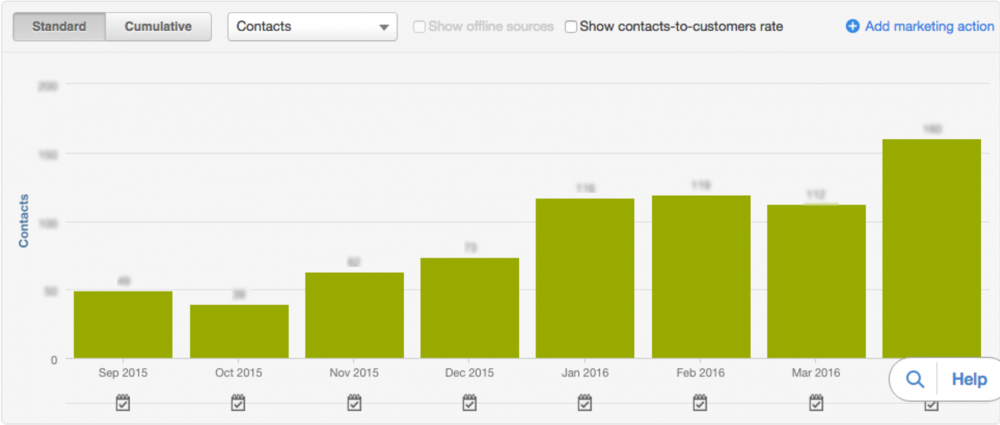
In fact, if you have a robust top-of-funnel content marketing strategy in place with a low conversion rate, adding an offer of relevant mid-funnel content can significantly increase your conversion rate. For example, one 97th Floor client had a robust content marketing and SEO strategy driving qualified traffic to the site. Its “Free Trial” offer brought in a good number of leads, but overall, the conversion rate of the site was extremely low.
We decided to test creating an ebook and placing the offer in hyper-relevant locations on the website. Within the first two months the conversion rate for organic traffic increased 3x, and months later the site retained that conversion rate. After the success of the first ebook, we created another gated offer that was relevant to other high traffic content pieces. Organic conversions increased by 43% and were maintained long-term.
While having mid-funnel content was a key component to the campaign’s success, having effective content was the most critical component for driving quality leads. Many marketers would agree that content marketing is an extremely effective lead-gen tactic. However, it can also be the most difficult to execute well. After all, good content should be unique and insightful while nurturing potential customers all at the same time.
So what process can you follow to create effective lead-gen content?
In the case study cited above, we found there were 3 core questions a buyer needed to answer before making a purchase decision. The majority of that information was difficult to find, requiring visiting multiple websites and fitting pieces of information together while navigating a plethora of buzzwords. The ebook we created offered a comprehensive buyer’s guide that provided a framework for answering those questions and compiled all of the necessary information into a single location.
Content mapping is not a new concept, but many businesses fail to understand how crucial it is. Content should be mapped not just to the stage in the buyer’s journey, but also based on the information the visitor is consuming at the time.
For example, if a visitor comes to your website via a blog post titled “What is content marketing and why does it matter?” an ebook about “How to Optimize Title Tags” is not nearly as relevant as an ebook on “How to Develop Your First Content Marketing Strategy.”
In the case study above, the main CTA to the buyer’s guide was placed on a page with a competitor comparison matrix. Visitors who arrived on that page were already looking for information to help them make a purchase decision, so a comprehensive buyer’s guide was a compelling offer for those visitors. So compelling, in fact, that the click-to-submission rate ranged from 50-65%
Many traditional marketing activities- webinars, trade shows, purchased lists- are one-and-done activities. Once the event is over, it doesn’t continue to generate leads. If the business needs more leads, it has to attend another trade show or produce and promote a new webinar. Gated content, however, can produce a long-term conversion funnel if you create the content with that intention.
Content typically dies because it:
The secret, then, to creating a long-term conversion funnel is to create content that will still be useful to a buyer two years from now and is tied to organic traffic coming to your website. In the buyer’s guide case study, the conversion rate was maintained because SEO was the primary content promotion strategy with only a small percentage of leads coming from social or paid channels.
There is no one-size-fits-all solution in marketing, but by following the principles above you’ll be able to create effective lead-gen content and test whether mid-funnel conversions can have a significant impact on marketing ROI.
When I was just a young pup trying to make his way in the vast and often unforgiving wilderness of content marketing (yes, I’m talking about back in 2013), I often found myself assigned to write about topics that were, shall we say, not within my field of expertise. This was neither uncommon nor unexpected; after all, when your field of expertise consists of an encyclopedic knowledge of 90s-era animated superhero television shows and almost nothing else, then you should expect to work outside your comfort zone.
So, I learned the art of the 20-minute masters course. If I needed to write about tips to getting the most out of the Paleo diet, my first step would be to type “what is paleo diet” into my Google search bar, and my second and last step would be to create an 800 word article about how throwing out 10,000 years of agricultural science might actually be a healthy decision. If I was asked to highlight the benefits of solar energy, I’d learn the science while writing it and come away an hour later convinced that traditional utilities were the tools of the devil.
I learned a lot during those 20-minute, panic-fueled research sessions—taking in, metabolizing, and excreting knowledge back into the internet, like some virtual circle of life, except with trivia and statistics instead of whatever The Lion King was about. By the way, when Simba became leader of the pride, did he kill all of the other male cubs? Because I’ve heard that lions do that.
In any case, the end results were, if I may say so, decently informed content presented in a way that was at least mildly interesting. For example, take an article I wrote about food storage and different types of fictional apocalypses. I mean, when faced with a sea of emergency preparedness articles, it was nice to be able to create something unique, in that it was was both helpful and unflinchingly honest about your family’s chances of surviving a robot uprising. Of course, that’s not to say that I didn’t encounter the occasional snag. Research, particularly the kind that is motivated by imminent deadlines, isn’t always an exact science.
If you’re finding yourself in a similar situation—needing to produce factually-based content quickly—then I think I can help. The internet is a big place, and if you know where to look, whom to ask, and what ‘sponsored content’ is (hint: it’s not news), then there’s no reason why you shouldn’t be able to locate the information you need, and with enough time left over to turn it into something useful.
This may come as a shock to some readers, but just because it’s on the internet doesn’t necessarily mean that it’s trustworthy. Believe me when I say that it doesn’t take much in the way of credibility to get your words up on a website. Do you think that Buzzfeed is asking for credentials and references from the person who just wrote “15 Reasons why Cocoa Butter Is the Best Thing Ever”? Of course not. Why would they? Most internet users aren’t looking for peer-reviewed studies; they’re after some quick entertainment, and the thought of tracing sources or following up on bibliographies is about as far from “quick” or “entertaining” as you can get.
That doesn’t excuse your responsibility as a content creator. To put it bluntly, the internet is already well stocked with sensationalism and biased opinions masquerading as fact; don’t add to it. If you’re going to be presenting information, do everything in your power to ensure that it’s reliable information. Which, of course, means knowing where to find it.
Government and educational sites are generally held to a higher standard than others, although that’s not to say that they are always 100% accurate (or unbiased). Still, those that include data from relevant studies are usually trustworthy, and will not only provide you with relatively reliable information from which to craft your content, but may also give you interesting stats and data to link to to support any arguments you might be making.
News sites are also authoritative resources, but bear in mind that not every news site is created equal, nor is every site that identifies itself as a news site recognized as one. Some are just ideological outlets for particular interest groups (I’m not naming any names, Fox News and Huffington Post). There’s actually a lot of data that goes into which news sites are the most reliable and objective, and I’m not going to bother reproducing it here, but feel free to check it for yourself. Stick to the ones at the top of the list, and you should be OK.
On the bottom of the barrel, we’ve got blogs. Now, I’m not suggesting that blogs are incapable of unbiased reporting or producing accurate data, but I am going to point out that when a post is being written by a single author, for that author’s site, with no editorial or supervision failsafes in place, then there’s really nothing stopping them from making whatever claims they’d like. If, on the other hand, a blog includes links to its resource material, then feel free to track the truth down yourself, and if it looks promising, then link to the original source in your own article.
Finally, I’d like to set a few things straight with regard to Wikipedia. First, no, you should never link to Wikipedia. This is because Wikipedia is a collaborative encyclopedia, and you really don’t have any way of knowing whether the author was relaying reliable information. Perhaps even more importantly Wikipedia has a reputation for being a non-reliable source. A link to Wikipedia can end up doing more harm to the perceived authority of your article than whatever information you’re attempting to cite could hope to offset. Interestingly enough, I was once writing for an Australia-based client who wanted links from Government sites, and I discovered that the Australian .gov pages were not above linking directly to Wikipedia articles. I think I found where I’d like to retire.
This is because, in my personal experience, I’ve found Wikipedia to be one of the most accurate and complete internet resources available. When it comes to general information, I’m more likely to trust Wikipedia than any government or news site, because if there’s one thing that the kind of people who write and edit for wikipedia love, it’s correcting each other. No fallacy or inaccuracy is going to last long when you have thousands (or more) of potential editors looking over everyone’s shoulders, just aching for a chance to show off what they’ve got. It’s like misusing the word “whom” in a room full of English teachers—you’re going to be corrected, and it’s going to be swift.
So, should you use Wikipedia? Of course you should! It’s probably the most complete repository of human knowledge available. Just don’t link to it. Instead, use Wikipedia as a general research tool, and then if you need something to link to, check out the references section. You can evaluate the authoritativeness of specific resources, and if they look good, then you can link to them yourself. You should already be in the habit of tracing information back to its source, so in that respect, Wikipedia really isn’t any different.
Finally, as a general rule, if a site is actively trying to sell you something, then it may not be the best resource. On the other hand, if they support their claims by linking to relevant studies or including a bibliography section, then there’s no reason why you can’t take advantage of their hard work. Don’t worry, if you do a good enough job, you’ll be able to pay to forward to the next internet writer who comes to your site looking for usable information.
Pretty straightforward so far, right? Well, there’s one other thing to consider when researching your article: time. No, I’m not talking about the deadline; I know you haven’t forgotten that part. I’m talking about the date stamped on your source material. You see, usable information is three things—reliable, relevant, and recent. If you find the perfect stats to support your argument, but they’re from a report conducted three decades before the word ‘internet’ even existed, then they’re not the perfect stats. That said, the shelf life on some resources is longer than others.
As an example, let’s take a look at the two links I’ve included in this post. The first one is found all the way back up the page in paragraph #3 (the weird part about how much I dislike Lion King). Clicking that link will take you to a news report on the site Livescience.com. The article is everything you might want in a linkable resource—it’s authoritative, well researched, blah, blah, blah. But take a look at the year it was published. 2013. That means that the data is going on half a decade old. A discerning reader will make note of that, and might wonder why you haven’t been able to find anything newer to back up your arguments.
The second link is the one about which news sites are most widely trusted (about eight paragraphs up from this one). The page I’ve linked to was published less than two months ago, and that means the data is as fresh as a crispy head of lettuce.
But, like I said, the shelf life all depends on what you’re linking. The piece about the lions was published three to four years ago, sure, but how much could lions have changed in that time? On the other hand, the data about the reliability of news sites would likely be outdated much sooner. Can you think of any events, say, maybe far-reaching political events, that might have changed how readers view news-site reputability? In this case, even data that is only a year old might be too antiquated to use. It’s all about what information you’re citing.
Want an easy solution? Well, I’ve got one for you. When you do a Google search for reliable information, just click on the “settings” button underneath the search bar, and scroll down to “advanced search.” This will take you to a new page, where you can more clearly define what kinds of sites you’re looking for. About halfway down the page, you’ll see the “last update” option. Select it, and then select “past year,” before finalizing your search. This will return only pages that have been updated within the last twelve months, so you’ll have fewer outdated results to sift through. Trust me; this one’s a time saver.
It would certainly be nice to be able to contain all of our writing within our own areas of expertise, but it’s just not realistic. In fact, in the four years I’ve been writing at 97th Floor, I think I’ve only had one article published that made any sort of reference to Batman: The Animated Series, and it was subtle enough that the editors at Business.com didn’t notice. The reality is that in order to succeed as an internet content creator, you’ll probably have to take a few steps out of your comfort zone, and that’s actually a good thing.
You can be the expert that readers need, even if that expertise is built on nothing more than 20-minutes of Google search results. After all, content marketing is all about providing readers with content that is educational and informative, and if you can give it to them, then no one will care that you’d be more comfortable writing about cartoons.
Oh, and with that, it looks like I’ve now referenced Batman in two of my articles. I guess my expertise is worth something after all.
Here at 97th Floor, elevating brands we believe in is part of our culture. In light of this, I thought it would be fun to analyze the digital marketing of a brand whose product I like and am very familiar with and really enjoy. That brand is YNAB.
What Is YNAB?
YNAB stands for You Need a Budget and when answering the question, "what is YNAB?", it's important to understand what YNAB does. It is a computer program used for budgeting and tracking expenses. The software takes a different approach from tools like Mint, which focus on pulling all of your bank accounts and credit/debit card transactions into one place where you can categorize and review transactions after they happen. This reactive approach works for many people and was actually my tool of choice before I discovered YNAB.
YNAB takes an opposite, more proactive approach to finances. By educating users on how to properly plan where each dollar will go, while also providing the technology to track spending, YNAB puts people in charge of their finances. A couple of years ago, a colleague mentioned it to me in a conversation and I’ve used it ever since. It is incredible for keeping track of spending and overall being on top of your finances.
But this isn’t an advertisement. If you want to know more about the program, YNAB has an excellent intro to the finer details here. For now, I’d like to take a step back from what YNAB can do, and instead focus on the digital marketing side of things.
For a while, I’ve wanted to dig into YNAB’s online marketing efforts to see what gems I could offer them as a “here’s to YNAB” type toast. As I dug deeper, I realized that YNAB has done an incredible job in building a devout YNAB community online. It is a difficult task to create a cult-like following (which I mean in the most positive sense) around your product. YNAB has created thousands of YNAB ambassadors by leveraging communities on Reddit, Facebook, and other social media sites, and through effective email campaigns.
But while YNAB is doing great things in the community building space, I want to shift the focus to what they could be doing with organic digital marketing to reach even more people and add another channel to fuel their community. For this post, the focus will largely be on SEO-related potential.
To begin, let's take a look at where YNAB is at organically. YNAB ranks for 6,069 keywords in the top 50 results as per Ahrefs. Again, one thing that is immediately apparent is how great of a brand YNAB has built (I’ll probably echo this many times throughout the post). Its brand search for the keyword “YNAB” generates around 130,000 monthly searches alone. Add the rest of its branded keywords and you have a very substantial amount of branded organic traffic.
YNAB also ranks for many non-branded keywords, albeit not nearly as well. There are many opportunities to push up these peripheral keywords so that they bring in significantly more search volume. We’ll get into this in greater detail further down in the analysis.
Part of YNAB’s building such a strong brand is due to leveraging the passionate following that surrounds the online financial niche. Some of the biggest communities on Reddit, like r/financialindependence, are related to finances, such as the following:
Reddit.com/r/personalfinance - 10,235,956 subscribers
Reddit.com/r/frugal - 628,703 subscribers
Reddit.com/r/financialindependence - 183,573 subscribers
The YNAB online community has done an excellent job siphoning traffic from these various subreddits into their own YNAB Reddit community (Reddit.com/r/ynab). The YNAB Reddit community, or subreddit, has over 30k subscribers. Many subreddits are created and die before they ever get enough users to sustain growth—the Reddit.com/r/budgetfirst/ subreddit, which was created by a group of YNAB Reddit users after YNAB switched to a subscription-based model, is one such example.
Despite the challenge of creating a sustainable reddit community, YNAB has managed to create a community that not only wants to be more involved in the YNAB ecosystem, but also help others in their pursuit to financial freedom. Gotta say, 30k hungry brand ambassadors is never a bad thing to have.
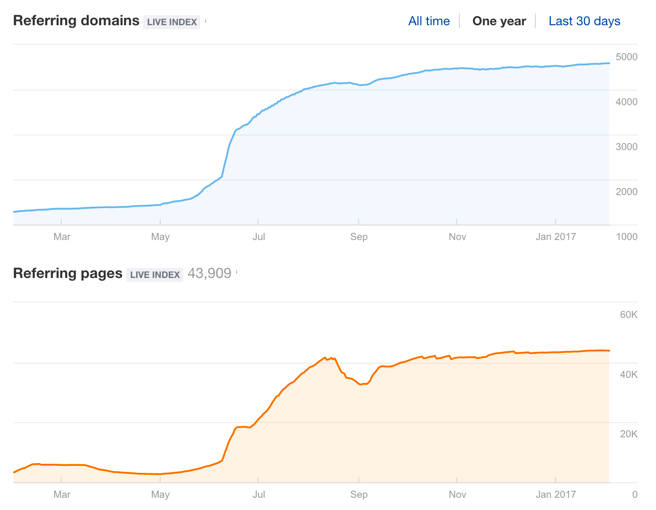
Ahrefs indicates that YNAB is increasing in referring domains quite healthily. The data below raises the question: where is YNAB getting their links from?
One thing I found right away, is that YNAB has some great links on what I like to call “feeder sites.” “Feeder sites” are sites that have content that is syndicated by many other large publications. Finding valuable feeder sites can be immensely powerful for SEO due to the amount and the quality of links that can be obtained.
Below is an example of what this feeder process looks like that YNAB has benefitted from.
An article was placed on the Reader’s Digest’s site, RD.com, entitled “34 Little Life Skills Everyone Needs to Be a Grown-Up.” RD.com is a feeder site to MSN.com as well as a handful of smaller sites. You can see that MSN.com syndicated the same article here. This means that for the effort of creating one very high-quality post, you can net a handful of links, sometimes from some large publications. This can be immensely powerful, and can lead to great jumps in increased rankings,
In the last few months, YNAB has received links like these:
And this is honestly only naming a few of the total links built recently.
YNAB is in a great position. It has the benefit of being able to target money-management communities with its methodology while at the same time targeting sites that focus on cell phone apps. This widens the targetable audience for the amount of websites YNAB can get links from. More links equal more authority, and when properly used, convert into better rankings and more traffic.
YNAB gets numerous mentions on both large and small publications. It is in the great position of garnering many mentions through its thousands of devoted fans. Typically, sites struggle with gaining more authority, therefore, they need a lot of high quality and well-targeted link building.
One note, however, is that many of the specific blog posts on YNAB’s site don’t get as much link love as the core YNAB pages (homepage, feature page, etc.). YNAB would benefit from additional links to their established blog posts, as well as to new posts as they are published. With the right content paired with YNAB’s community, this kind of link building should be cake.
YNAB has opportunities to generate much more organic traffic through their currently ranking pages. In order to diagnose how many opportunities there are, I pulled all ranking keywords (positions 1–50) from Ahrefs. Second, we needed to segment the data in order to see rankings in specific ranking buckets. I segmented rankings by keywords in the top 3 positions, positions 4–5, positions 6–10, page 2, position 21–50, and page 3+ rankings. I did this for every URL on the site in order to gain an understanding of each page and its rankings. The results looked something like this:

From a glance at the spreadsheet above, you can see a particular URL and what keyword positions that it ranks for. This makes it easy to determine which URLs simply need a bump in optimization and authority in order to generate traffic increases. This also allows you to forecast how big the traffic increases will be.
Let’s go through an example of how this data can enable us to take traffic-increasing action.
We see in the above screenshot that the blog post “How to Pay off $26k of Debt in 18 Months on a $35k per Year Income” ranks for 4 keywords in the top 1–3 ranking positions and 9 keywords in positions 4–5. The keywords in positions 4–5 represent around 520 monthly searches. This is what we see on the keyword level.

Looking at the average difficulty of these keywords, as well as taking into account that this post ranks as it does with not many links, YNAB could bump these 9 keywords up into the top 3 with only a handful of inbound links. This would increase the traffic of this page to somewhere between 100–150% with minimal effort. Sure, this is merely a couple hundred visits extra, but considering the minimal effort it would take, it would be worth it. Furthermore, you can see how this strategy can scale across the entire site. YNAB could increase overall traffic to the site by a large margin simply by taking advantage of this strategy applied too many of their blog posts.
The Google Featured Snippets box can be incredibly powerful to leverage. I want to show you how YNAB could leverage it to rank in a position essentially above position #1 (sometimes referred to as position #0). For context, the Google Featured Snippets box was debuted in Sept 2014, and was created as a vehicle for putting relevant answers in user’s hands much more quickly. For example, if you search “how to budget and save money” in Google, you will see something like this (highlights in red are mine):

You can see in the above screenshot that bettermoneyhabits.bankofamerica.com occupies the #0 position in Google’s featured snippet. This gives bankofamerica.com a strong advantage over americasaves.org in positions #1 and #2. Not only does bankofamerica.com have an augmented snippet, it also rank above position #1. This position can generate much more traffic than position #1.
Another value in ranking in the Google Featured Snippets box is that you can circumvent the climb to the top and be picked for a top page ranking, even if your site technically occupies a different rank land somewhere else on page 1. A detailed post on the specifics of how to do this can be found here.
YNAB already ranks on the first page for a handful of keywords that have the Featured Snippets box, but someone else shows up for the Featured Snippet. Because YNAB already ranks on the first page, it could implement some on-page changes and increase its chances of stealing the coveted Featured Snippets position. This would drastically increase the traffic YNAB receives from currently ranking keywords. For example, YNAB ranks in the 10th position for “how to pay off debt." This keyword generates around 5,400 searches per month. At the 10th position, YNAB doesn’t pull in that many of the 5,400 searches. However, if YNAB ranked in position #0, it would pull in a large percentage of that traffic.
Here are some of the keywords that have Featured Snippets YNAB could steal:

The process of optimize live posts is fairly simple, although it takes diligence. Cole Rieben, one of our Campaign Managers here at 97th, has a great post on what changes can be made in order to boost a site into the Featured Snippet spot (found here).
Without a doubt, creating new, high-quality, keyword-targeted content is one of the most rewarding actions YNAB could take. Content should be created for the user first, but in order for it to be valuable, it must also be findable. SEO done well is the perfect marriage between solid content and the ability to have that content found when users are asking questions. Keyword research can further help you understand exactly what kind of content people are looking for. It is an insight into their needs. Think about it, these people are asking questions already, we just need to meet their question with the best answer.
YNAB has created a lot of content. Most of it is fairly short and doesn’t rank for a ton of keywords. In addition, there are so many budgeting-related questions being asked daily. If YNAB can answer these questions with their grade-A philosophy and budgeting tool, it would be a huge win-win. Users get the answers they need, and YNAB grows.
To analyze what the market looks like in terms of budget/finance related keywords, I pulled a lot of data—like, over 111,000 unique keywords worth of data.
After researching the keyword level data, we needed to organize it to make it useful. The goal in leveraging all of this data is to understand a few things.
The first is keyword groupings of well-ranking URLs in the finance space. These URLs are from many other finance related sites. The data allow us to understand what keyword groups Google ranks these pages for. Secondly, I want to understand what it took for these sites to rank well
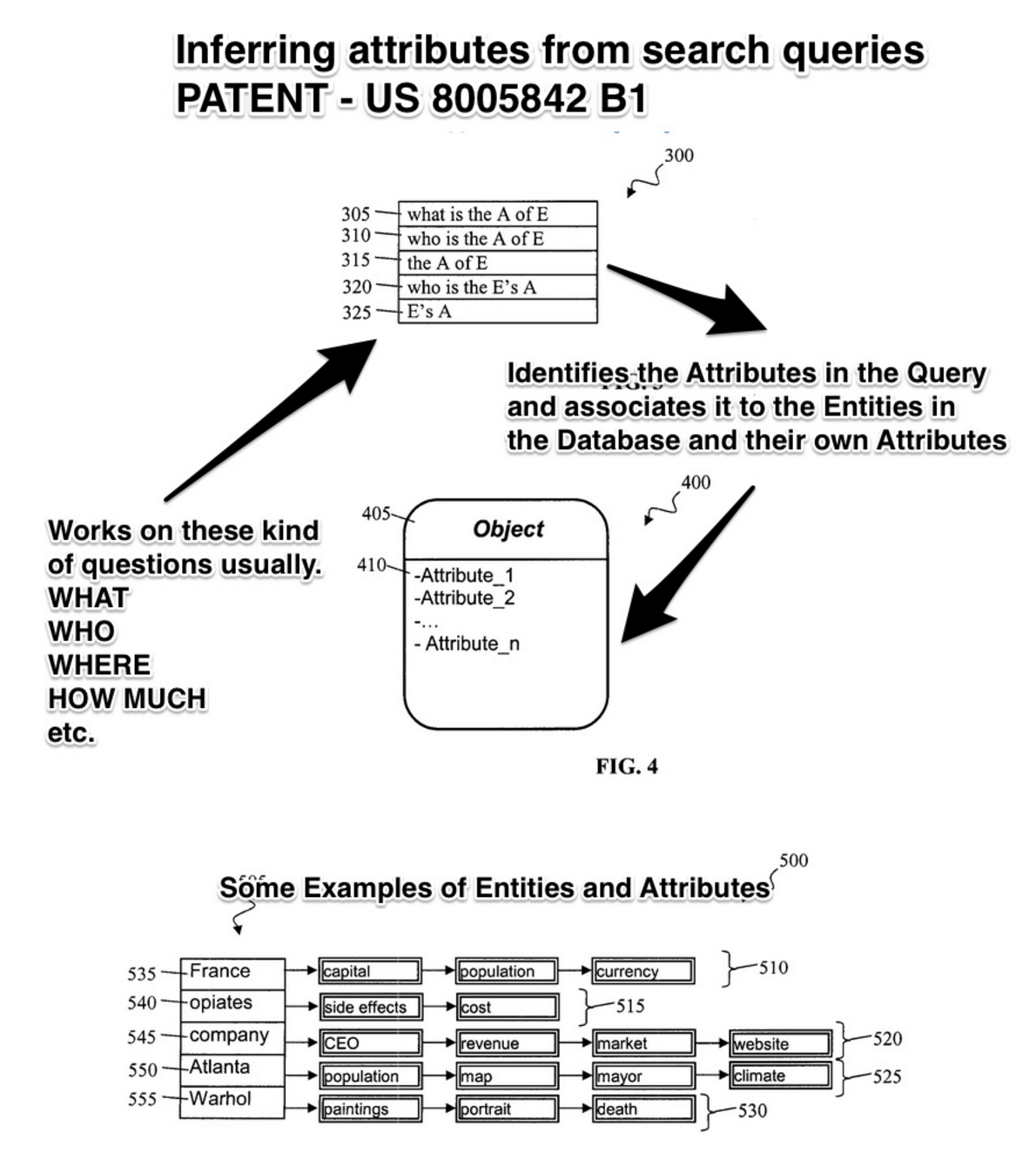
From Quick Answers to the People Also Ask section, featured snippets have been at the top of numerous result pages and top of mind for many digital marketers and online businesses. First position in Google search is no longer adequate, especially when almost any competitor on the first page could qualify and leap multiple positions to snag the prime real estate above the first organic result. The result pages that have featured snippets tend to have two important elements, an entity and an attribute related to that entity. Here is a diagram Google used to explain the concept in their patent for Inferring attributes from search queries:
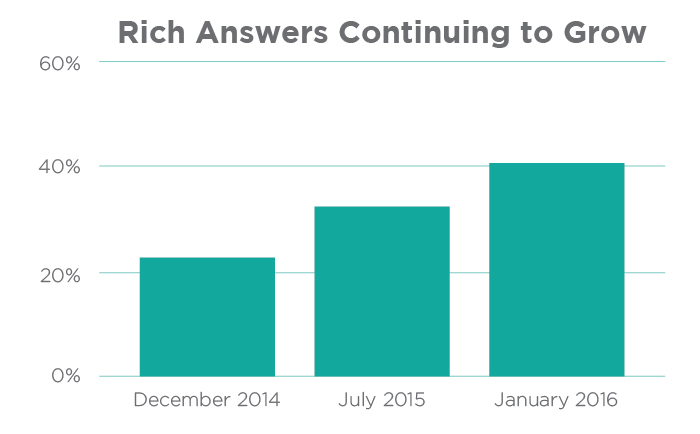
While these results are not new, there are still tons of opportunity to be had. For starters, they’re being rolled out to more international SERPs as time goes on. There are still plenty of US queries for which Google will eventually display a featured snippet. Below are the findings of three consecutive studies performed by Stone Temple Consulting whose data from 855k test queries support the assumption that there is still more growth to be had.
Is Optimizing for a Featured Snippet Worth the Time and Effort?
Before you go any further, and before I get into optimizations and prerequisites for showing up in a featured snippet, you should weigh the potential gains from your efforts. For some markets there aren’t currently any featured snippets present. Don’t forget that Google is still rolling this out to new areas and for more terms. So I would still encourage research and optimizing pages that rank high for potential featured positions. The payoff may not be immediate though.
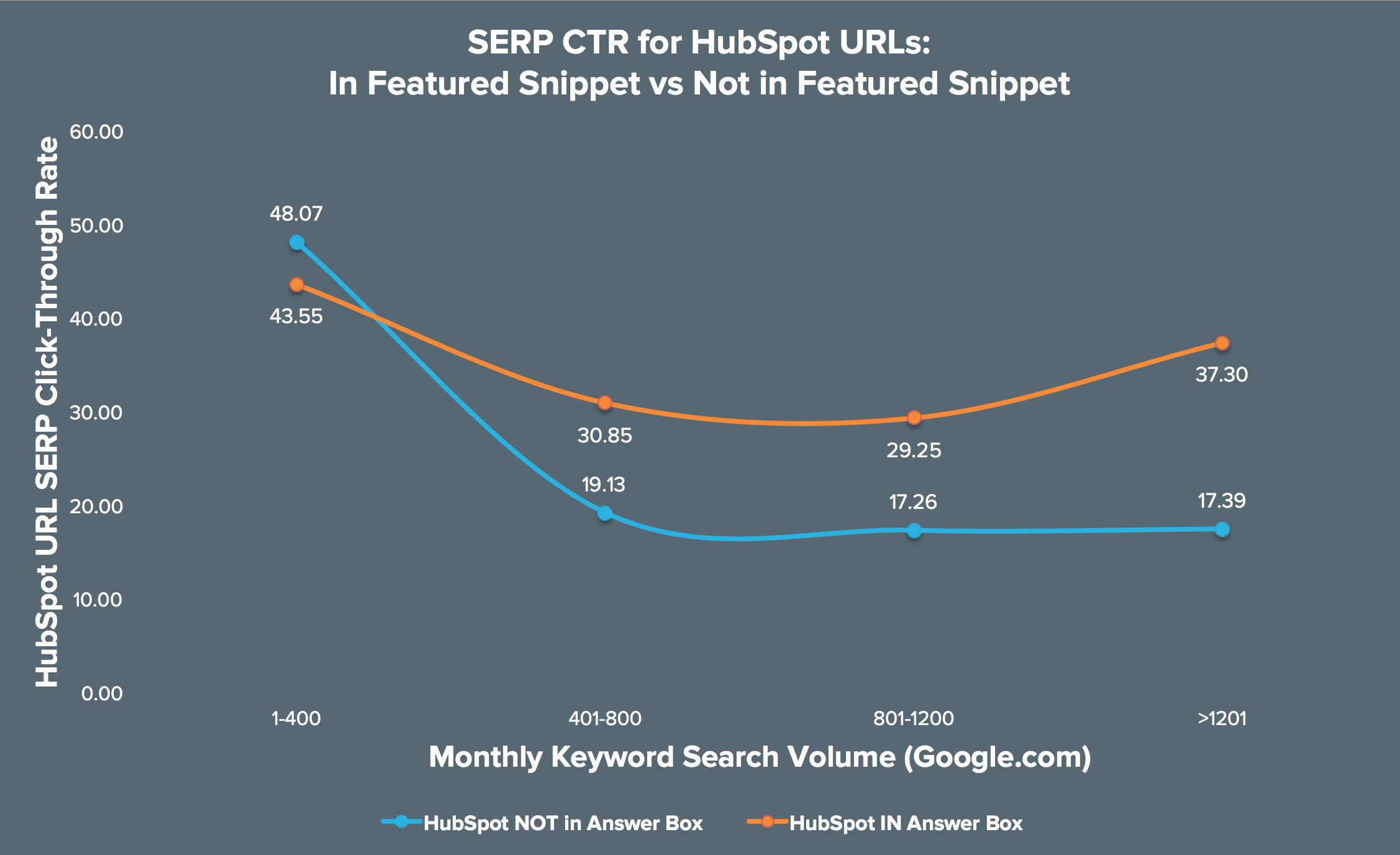
In most cases where the opportunity currently exists, tests have shown an unexpected increase in click throughs. The assumption is that having a featured snippet on the result page for a query would reduce the clicks to the first position url and subsequent urls. Matthew Barby’s sample of Hubspot urls showed the opposite with an improved amount of click throughs to result #1 that followed the featured snippet. His analysis showed that the urls that displayed in a featured snippet saw a higher click-through-rate than ones that only displayed in regular first page results.
Where to Optimize
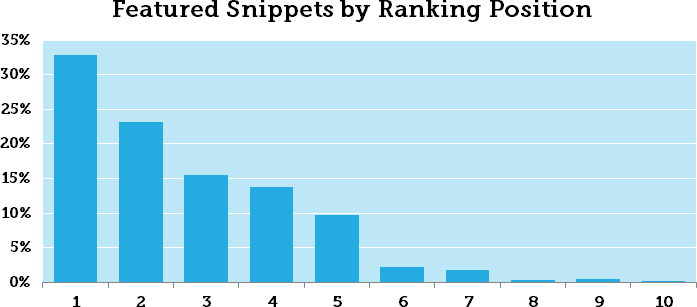
I would first start by digging through Google result pages where your site ranks #1. If there are featured snippets on any of those result pages that aren’t pulling from your site then there is great opportunity for some upgrades to your page. If your site ranks for a large amount of queries in position #1 then focus first on the higher volume terms. While it is very possible to grab a featured snippet position if you aren’t ranking #1, there are two separate studies showing that about 30% of featured snippets pull from the #1 result. The graph below was pulled from a study run by Moz on 10k keywords.
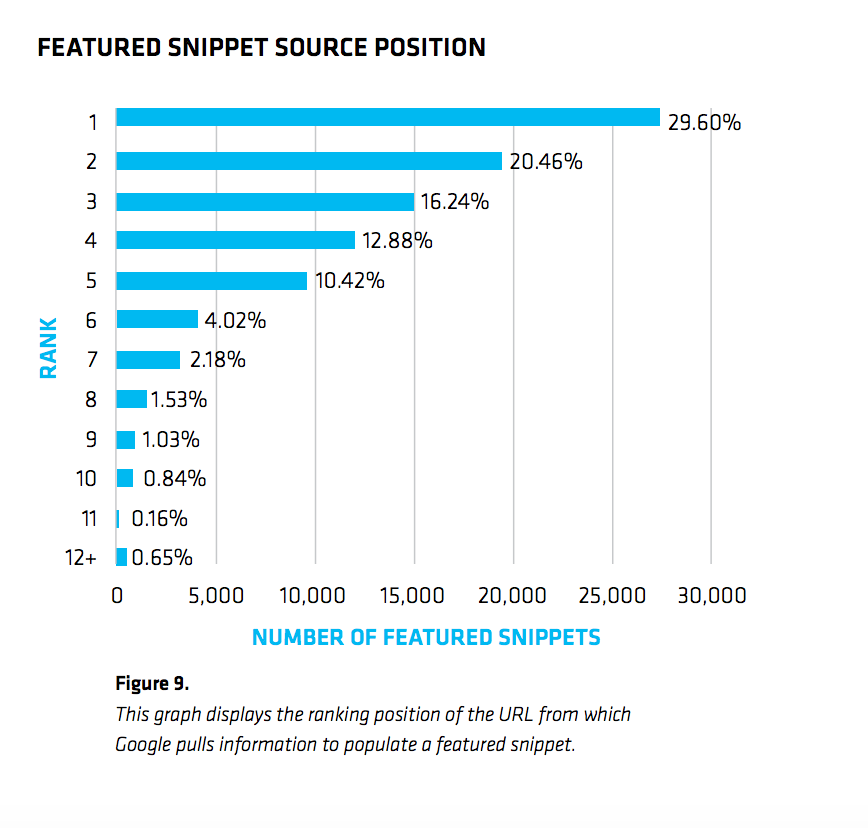
The second study was run by Stat with 1 million competitive keywords. While they found a similar result that about 30% of featured snippet results pulled from the #1 ranking page, they do call out that 70% of featured snippets came from results other than the first organic position. Even more interestingly, they found that a small percentage of queries sourced their featured snippet from positions beyond #10. I would recommend downloading their whitepaper that explains their findings from analyzing 1 million high-CPC terms.
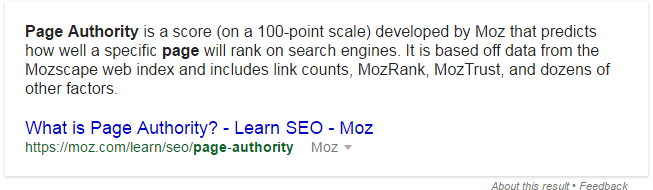
Dr. Peter J. Meyers illustrates this nicely as he proved this to work for Moz and the question phrase “What is page authority?.” Another site lept over Moz’s #1 result for the term to capture the featured snippet position.
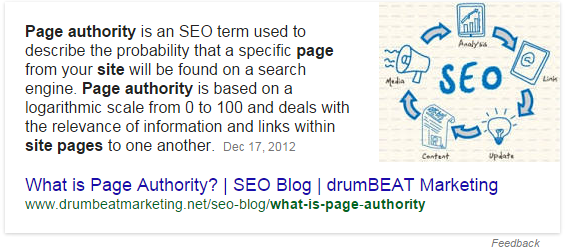
The Moz team noticed that Drumbeat Marketing did a great job of directly and promptly defining page authority and answering the question. Moz promptly upgraded their copy with the question in the header, and to read as follows:
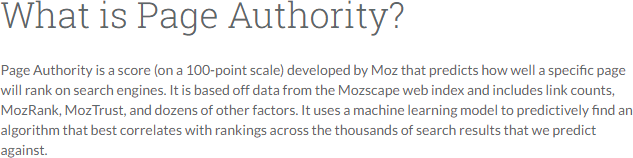
Not long after, they captured the prized featured snippet display for that query while maintaining rank in the first position.
The next area of focus should be on any other keywords your site ranks for on the first page. You could waste a lot of time researching all the keywords you could potentially rank for but your time is most wisely spent on first page positions based on the data from industry tests.
How to Optimize
Now that you know which pages need your attention you can determine which type of featured snippet to rank for. Is it a list? Is it a paragraph answer? Is it a table with information? Google very plainly communicates in their explanation of featured snippets that page markup won’t be a factor in qualifying for these positions.
Where does the answer summary come from?
The summary is a snippet extracted programmatically from a webpage. What's different with a featured snippet is that it is enhanced to draw user attention on the results page. When we recognize that a query asks a question, we programmatically detect pages that answer the user's question, and display a snippet as a featured snippet in the search results.
How can I mark my page as a featured snippet?
You can't. Google programmatically determines that a page contains a likely answer to the user's question, and displays the result as a featured snippet.
So the best thing you can do is upgrade your content to fit the query's featured snippet. In Stat’s research they discovered that paragraph answers are the most common type of featured snippet and displayed that way for more than 80% of the million terms they tracked.

Optimize for Paragraphs
The paragraph featured snippet displays pages that have answer oriented copy as well as the question in a header. Google will only pull a few sentences, so make your answers brief but directed at the searcher. In most cases Google will pull the copy from text they deem most valuable to the user. As such, I have run into an interesting scenario where Google actually selected partial information from a list and displayed it in paragraph form. Below is the result page for “home protection plan”. You will notice that the answer is displayed in a paragraph form, but the page it pulls from actually has it listed out.

The same approach should be considered for the People Also Ask section. Once research is done on related questions, follow the same pattern of addressing the question and exclusively answering it below the header. In most cases you will be building out questions and answers on your landing page and not a designated FAQ page.
Optimize for Lists
The featured snippet that displays a list is one of the more recognizable types and usually occupies more real estate on a result page than paragraph answers. These types of answers tend to show up for how-to’s, cost breakdowns, as well as numbered and bulleted lists of all kinds. To rank for this type of featured snippet you may want to adjust some copy to introduce a list. Do your best to use the term or phrase in the heading of the list. It is important that it stays relevant and increases the value of the page. Another thing to keep in mind, especially if you win these positions, is that you leave the user wanting a little more. Give them a reason to go to your page. Recipes can be a great chance to do this as each step usually involves more details that can’t fit.
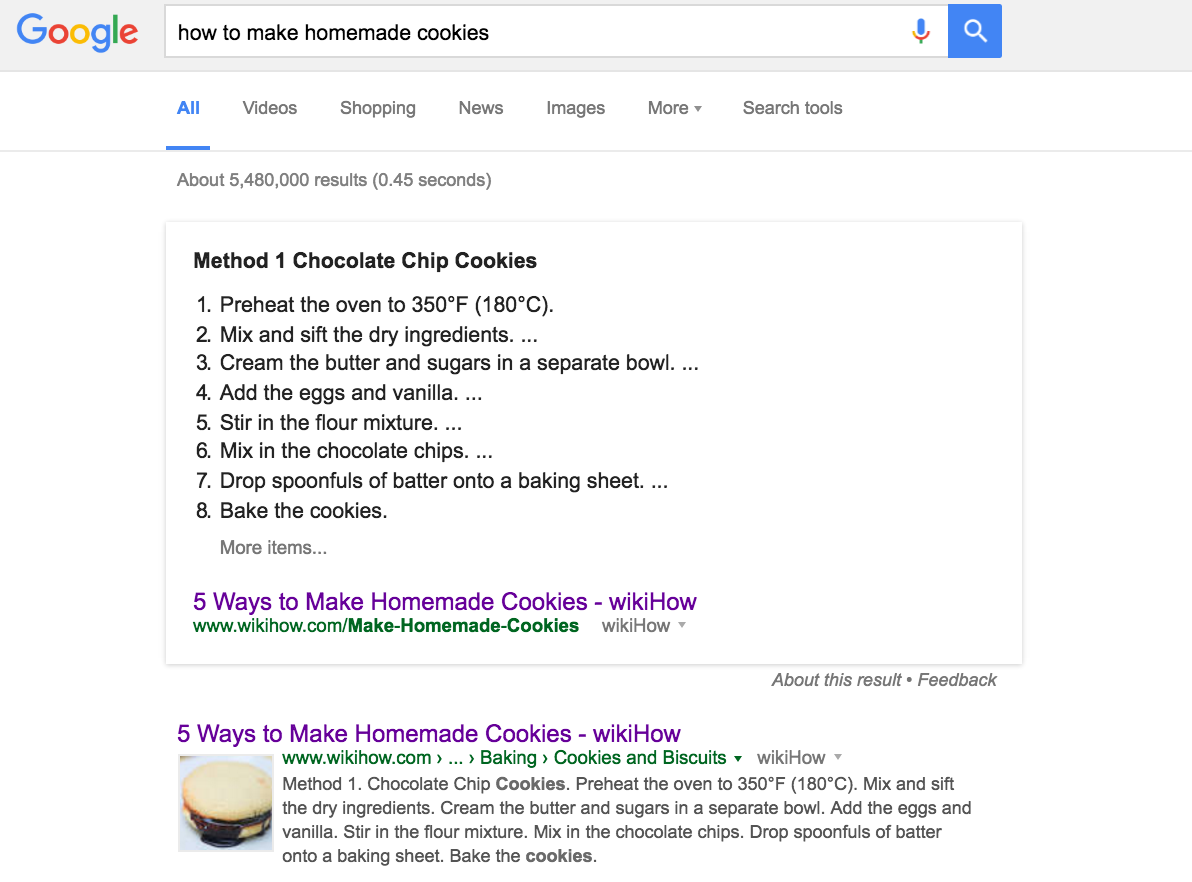
Stat’s research also found the use of <ol> tags on pages are 41.6% more common in featured snippets than in regular results. They saw the use of <table> tags nearly 22% more common in featured areas than in regular results. This brings me to the next type of featured snippet.
Optimizing for Tables
Optimizing for tables really comes down to displaying data or information that may already exist on your page a little differently. If you currently have a list on that page but there is an opportunity to grab a table snippet then find a way to compare the list to another list or just display multiple attributes at once. As mentioned above, it wouldn’t hurt to make sure that you are using <table> tags on your pages.
The most important area to focus on for optimizing your chances of being featured is your on page copy. Backlinks and other external factors for ranking become less important the closer your page is to the first position. Remember that before you optimize any pages you will need to research the Google result pages for keywords you rank for on the first page. The benefits of more clicks are definitely there, and you can always do more to direct the user to your page with enticing copy. This is definitely an area of optimization that you will want to return too often as Google expands to new markets and includes featured snippets in more result pages.
Yesterday, September 23, was the final day of BrightEdge’s Share15 conference in San Francisco. Share15 is a Content Performance Marketing event put on “for digital marketers, by digital marketers.” The conference is a specific opportunity for BrightEdge users to get hands-on. This year’s conference had speakers from several big players in the industry, including BrightEdge, Salesforce, Google, and many others.
.@chrisbennett of @97thFloor shares how to bucket #keywords for #content success at #Share15 pic.twitter.com/JvsydGAGeD
— BrightEdge (@brightedge) September 23, 2015
Chris Bennett, 97th Floor’s CEO, had the chance to speak at the conference yesterday. 97th Floor is a certified BrightEdge Agency Partner, and several of our clients use BrightEdge in their business. Chris was excited for the opportunity to speak here, as this was his first year presenting at a Share conference. He also enjoyed this chance to speak alongside his old friend, Kirill Konrod from Adobe, who had some great insights on Google’s Quick Answer boxes. Chris’s presentation emphasized tactics such as focusing on keyword research, using those keywords to recognize and create better content, and making sure that you are creating altruistic content for the user.
For a session that @97thFloor claims doesn't include earth shattering news, I'm sure loving these ideas! #contentmarketing #share15 — Taylor Harker (@TaylorHarker) September 23, 2015
Not only was Chris one of the speakers at Share15, but 97th Floor was a sponsor of this year’s event, setting up a “swag machine" for use by conference attendees.

The machine was filled with shirts and portable chargers. To get their swag, participants could tweet a selfie in front of the machine, tagging @97thfloor, #share15, and a special hashtag the machine would generate. Once the tweet went out, the machine would dispense the loot.
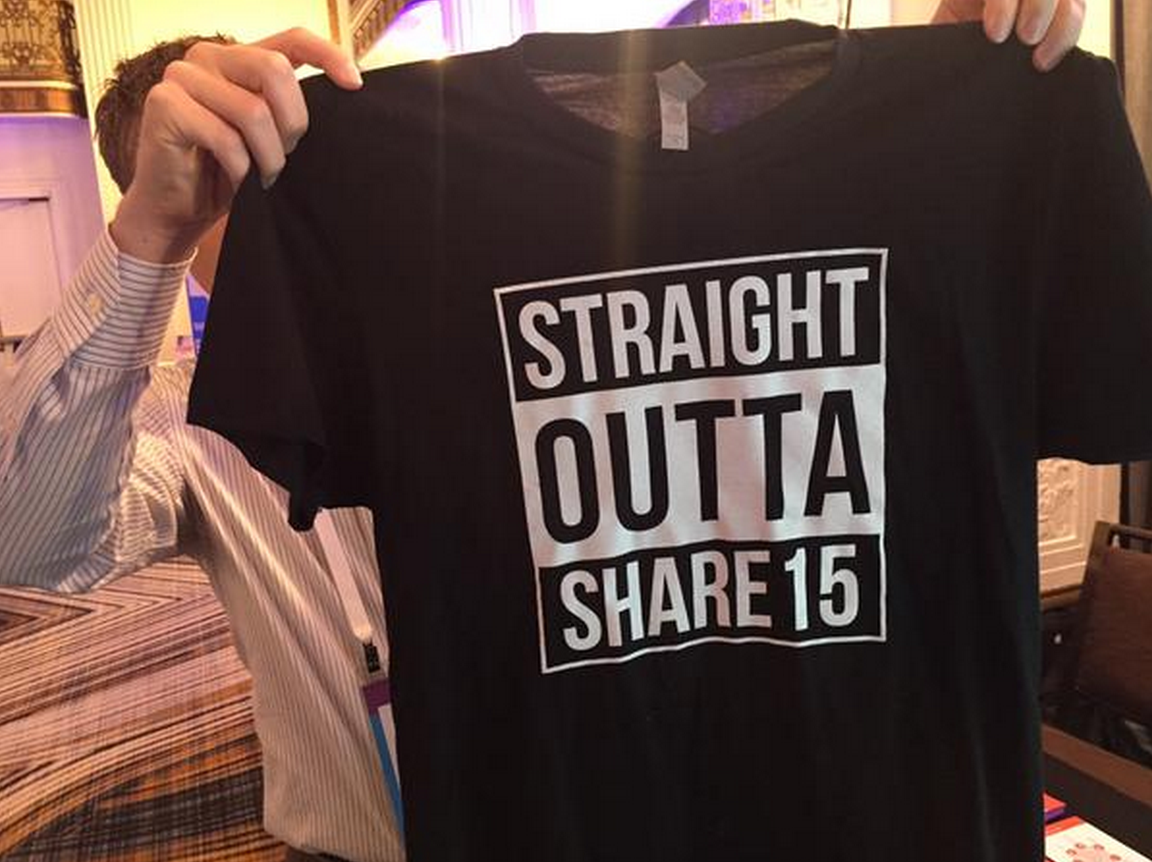
We figured that Share15 was the perfect opportunity to showcase the machine. Where better than a Digital Conference to share a fun, innovative platform to build social engagement?
At #share15 with @97thfloor #dm858 how cool is this? pic.twitter.com/21KKbXTJ5K
— Lisa Brown (@bunltd) September 23, 2015
Not only did this generate buzz for 97th Floor and Share15, it also fell right in line with Chris’s message from his presentation, and 97th Floor’s own brand, combining creative tactics for bigger results.
@97thfloor #share15 #dm901 awesome swag machine!! pic.twitter.com/IXTsfqGHoy
— Jim Yu (@jimyu) September 23, 2015
Having a great time @97thFloor #share15 #dm042 pic.twitter.com/Tsas0gPgLP
— Sophia Eng (@sophianeng) September 23, 2015
We loved coming to Share15 and working with BrightEdge. Their staff was wonderful to work with and a real class act. They really proved just how much they care about their customers. Thanks, guys!
Dreamforce, Salesforce’s enormous, annual conference, happened last week, bringing together more than 150,000 professionals from several different industries, with millions more viewing live via the Internet. The event took place from September 15–18 across several venues in downtown San Francisco and included approximately 1,600 sessions and keynote addresses.
97th Floor’s CEO Chris Bennett spoke at the conference on Wednesday, September 16. Salesforce is one of 97th Floor’s clients, and Chris attends Dreamforce regularly. His presentation, “Building Content that Grows Your Business,” marked the third time Chris has been invited to speak at Dreamforce, having spoken previously in 2013 and 2014.
.@chrisbennett Content marketing and seo works for B2B, too. #cmseo #df15 #seo pic.twitter.com/9ku7FxhXlS
— Stuart (@steuwart) September 16, 2015
This year, Chris focused on fundamental principles to ensure success in digital marketing. While the tactics he presented seemed simple, he showed several case studies demonstrating impressive results. Tactics included baking promo into content, and basing content on sound research. Chris especially emphasized keyword research, recommending marketers “add three hours to the five minutes you currently spend.” People responded well to his presentation and provided lots of positive feedback:
@chrisbennett really liked your presentation, super tactical. Thanks for the tips!! #df15
— Jason Bilog (@JasonBilog) September 16, 2015
Your content must provide value and prioritize the customer's needs over your company's needs. via @chrisbennett #DF15 #contentmarketing
— Mike Koyle (@mikekoyle) September 20, 2015
My boy @chrisbennett killing it @Dreamforce #DF15! You NEED to follow this guy! @crowdmics @97thFloor #seo #marketing pic.twitter.com/V0IX0O60SA
— Sean Holladay (@seanholladay) September 16, 2015
View the full deck from Chris’s presentation below:
O.K. before you keep reading I have to apologize, I hate case studies and examples of sites that don't show the sites involved. One of the things that I try to do to set us apart from a lot of blogs is to give specific ideas on how to do things, but in the case study below I can't. We are growing and have a lot of clientele that just won't let us share their info, or even mention them as a client. That is fine, I guess if I was a 100 million a year plus company with very intelligent competitors I wouldn't want our service providers giving away our secrets either.
With that said this will still be really cool to share and I will show you (doctored) screen shots from their analytics.
We helped a friend/client launch a blog in October and it has been some of the most successful blog marketing we have done to date in the realms of blog optimization and social media saturation to a brand new domain and website.
The blog is general and covers a lot of different topics mostly internet and advertising related, which helps. If you have a niche blog you can still have tremendous success in blog promotion, especially in terms of links and subscribers which is the most import aspect of a blogs success in my opinion.
The Stats: The blog is exactly 39 days old it has a total of 21 pages, it has received over 165,000 uniques, over 3,000 links and over 1,117 subscribers. The subscribers and the amount of branding we have seen (see below) are what we are most exited about.
We have had campaigns that generate more traffic and links then this blog (I am working on another case study where I will actually show you an example of an article that had over 150k visits in one day, and has had over 3k links just to the article), but what is different about this site is the vast amount of subscribers and the consistent traffic. Barely any of this traffic is from Digg, the blog is receiving thousands of visitors a day on a consistent basis. So it has been a combined effort on behalf of the posts instead of one home run submitted to Digg with one traffic spike and virtually no traffic a week later. The lowest day so far as been over 1,600 visitors and the highest has been 14,922 with several days over 10k.
Graph screen shot of the blogs entire life so far: 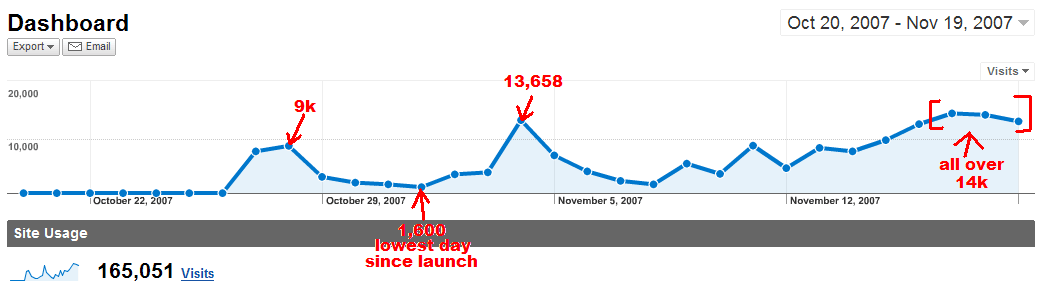
Page Views to some of the URL's: 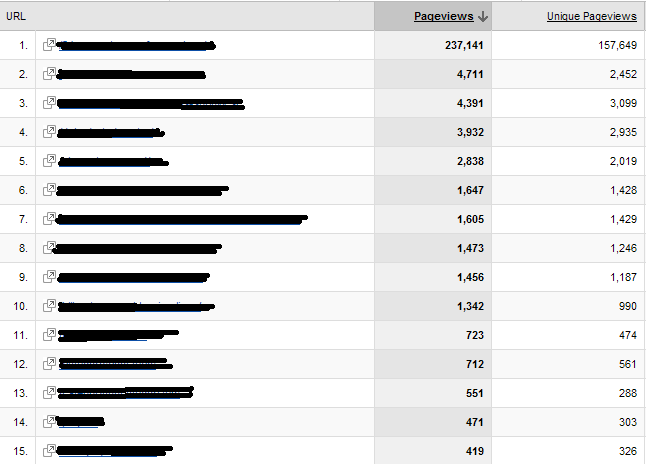
Traffic Sources: (what is best about this is Direct Traffic to the domain, is over 14% which is over 24,000 visitors. Remember this blog is only 39 days, that is some sweet branding) 
The majority of the initial traffic came from StumbleUpon, I think that is why the subscriber rate has been so good. We also get a tremendous amount of traffic from other hub sites picking up our stories and linking to them.
How to do it: I would credit a handful of things the the sites success.
1.) The site owner has fallen in love with marketing and has done a great job with generating outstanding content. He has engulfed himself in Social Media and in his competing blogs and really understands how to generate good content for his audience.
2.) We mapped out and understood our audience prior to launch. We actually had a good amount of posts ready before launch so that we wouldn't lose steam. After the first few pages being submitted to social sites we let the sites subscribers and community promote the rest of our content as it was created.
3.) The Domain is easy to remember, easy to spell and all that. By watching the direct traffic to the homepage and branded search terms in Google we are really seeing that a good domain can go a long way.
Again I apologize for not being able to give away more. I'm working on about 3 posts that all give away the farm with specific examples. Also remember this site/company did not exist before the last week in October, there wasn't a huge brand name to piggy back off of or any prior marketing or advertising to build off of. This was brand new, raw straight out of the gates marketing.
