Paid media has grown up.
Does this mean it’s simpler, calmer, or easier to manage? Hahaha. No. Quite the opposite, in fact.
In 2026, paid media lives at the intersection of automation, creative strategy, data interpretation, and business accountability. Platforms move quickly. Interfaces change often. AI touches almost every layer of execution. And budgets feel heavier than they used to, because expectations are heavier too.This is where the role of a PPC agency starts to look very different from what it did even a few years ago. What used to be about keyword bids and ad copy now looks much more like systems thinking, forecasting, and cross-channel coordination. Which is exactly why businesses continue to turn to PPC agencies: for guidance.
Key takeaways
- A modern PPC agency supports far more than keyword bidding and ad creation.
- PPC agencies now blend automation, AI, strategy, and cross-channel data into a single operating model.
- Choosing the right PPC agency has a direct impact on growth efficiency, risk management, and ROI visibility.
What is a PPC agency, and how do they work today?
At its most basic, a PPC agency manages paid advertising across platforms like Google, Microsoft, Meta, LinkedIn, and emerging discovery environments (such as AI-driven search and retail media networks). That part hasn’t changed.
What has changed is how success gets defined and how work gets organized around it. A modern PPC management agency centers on business outcomes: qualified demand, revenue contribution, and scalable growth. Traffic still matters; it’s just not the only voice in the conversation anymore.Today’s PPC agency operates as a strategic partner. Campaign execution is supported by planning, forecasting, testing frameworks, and measurement models that extend beyond individual platforms. Heading into 2026, PPC agency models reflect this shift. Strategy, interpretation, and optimization layers now carry as much weight as execution itself.
How PPC agencies are evolving in 2026
Maybe not a huge surprise in this new era of autonomous, intelligent machines, but the most visible change is automation.
Bidding, targeting, and creative testing increasingly rely on machine learning systems that operate faster than any human team could. That reality shapes how a modern PPC agency adds value. Manual campaign management alone doesn’t always hold up well anymore. The real leverage comes from setting the right guardrails for automation and evaluating its impact. As such, PPC agencies now spend more time interpreting data, defining testing priorities, and connecting performance signals back to business goals.
Data integration plays a major role here. Performance spans analytics tools, CRM systems, lifecycle data, and attribution models rather than living in a single dashboard. A capable PPC agency knows how to connect those inputs so optimization decisions reflect actual business conditions.
Core services offered by a modern PPC agency
No two PPC agencies present their services in exactly the same way. Still, the strongest ones tend to share a common foundation. Each capability reinforces the next, forming an approach designed to work cohesively as campaigns grow and evolve.
The real business value of hiring a PPC agency
The impact of working with a PPC agency is rarely expressed as a single metric. It reveals itself over time, in how efficiently teams operate, how confidently decisions get made, and how resilient paid programs become as complexity increases.
Greater efficiency at scale
Most teams tend to notice the value of a PPC agency when they suddenly realize that they have a moment to catch their collective breath. Budgets start to feel intentional instead of reactive. Testing moves forward with a clearer sense of purpose. Performance reviews become less about chasing fluctuations and more about understanding patterns. And as campaigns expand across platforms and audiences, that steadiness creates room to scale thoughtfully, without the anxiety-inducing feeling that everything needs to be fixed at once.
Reduced operational risk
Paid platforms are in a constant state of motion, and keeping up with that change is practically a job in itself. Policies update, automation behaves differently, targeting options come and go, and none of it waits for anyone. A PPC agency lives in that reality every day so you don’t have to, tracking changes, pressure-testing assumptions, and making adjustments before small issues turn into expensive ones. That buffer matters most when budgets increase and leadership expects stability along with performance.
Clearer leadership visibility
For leadership teams, the real value often shows up in how conversations change. Performance stops feeling abstract and starts making sense in the context of revenue targets, pipeline health, and growth plans. A strong PPC agency helps translate what’s happening in the platforms into signals leaders can actually use, whether that’s deciding where to invest next, when to pull back, or how aggressive to be with growth goals. That shared understanding tends to ripple outward, making planning smoother and decisions easier to stand behind.
How PPC agencies drive ROI in competitive markets
Competitive markets have a way of exposing weak strategy very quickly. Costs rise, attention fragments, and small inefficiencies stop being small. This is where a modern PPC agency earns trust by bringing discipline, judgment, and a long view to every decision:
Audience and intent alignment
In crowded spaces, broad targeting gets expensive fast. Strong PPC agencies spend real time understanding who’s actually worth reaching and what signals indicate readiness. That work goes beyond basic audience definitions and into intent modeling, behavior patterns, and demand quality. Clarity makes budget decisions easier. Spend gets directed toward people who are actually nearing a decision, keeping efficiency from eroding even when competition gets fierce.
Full-funnel strategy that reflects reality
Most buying journeys don’t move in a straight line, and competitive markets certainly don’t change that fact. Effective agencies account for that complexity from the start. Awareness, consideration, and conversion campaigns are designed to work together, each playing a role at the right moment instead of fighting for credit. Messaging shifts as people learn more, pause, compare options, and return when the timing feels right.
Creative systems that stay sharp under pressure
In competitive auctions, creative fatigue sets in quickly. Ads that worked last quarter start blending into the noise. Strong PPC agencies counter this by treating creative as an ongoing system. Clear messaging frameworks shape what gets tested and why, while performance data guides what gets refined next. Over time, patterns become visible — which ideas consistently resonate, which formats hold attention, and which angles stall out early. That ongoing rhythm keeps accounts healthy and responsive, without forcing teams into constant, exhausting reinvention.
Forecasting tied to business expectations
Maybe it goes without saying, but forecasting works best when it reflects how businesses actually operate. The best PPC agencies approach projections by looking at what has happened, what’s changing in the market, and how leadership defines growth. That framing helps teams understand what different budget levels are likely to support and where expectations should sit. This approach makes it easier to have honest conversations about tradeoffs, timing, and risk.
Context-driven optimization across teams
Clicks don’t tell the whole story, especially in competitive markets. But knowing what comes after the click? That’s where things start to get interesting. Context-driven optimization pulls insight from sales feedback, lifecycle data, analytics, and post-click behavior to show how paid traffic actually performs once it leaves the ad platform. That broader view changes decision-making. Keywords get evaluated based on lead quality. Creative gets refined using downstream signals, budgets shift according to what converts, and optimization reflects the kinds of real outcomes that matter.
Choosing the right PPC agency for your business
Now, be aware that at some point, every paid media program hits a crossroads. Performance plateaus, complexity increases, and what once felt manageable starts to feel harder to steer. Choosing a PPC agency at that stage becomes less about day-to-day execution and more about finding a partner who understands how paid media fits into a broader growth system — one that connects strategy, data, and long-term direction.With that in mind, a few criteria tend to separate agencies that simply manage campaigns from those that help businesses grow:
| Strategic depth | Look for teams that can explain why they’re making decisions, not just what they’re doing. Strong strategy shows up in how campaigns are structured, how tradeoffs are discussed, and how priorities get set over time. |
| Transparent, outcome-driven reporting | Clear reporting connects spend to performance in ways leadership can actually use. That means fewer vanity metrics and more insight into efficiency, demand quality, and business impact. |
| Experience across industries and growth stages | Markets behave differently at different scales. Agencies that have seen multiple growth phases tend to anticipate challenges instead of reacting to them. |
| Responsible use of AI and automation | Automation plays a role, but judgment still matters. The right PPC agency knows how to guide and evaluate automated systems so performance stays intentional rather than opaque. |
| Alignment with internal teams | Paid media works best when it doesn’t operate in a silo. Agencies that collaborate closely with analytics, CRO, SEO, and internal stakeholders tend to drive more consistent results and clearer accountability. |
When should businesses hire a PPC advertising agency?
There probably isn’t a single moment when a business suddenly “needs” a PPC advertising agency. It usually shows up as a pattern. A few small frictions pile up. Questions take longer to answer. Confidence in decisions starts to wobble. Often, this is precipitated by symptoms that are worth keeping an eye out for:
- Paid spend outgrows internal expertise
Budgets increase, platforms multiply, and the margin for error shrinks. What worked at lower spend levels starts behaving differently, and intuition alone becomes harder to rely on. - Performance plateaus despite increased investment
Spend goes up, expectations rise, and results stay stubbornly flat. This often points to structural issues in targeting, creative, measurement, or funnel alignment that benefit from an outside perspective. - Scaling across platforms adds complexity
Search, social, retail media, and discovery environments each bring their own constraints and optimization signals. Coordinating those efforts requires systems and oversight that many internal teams struggle to maintain consistently. - Leadership needs clearer ROI accountability
As paid media becomes a meaningful growth lever, questions around forecasting, efficiency, and impact become more pressing. A PPC advertising agency helps translate performance into terms leadership can understand and trusts.
How 97th Floor approaches PPC strategy
At 97th Floor, PPC advertising strategy starts with a simple acknowledgment: paid media lives inside a much bigger system than it once did. Revenue targets, pipeline realities, internal constraints — all of that shapes what paid media can and should do. We take the time to understand those inputs early, because everything downstream works better when the destination is clear.
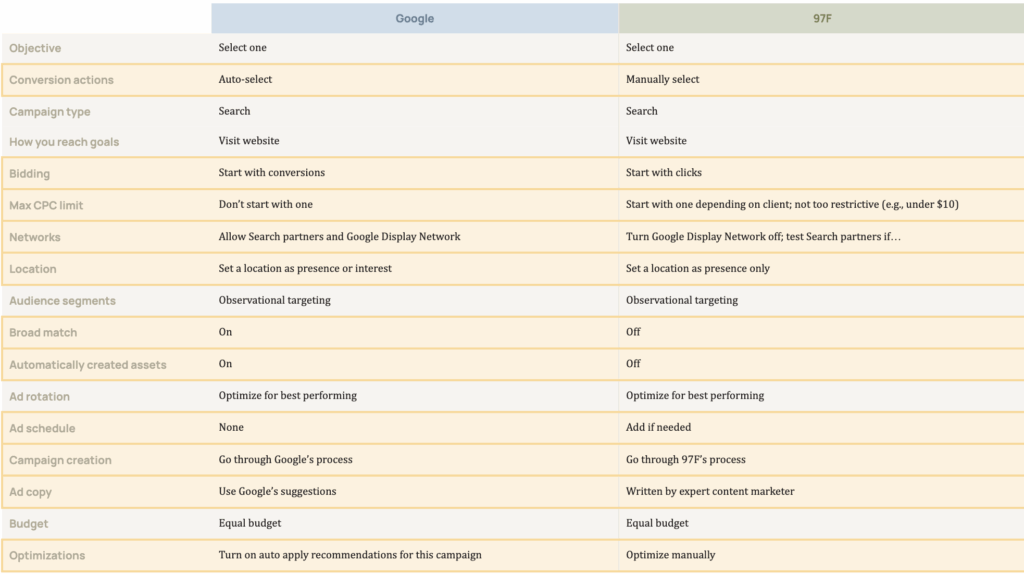
Paid search and paid social operate within shared frameworks, not separate silos. Insights move between channels, and performance signals actually get used instead of parked in dashboards. AI and automation play their part, but always with human direction. Our teams set guardrails, interpret results, and test assumptions so optimization stays intentional and grounded in outcomes that matter.But let’s be clear about one thing: That work only holds up when collaboration is real. That’s why our PPC teams partner closely with analytics, SEO, and CRO specialists to reflect how users actually move through the journey. Consider our work with JK Moving, where reshaping paid media around demand quality and intent alignment led to more qualified leads and better efficiency in a crowded market. This is what happens when strategy, testing, and cross-team coordination pull in the same direction.
Planning your next PPC investment
Planning a PPC investment in 2026 requires more than setting a budget and choosing platforms. It starts with understanding where you are today and where paid media fits within your broader growth plans. As you get started, be sure to:
- Assess current performance and constraints
Take an honest look at how paid media performs across channels. Notice where spend concentrates, where friction appears, and where teams feel stretched. Gaps in time, tools, data access, or expertise often matter as much as the metrics. - Identify growth opportunities and inefficiencies
Reviewing performance holistically tends to reveal patterns. Some campaigns drive real demand quality, while others create volume without impact. Those signals can guide you toward smarter budget shifts, sharper targeting, and clearer messaging. - Align paid media goals with business objectives
Paid media works best when goals connect directly to revenue targets, pipeline expectations, and growth timelines. That alignment keeps optimization decisions focused on outcomes that matter. - Choose a PPC agency built for long-term scalability
As complexity increases, sustainable growth depends on structure and adaptability. The right PPC agency brings systems that evolve alongside platforms, audiences, and business needs.
Build Your PPC Strategy with 97th Floor
For more than 20 years, 97th Floor has helped enterprise brands grow through constant shifts in how media works — by staying curious, experimental, and deeply invested in what’s changing next. Our PPC management approach blends strategy, data, and execution into systems designed for modern platforms, AI-driven optimization, and the realities of today’s paid media landscape.
So, if you’re ready to build a PPC strategy that supports long-term growth and adapts as paid media continues to evolve, we’re ready to help. After all, paid media has grown up. And with our help, your business can continue to grow right alongside it.