Last month, we attended BrightonSEO in San Diego. One of the highlights of the conference was hearing from Fili Wiese, an ex-Google Engineer. With his background, he could have talked about pretty much anything related to SEO, and the subject he chose to talk about was how Google crawls your site, giving tips on how to make it more efficient. Here is a full write up on that, where we cover why crawl efficiency matters. This article covers what bots do once they reach your site and what they look for.
You could have the best content ever written. It could be perfectly crafted for a specific audience or persona, answering every question they have in exactly the voice they want to hear. But if bots cannot access and read that content, none of it matters.
Search engines and large language models (LLMs) rely on bots to discover, read and understand what is on your site. If those bots can't get in, there is no mechanism for your content to show up in search results or AI-generated answers. And if it never shows up there, it will never be seen by the users you wrote it for.
So before you worry about anything else, it's worth understanding how bots read your site and what they are looking for when they get there.
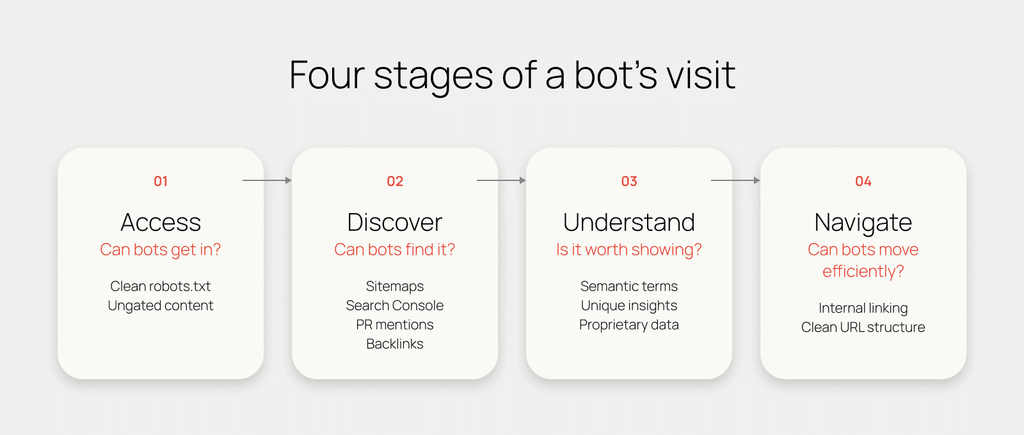
How do you make your content accessible to bots?
The first step is simply letting bots in the door. Two things matter most here.
Your robots.txt isn’t blocking content you want found
Your robots.txt file is one of the first things a bot checks when it arrives at your site. It is a type of instruction manual for bots. It tells crawlers which parts of the site they are and aren't allowed to visit. A single disallow rule pointed at the wrong directory can quietly block bots from entire sections of your site, or even the whole thing. Make sure your robots.txt isn't disallowing the content you want search engines and LLMs to find. A technical SEO audit will catch rules like this before they cost you traffic.
Your content is not gated behind form fills, paywalls or other restrictions
If your best content sits behind a form fill, a paywall or any other restriction, a bot hits that wall and stops. From its point of view, the content doesn't exist. If you want content to be discovered, it needs to be openly available on the page.
How can you get your content noticed and picked up by bots?
Once bots can access your content, the next step is making sure they actually find it. There are a few reliable ways to point them in the right direction.
Sitemaps
A sitemap is essentially a map of your site built for bots. It lists the pages you want crawled so search engines and other crawlers don't have to discover every URL on their own. Keeping your sitemap up to date helps bots find new and updated content faster.
Webmaster tools like Google Search Console
Webmaster tools such as Google Search Console give you a direct line to search engines. You can submit your sitemap, request that specific pages be crawled and see which pages have been indexed. They also show you when bots run into problems on your site, so you can fix them.
PR efforts
PR efforts get your brand and content mentioned on other websites, in the news and across the web. Every one of those mentions is another place where bots can come across your name and follow the trail back to your site.
Backlinks
Backlinks are links from other websites to yours. Bots follow links from page to page, so every quality backlink is another path leading them to your content. Backlinks from trusted sites also signal that your content is worth paying attention to.
What are bots doing when they get there?
When a bot lands on your page, it isn't just skimming. It's trying to understand what your content is about and whether it has unique value worth showing to users. Here's what it's looking for.
Semantically relevant terms to a subject
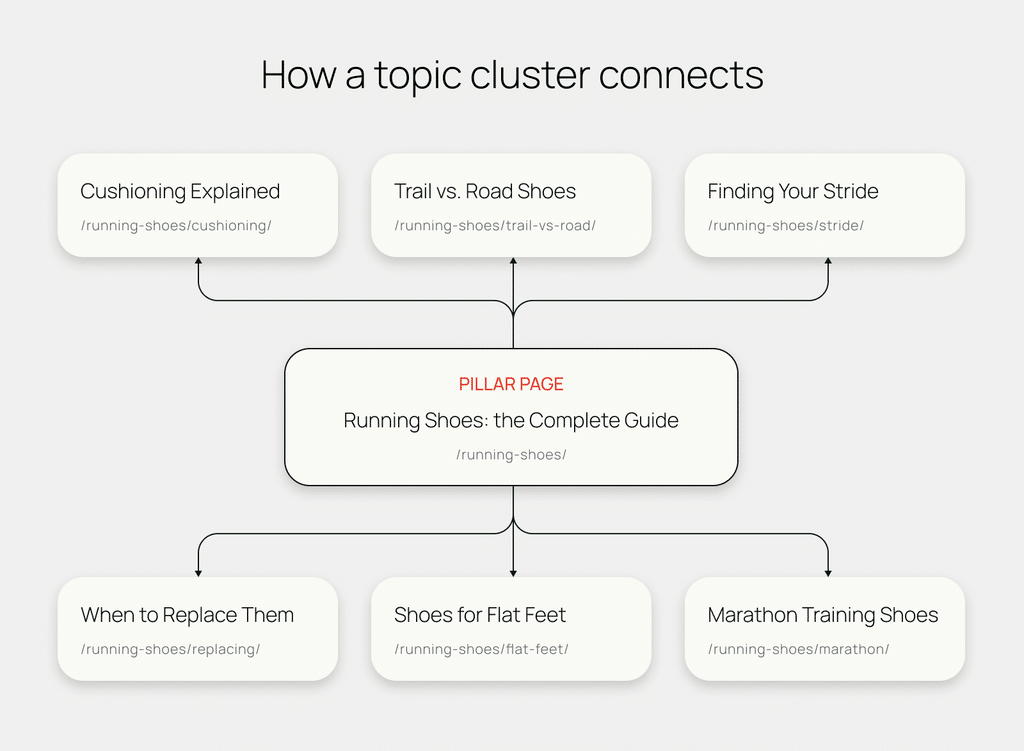
Bots look for terms that are semantically related to the topic you're covering. A page about running shoes, for example, would naturally mention things like cushioning, stride and trail versus road. These related terms help bots understand the full context of your content and confirm that it actually covers the subject in depth.
Unique insights on a topic
Search engines and LLMs already have access to countless pages saying the same thing. What stands out is content that offers a unique insight, a perspective or angle that isn't found everywhere else. Bots are looking for content that adds something new to the conversation.
Proprietary data
Proprietary data is information only you have, such as original research, survey results or internal findings. Because it can't be found anywhere else, it gives bots a strong reason to treat your site as a source worth referencing.
How do we get the bot to spend its time on our site efficiently?
Bots don't have unlimited time to spend on your site. The easier you make it for them to move around and understand how your content fits together, the more of it they'll be able to find and read.
Internal linking strategy
Internal links connect the pages of your site to one another, creating a topic cluster built with supporting content. A thoughtful internal linking strategy guides bots from one relevant page to the next, helping them discover deeper content and understand how your topics relate. It also signals which pages are most important, since those tend to receive the most links. It is impossible to create topical authority on a subject without a strong internal linking strategy.
URL structures
A clean, logical URL structure helps bots understand where a page sits within your site. URLs that follow a clear hierarchy, like /blog/seo/how-bots-read-your-site, tell a bot what the page is about and how it relates to the rest of your content before it even reads the page.
Great content deserves to be found. By making sure bots can access your site, find your pages, understand your content and move through your site efficiently, you give that content its best chance of reaching the people it was written for.
Getting crawled is only the first step. Hear Kevin Indig explain what it takes to get retrieved, cited and trusted in AI search.