



Sell 60,000 tickets and you fill a stadium for an afternoon. Create 60,000 memories and you'll fill a stadium forever.
Experiences become memories, memories become traditions and experiential marketing is the way to create an emotional bond with customers that pulls them back to your brand over the competition again and again.
Pro sports teams live and die not by their teams’ records, but by their ability to create experiences that begin long before kickoff and continue way after the stadium has emptied. They create fans, not customers.
We’re here to say that experiential marketing is for every industry. While your marketing will be specific to your brand, we’ve pulled three principles from pro sports marketing to help you convert customers into loyal brand fans.
In this guide, we’ll break down experiential marketing in sports examples drawn from real teams and brands, then show how those same strategies can be applied across industries.
At its core, experiential marketing works because it creates emotion, not just awareness. And no industry understands that better than pro sports.
Sports teams don’t market products; they market moments. Every touchpoint in sports marketing is designed to make fans feel something and feel it together. The shared emotion is what turns a single experience into a lasting memory, and a memory into long-term loyalty.
The strongest experiential marketing examples in sports are immersive and interactive. They invite fans to get up out of their seats and participate. They reward attention, amplify momentum, and extend the experience far beyond the physical event through digital channels and social conversation.
This is why experiential marketing in sports examples translate so well to other industries. When brands focus on how people feel before, during, and after an interaction, they learn more about their audience to improve their experience the next time they interact. This is the advantage sports marketers have been playing for years.
What translates isn't the tactic — it's the principle underneath it. The medium you choose — the event, the touchpoint, the format — communicates something before your audience reads a single word. Udi Ledergor, former CMO at Gong, invokes Marshall McLuhan's idea with a sharp marketing application: most brands are obsessing over what to say while ignoring the signal their channel selection is already sending. This short video breaks down why the medium isn't a delivery vehicle — it's the message itself.
Here are seven experiential marketing examples in sports that show how experiences turn audiences into lifelong fans.
Before changing a single seat or concession stand, the Utah Jazz spent a year listening to what fans actually wanted. By grounding the experience in real fan insight, the team transformed the arena into a space designed for making lasting, brand-loyal memories.
After the Utah Jazz’s $125M arena renovation, Bart Sharp, CMO at the Utah Jazz, shared that his team spent an entire year researching what Jazz fans wanted beyond the court before making any renovation plans. Their research showed a strong desire among their fans for more premium options, ice cream (yes, Utahns love their ice cream), and Instagrammable photo opps. With these findings, the Jazz transformed their arena to provide fans unforgettable experiences.

Built Bar shows that experiential marketing can happen far beyond the venue. By placing customer service directly under marketing, the brand turns real-time feedback into responsive experiences that make customers feel heard and valued.
BuiltBar has a unique way of ensuring their customers are heard and that feedback gets injected directly into their marketing campaigns. “We’ve actually put the customer service team under marketing leadership. That way we can pivot and change quickly without going through multiple channels,” said Colleen Ferrier, VP of Marketing at Built Bar. “So we’re hearing as leaders directly what the customers love, what they don’t love, what they’re liking, what they’re not liking. And we as a team can shift and change quickly for them.”

By directly listening, learning, and responding to customers, Built Bar’s marketing team has the ammunition they need to generate more value for their customers.
As marketers, we must prioritize listening before campaign creation. We should never assume we know why someone came to our websites or their purposes for joining in the experience. Every time we make assumptions, we limit ourselves and miss opportunities for our customers, putting time and energy in the wrong places.
Do This: Customer feedback/research surveys always endear customers to you—show you care and learn from your most important audience. Also, consider moving Customer Service under Marketing to close the customer feedback loop.
When momentum strikes, great experiential marketing captures it instantly. The Suns turned a split-second, game-winning play into a physical product almost overnight, allowing fans to own a piece of the moment while the emotion was still fresh.
With only .9 on the clock, Deandre Ayton scored a game-winning alley-oop against the Clippers during the Suns’ 2020-2021 season. Being hyper-engaged on social media, the Suns’ social media team quickly recognized an opportunity to capitalize on the excitement surrounding the play. New “Valley-Oop” shirts were announced on their social channels that night and available for purchase the very next day. No one could have predicted the alley-oop, let alone prepare t-shirt designs. But the Suns were ready—they took an awesome on-court experience and memorialized it for the fans.

Marketing teams have to find ways to monitor momentum. Bart Sharp shares how this is a key principle they follow within their marketing strategy. “I’ve learned in this industry you’ve got to be very nimble because things can change very fast. In an instant, we have to shift our focus and find ways to capture that momentum.” Sometimes the team is playing really well and there’s a story there. Sometimes there’s not. In pro sports (and really in just about any industry) you can’t predict how the seasons will go. You can have an idea based on data you’ve gathered (players on the team, how we compare to competition, injury reports, etc.) and that informs direction. But if things get going and you notice momentum is building somewhere else, you’ve got to make that pivot.

Marketers may be the best planners in the world, but following the momentum inherently means that marketers must be ready to abandon their plans—which is frankly really hard to do! What if the Suns chose to just stick to their content calendar? They would’ve missed out on a huge opportunity for the brand to bond with fans.
Not all experiential marketing examples happen inside a stadium. Oreo’s now-famous “dunk in the dark” response during the Super Bowl blackout shows how brands can insert themselves into shared cultural experiences by acting quickly and understanding the moment.

We all remember the classic example of Oreo capitalizing on the power outage in the 2013 Superbowl with a tweet about “dunking in the dark.” The brand acted quickly around a current event, which was only possible because they were aware of what their audience was doing and how to appeal to them in that moment.
It doesn’t take a huge team or expensive software to interact with your audience. Plan all you want, but be ready to strike when the opportunities arrive.
Do This: Marketers can’t capitalize on momentum if they aren’t looking for it, if they don’t have a supportive infrastructure, or if they don’t have the green light from leadership.
Experiential marketing doesn’t always require large-scale activations. Real Salt Lake demonstrates how thoughtful, personal interactions on social media can become powerful micro-experiences that deepen fan loyalty.
Tyler Gibbons, VP of Marketing at Real Salt Lake (RSL), shares how seriously they take online interactions with their fans. “When someone shares wearing a team jersey and you respond back to them on social, you probably made that person's day. You're going to have a fan for life.” In their case, RSL is extremely careful about who on their team has the permission to dialogue with fans—they don’t underestimate the power of these micro-experiences.

Creating an experience doesn’t mean that you need a full event or production. Experiences can be small and individualized for your specific audience. Hubspot emphasizes that even when you give your audience a tangible experience, there must still be an online dialogue happening. Dialogue is especially crucial to industries where the experiences are largely digital. It’s those conversations that become a major part of audience-brand bonding.
Not every fan can sit courtside. Geography, cost, and capacity make that impossible. The Warriors decided to redesign that reality.
By experimenting with virtual reality, the Warriors created a way for fans to experience games from a courtside perspective without ever stepping foot in the arena. Using VR technology, fans could feel closer to the action, immersed in the sights and sounds of game day, even if they were watching from hundreds or thousands of miles away.
This is a strong example of experiential marketing because it expands access instead of limiting it. The experience isn’t just about watching basketball, but about giving fans a story to tell. Now, fans can feel like they were courtside, even if they technically weren’t.
The takeaway here isn’t that every brand needs VR. It’s that the best experiential marketing examples use technology to remove barriers and deepen emotional connection.

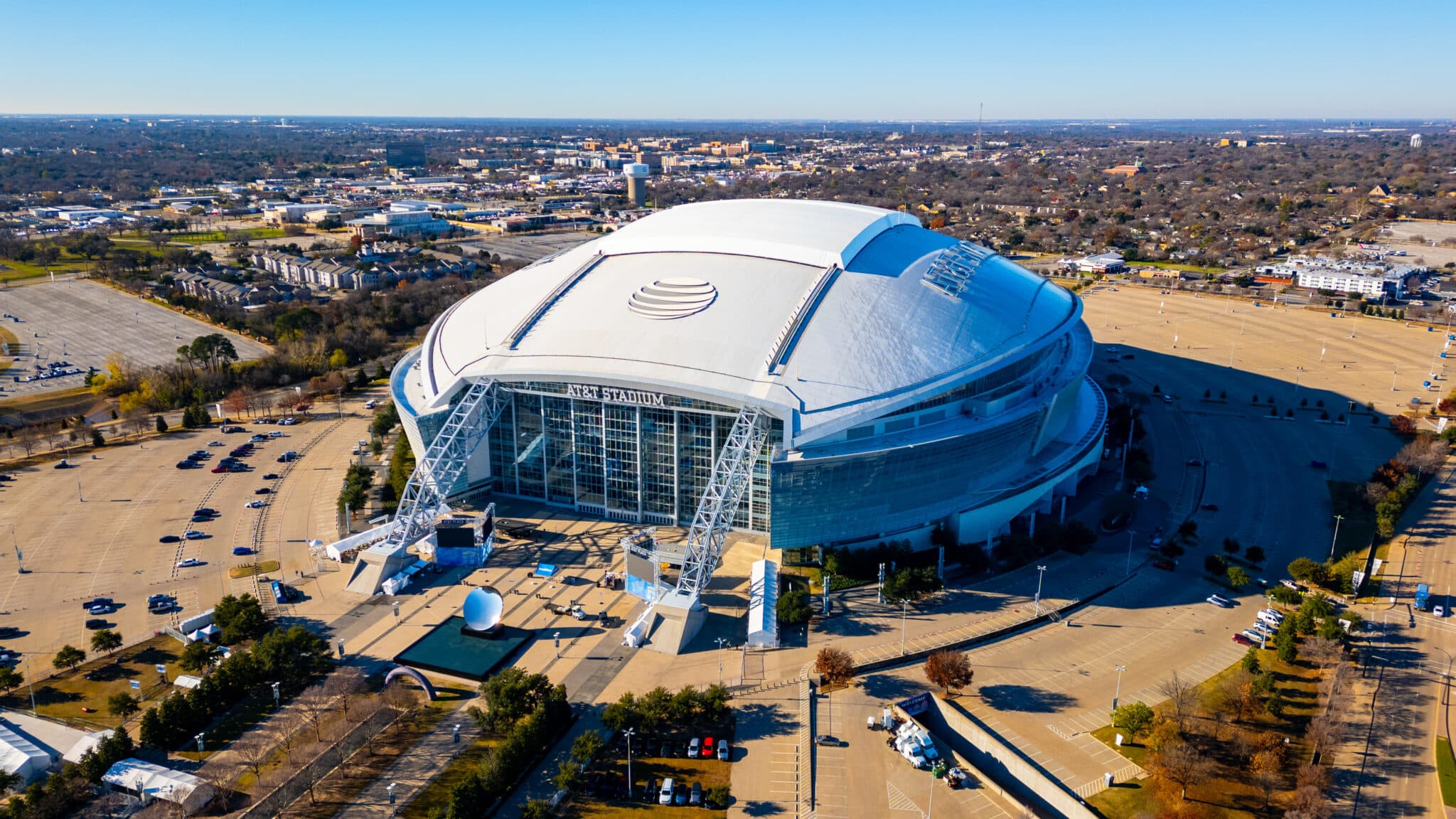
AT&T Stadium is massive. Iconic. And, it’s intentionally designed to be experienced even when no game is being played.
The Cowboys have turned their stadium into a year-round experiential marketing engine through immersive tours that give fans behind-the-scenes access. Visitors can walk the field, explore locker rooms, learn the architectural story of the venue, and see how one of the most recognizable franchises in sports operates from the inside.
This is a masterclass of storytelling at scale. The Dallas Cowboys’ stadium has become a physical brand expression, reinforcing the Cowboys’ identity as larger-than-life, premium, and deeply rooted in sports culture.
What makes this one of the strongest experiential marketing examples is its longevity. The experience doesn’t rely on a single event or even a game; it creates value every day, for fans who may not even attend a game, but still leave feeling closer to the brand.
Look at the interactions happening with your target audience. Is there a way to build an online element into a tangible experience? Are you keeping a dialogue going on and offline?
A major sign of marketing maturity in an organization is the level of experience they place in customer-facing roles (such as social media managers, customer experience, etc.). Unfortunately, many brands put their “greenest” people in these roles—preventing organizations from fully capturing their audience’s feedback and preventing audiences from an elevated experience.
There’s a reason why pro sports teams pull in top talent for game-day coverage. Inside the NBA, for example, features the beloved Charles Barkley and Shaq. College GameDay utilizes former athletes, coaches, and other experts to talk about the football games. Both shows have subject matter experts in charge of the dialogue, giving this dialogue the best people to engage audiences.

So don’t put your least experienced employees in charge of all the digital dialogue for your brand. Make sure that whoever is helping to create that dialogue knows and understands your company’s offering, your values, and how to interact with your audience in a way that is meaningful to them.
Do This: Don’t hire entry-level for audience-facing positions.
Pro sports marketers have an obvious edge in creating customer experiences—their product is literally an experience—but their playbook is written for every brand in every industry. A stronger focus on experiential marketing truly can turn your brand observers into lifetime, loyal fans.
If you’re ready to take inspiration from these experiential marketing in sports examples and apply them to your own brand, we’re here to help.
At 97th Floor, we partner with teams who want to create experiences people remember. If you’re ready to build experiential marketing that connects, converts, and lasts, let’s build together.
Want more expert marketing content sent right to your inbox?
Join our newsletter and never miss a beat.
In this no-fluff Prezi video, Paxton Gray, CEO of 97th Floor walks you through his step-by-step process to creating consistent and quality content marketing that works for virtually any budget. If you’ve felt that content marketing hasn’t been producing the results you’ve wanted, this video is for you.
Paxton explains one of the reasons why Buzzfeed content marketing can draw you in — even when you know it’s just clickbait — is because it taps into the “human algorithm.” It's the power of appealing to a person’s curiosity, especially in a content marketing context. Curiosity alone is not enough, though. Paxton explains how to also use data to create content that’s more personal, targeted, and relevant. After all, content marketing made for everybody means it doesn’t really appeal to anybody.
MozCon 2020 is a wrap.
We heard from many speakers covering many industries, but even more compelling than the voices we heard, was the common themes between them.
I worked with my fellow attendees from 97th Floor to pull together the common themes and action items from MozCon 2020. In no particular order, here's the themes we saw, and what marketers and brands should be doing next.

As always Moz leads by example when discussing difficult, but necessary, topics. Like addressing the current economic, social, and civil situations. Sarah Bird kicked the conference off by acknowledging the current environment, and Dr. Pete gave a heartfelt opening to his address on keyword research. Immediately Dr. Pete had my heart and attention as he drew the connection between today's circumstances and how these factor into the fundamentals of SEO. Specifically topical research.
Of course today's economic climate is affecting each of the businesses we work for. Wil Reynolds closed the conference by introducing us to the new CMO, or rather, the lack thereof. We were all given stark evidence that our careers and success as marketers hinge on being able to effectively communicate in the language of the board.

The Takeaway: I think I speak for everyone when I say I’m sick of hearing “unprecedented times” in brand messaging. Let’s skip getting things back to normal and instead make things better. No doubt, the past few months have changed some foundational elements of everyone’s lives, but as marketers let’s make sure this change is for good, and is long lasting.
Look at your current marketing efforts and ask, "Are we trying to get back to "normal"? Or are we using this as an opportunity to get better?
I think I speak for all the attendees when I say that day 2 of MozCon 2020 was filled with equal parts intrigue and trepidation. Of course we've all known for a long time 97th Floor has already believed in the power of unconventional data sets for practical SEO use. (We're so close to launching something big around this, stay tuned!)
I think most SEOs understand and respect the different methods of deep technical SEO, but many don't know what's possible, or how to begin. Enter Moz's Senior SEO Scientist Britney Muller, who walk gave every attendee the chance to dip their toes into machine learning and automaton.

Britney continued on with examples and uses cases, but perhaps none was more interesting than entities from Google. Essentially it's a score that indicates Google's topical associations with a given URL. I'm excited to dig deeper into this later.
Of course every attendee this year remembers Michael King's one of a kind theatrical experience showcasing the many use cases of data scraping, machine learning, big data crunching, and artificial intelligence.

This address was maybe the heaviest conference address I've ever heard, but the format of a ~30 minute film and story made it actually digestible. In the traditional setting, my eyes may have glazed, but today, they were glued. Today, we witnessed a new medium for virtual conference addresses. Well done Michael!

The Takeaway: The technical inspiration shared today could come across as fiercely intimidating. But you can take it for a fact that these advanced scripts, and machine learning setups aren't conceived out of nothing (even for the pros). If you are enthralled by the idea to get busy with scripts, machine learning, and automations start slow and be patient with yourself. It's a brave new world! Also rewatch those sessions when the recordings come out.
Stay glued to the 97th Floor social accounts and newsletter to be of the first to know when we drop our own software that accomplishes a lot of the technical crunching we've seen seen at MozCon.
How can you get customers if you don't know them? Even before Coronavirus, the industry has been seeing subtle shifts to growth-driven marketing. Or in other words, measurable marketing.
Quickly Wil Reynolds had the audience's attention with the line, "The less you understand your customer, the more you spend to acquire them."

If we really care about bottom line budgets, we should start acting like it. Wil went on to call out mistakes he's seen of advertisers spending inefficiently because they didn't have their customer map dialed in. He made the case that saving money comes when you understand the customer journey and all marketing facets work in unison to perfect the customer journey experience.

Branding expert Flavilla Fongang uncovered timeless branding expertise with many notable tactics like:

But perhaps none was more resounding to me than her declaration that customer engagement is a company-wide effort. Innovation must be built into the company culture to retain and delight customers.
The Takeaway: The customer journey is not only knowing your audience, it's anticipating their next move. The customer journey is crucial to bottom-line success. There are too many options in your space for you to just meet needs, we need to exceed customer expectations. And that only comes when we know our audience.
Invest in a real customer journey map (not just audience insights), paired with your published content. Hopefully you find gaps in the journey, filling those gaps with customer-focused content is your next homework assignment.
A great place to start on this a guide we put together on building a bullet-proof buyer persona.
I love transparency, but even more I love the vulnerability that took place at MozCon 2020. Speakers were eager to share what didn’t work for them. Phil Nottingham shared a story of setting three different budgets for a set video ads, $1,000, $10,000, and $100,000.
Obviously this would mean huge differences in the production value of these campaigns, and you might think that a better video ad would lead to better traffic.

Crazy right?
But we learned that spending more doesn’t mean it’ll produce proportionally more results.
Shannon McGuirk also spared no punches in reviewing her past work in link acquisition. I love this honesty, because this is how we (as a community) go further. Link acquisition is something that most are shy to share, so I was especially glad to see Shannon’s blunt honesty about what didn’t work (and what did).

The above graphic from Shannon shows what our marketing efforts tend to look like. You can see that majority of the activity is bringing in steady results. We can all see this is a healthy balance of activity, yet too often marketers only focus on the "huge wins" and consider everything else a fail. Embrace the steady performing campaigns and learn from your fails.
The Takeaway: None of us have ever marketed through a global pandemic before (unless someone at MozCon 2020 was marketing during the Spanish Flu 100 years ago). Let’s grant ourselves a little leeway and break a few eggs while we make a marketing omelet in this new world.
So don't shy away from getting after something our of your comfort zone. Whether you win or lose, the world keeps spinning. So get after that crazy idea you've been pushing off.
You know that building and selling to an audience isn’t cheap. You didn’t need to pay for a MozCon ticket to hear that, but it’s important to be reminded that people aren’t waiting around online for a brand to win their loyalty. Phil Nottingham encapsulated this feeling when he said, “The number of impressions is not the number of people impressed.”

A number of speakers today expressed renewed focus on audience building, especially through the lens of the unique health, economic, social, and civil circumstances everyone is facing today.
The Takeaway: Be empathetic and understanding with your audience. Rerun your keyword research because volumes and interests have changed dramatically in the past few months. Being quick on an SEO/paid media/content strategy for up and coming keywords in your space will be rewarded with more traffic. Now comes the fun part of turning that traffic into an audience, which was discussed today by many presenters.
Get fresh keyword and audience data, then restructure your traffic and audience source.
This isn’t a new topic for MozCon, or any digital conference for that matter, but today it matters more than it did in the past. Just within the past several months, spending and consuming habits have changed dramatically. If SEOs are working purely off keyword data that is 6-12 months old, they are missing out on huge opportunities.
Utilizing Google Trends at this time is a great place to start, and Dr. Pete took us on a journey of just how to grab that data. Who else was excited to learn about Pinterest Trends?

Many others at MozCon shared truly cool ways to collect and crunch data that give you deep and actionable understanding your audience, for example...

And don't write off knowing your own business. Heather Physioc laid down the foundational truth that before any significant marketing can be conducted, we need to understand the brand we are marketing for. Including our values and competitive edge. A good tip for defining your competitive edge is finding the collection of words that describe your businesses that end in "est" (i.e. quickest, cheapest, etc.).

The Takeaway: Your audience, along with their wants and needs, has likely drastically shifted over the last six months. If you aren't on top of those new insights, you are bleeding money. Lucky for you, there’s data out there to inform your audience strategy. Of course there’s some readily available data sources from traditional tools, but through custom scrapers and unique data pulls/crunches you can get clean data that actually informs strategy.
Make every effort to obtain audience data, build real personas, and then use those personas throughout your marketing team.
Another way to say this is to invest in your brand.
This is another trend that isn’t exclusive to this MozCon, but we’ve been saying the same thing for years. However, I think most brands are feeling this exaggerated effect given the economic hardships associated with the Coronavirus pandemic.
It was mentioned multiple times by many speakers; Capture and delight your audience, and then nurture them on your own platforms. Be it your copy, website, videos, or email.
Phil Nottingham gave a great example of this such as Uber creating Uber Presents, or Mailchimp creating Mailchimp Presents, or Wistia creating Brandwagon, a late night style talk show for marketers.

All of these projects are great examples of companies creating content for their audience. They become the media their users seek, rather than spending a ton of money to annoy users on other media platforms.
When Brian Dean started by dropping some Star Wars themed slides, he had me. But the data kept me! For example he confirmed what many have already assumed, but not with the hard data behind it. Your email subscribers are more likely to get to your content than your social followers.
 Not to mention Brian's presentation also discussed specifics of how to invest in your brand. He asserts (and I agree) that marketers need to spend more time on the promotion of their content, especially when compared to how much time we spend creating it. He called for an end to the "
Too often marketers rely on instinct to create content. As a result, content is less engaging and we have to produce more of it to make up for that lack of performance. In this clip from the 2019 ContentTECH Summit, Paxton Gray - VP of Operations at 97th Floor - shares how marketers can access hidden treasure troves of data, which will help them to create content their audience will love.
it can be hard to be aware of the human side of the business while also making sure we’re focused on the business side. when people are the happiest and feeling fulfilled and accomplished in their role, it benefits the whole company.
Welcome to the the 97th Floor Mastermind Interview Series where each week we sit down with one of the makers, thought leaders, and visionaries behind the biggest and/or up-and-coming brands around. We talk about everything from business and marketplace insights to personal journeys and successes, to failures and legacy.
In this episode we’re talking to Miranda Barnard, Vice President of Marketing at Vivint Solar, about the marketing value of understanding your audience, creating sharable messaging, recognizing and employing trends, and more. Using personal experiences and insights, Miranda dials in on what it means to provide a great customer experience, how that focus is changing the world of business, and how leadership in business is adapting.
0:10 About Miranda
2:37 Storytelling
4:28 Communicating with authenticity
7:09 Career changes
8:36 About Vivint Solar
14:15 Onboarding
18:11 Leadership style
19:33 Letting people go
23:09 Creating vs recycling content
25:30 What keeps you up at night
26:30 Handling conflict
29:02 Miranda’s legacy
Learn more about Vivint Solar
Connect with 97th Floor on YouTube | Facebook | Instagram | Twitter | LinkedIn
Be sure to subscribe to our YouTube channel and get notifications - we’ll drop a new episode every week.
 |
 |
 |
[leadership] comes down to who you are and your ability to influence people to do great things.
Welcome to the the 97th Floor Mastermind Interview Series where each week we sit down with one of the makers, thought leaders, and visionaries behind the biggest and/or up-and-coming brands around. We talk about everything from business and marketplace insights to personal journeys and successes, to failures and legacy.
In this episode we’re talking to Kurt Workman, CEO and Co-Founder of Owlet Baby Care, about his own journey to business success. Through personal experiences and insights, Kurt shares how he learned how to turn potential hurdles into valuable educational opportunities.
0:10 About Owlet
2:52 Priorities
5:12 Technology behind Owlet
8:45 Failure
12:10 The startup phase
17:15 Building the company
19:03 Success
23:55 Hiring and firing
28:43 What keeps you up at night
31:15 Pain points with growth
35:55 Kurt’s legacy
Learn more about Owlett
Connect with 97th Floor on YouTube | Facebook | Instagram | Twitter | LinkedIn
Be sure to subscribe to our YouTube channel and get notifications - we’ll drop a new episode every week.
|
|
|
Talking about design, and giving feedback can be difficult. Sometimes it feels as though there’s a whole language you don’t know how to speak. And when you can’t find the words, it’s a challenge to get anything done the way you envisioned it in the first place. Here are a few pointers to help you communicate better with your designer so you can both end up in a place you’re proud of.
There’s nothing more frustrating for graphic designers than finishing a project and being notified of an issue that could have been addressed (and fixed) in the early stages. If you have concerns or feedback about something, voice them early and as they arise. Waiting until the end of a project to address the issue only makes things worse. Most often, it creates a domino effect of other changes that now must be made.
Don’t be afraid to give a free and honest critique. Graphic designers expect opinions, and yours are valid. Everything should be up for discussion. Remember, you know your brand/company/product the best. Your designer needs your voice on that front. While some feedback may seem obvious to you, it may not be obvious to your designer. Be sure to share your concerns. If you don’t tell your designer you think something needs to be revised, they won’t know there’s an issue. And when words are hard to find, gather examples. Show your designer what you like and/or what you don’t like. This will help carve a more guided path for the designer to take.

When it comes to graphic design, there are 5 main principles your feedback should live under.
When you give feedback, be specific to one of those principles. Instead of saying, “Make it pop.” Say, “I’d like to see brighter colors.” The field of interpretation to “make it pop” opens up a sea of possible solutions. But by being specific, the graphic designer can then ask more clarifying questions. Do you like the current color combination? Do you want brighter hues of what we have, or new colors? This will help pinpoint the root of the issue.
Poor: “Make it pop.”
Good: “I’d like to see brighter colors.”
Best: “I’d like to see brighter colors because it’ll show up more prominently. It also relates to our youthful audience.”
Telling your “why” helps the designer see from your perspective beyond your feelings or emotions (“I think” and “I feel” statements). Giving specific feedback is helpful, but explaining the “why” can really visualize your thought process. Opinions (“I think” and “I feel” statements) hold weight, but “why” statements can reveal more substantial underlying points worth talking about.
Design is subjective. While you may feel strongly one way about a design, your designer may feel the opposite way. State your case. This means you’re giving specific feedback and following your feedback with the “why” behind it. After you state your case, be sure to ask and listen for your designer’s reasoning. Design is full of decisions that you may not be aware of. Find out what the designer insists is necessary to the project, then compromise on what can be changed.
humility is about confidence. it's about knowing you're enough. it's not better than and it's not less than.
Welcome to the the 97th Floor Mastermind Interview Series where each week sit down with one of the makers, thought leaders and visionaries behind the biggest and/or up-and-coming brands around. We talk about everything from business and marketplace insights to personal journeys, successes, failures and legacy.
In this episode we’re talking to CEO and Co-Founder of Homie, Johnny Hanna. Homie is a platform where you can buy or sell your home online without an agent. In this interview, we talk about building a blue ocean within an old industry. Johnny shares his insight about educating on a new offering in a marketplace, scaling and living on the spectrum of “less than” and “better than.” We dive into the meaning of failure and what work-life balance really means. Let’s jump in!
0:10 Building a blue ocean
3:45 All about Johnny
6:15 Mentoring and giving back
6:56 What is Homie?
11:20 Educating on a new offering in a marketplace
12:43 Scaling requires education, data and nailing the “it factor”
18:18 The spectrum of “less than” and “better than”
22:23 Finding good fits within a team
24:33 Work-life harmony and defining seasons of business
28:53 What keeps Johnny up at night
30:00 Failure and solving one problem at a time
39:00 Johnny’s legacy
Learn more about Homie
Connect with 97th Floor on YouTube | Instagram | Facebook | Twitter | LinkedIn
What’d you think of the episode? The conversation continues in the comments below. Be sure to leave your insights.
Be sure to subscribe to our YouTube channel and get notifications - we’ll drop a new episode every week.
|
|
|
one of the best things we've done at chatbooks is to create a clear set of values; we promote, reward and cut based on these values.
Welcome to the the 97th Floor Mastermind Interview Series where each week we sit down with one of the makers, thought leaders and visionaries behind the biggest and/or up-and-coming brands around. We talk about everything from business and marketplace insights to personal journeys, successes, failures and legacy.
In this episode we’re talking to Chatbooks Chief Marketing Officer, Rachel Hofstetter. Rachel joined Chatbooks in November 2015 and played a pivotal role in creating the video The Real Mom, which has since amassed more than 100 million views. Rachel did this while also overseeing the overall brand that is turning instagram photos into instant coffee table artwork. Prior to Chatbooks, Rachel worked at “O” the Oprah Magazine, Reader’s Digest, wrote a best-selling book Cooking Up a Business and founded a company called guesterly. Her insights in this interview on everything from just getting started on a project or life goal, to failing, to defining your teams’ north star are spectacularly clear and spot on. Let’s jump in!
0:35 An editor, best-selling author and entrepreneur—Rachel Hofstetter's start and journey to Chatbooks.
3:37 Validating an idea, starting a company and getting noticed by Glamour, Real Simple and Procter & Gamble.
6:39 Storytelling and entrepreneurship.
7:14 Chatbooks launch and the story behind the simple idea and brand.
10:58 The process (and myth) behind creating a viral video; collaborating with the Harmon Brothers.
14:58 Creating a clear vision and three objectives of a CMO.
17:27 How to grow an all-star team and defining the 5-points of the Chatbooks north star.
22:55 The remedy to fear of failure.
29:00 Rachel's guiding principle to always improving and growing.
31:37 The art of essentialism and getting the right things done.
33:27 Saying "no" without saying no.
what I give doesn't have to necessarily be what you asked for and it can still be beneficial to you.
36:24 Legacy; what Rachel wants to be remembered for.
39:04 Advice to those figuring out what they want to have, be, do next.
Learn more about Chatbooks | guesterly
Chatbooks "The Real Mom" video
Rachel's book Cooking Up a Business: Lessons from Food Lovers Who Turned Their Passion into a Career -- and How You Can, Too
Connect with 97th Floor on YouTube | Facebook | Instagram | Twitter | LinkedIn
What’d you think of the episode? The conversation continues in the comments below. Be sure to leave your insights.
If you liked this episode, subscribe to our YouTube channel and get notifications - we’ll drop a new episode every week.
|
|
|
Here are 5 things to create a killer Facebook ad with expert and PPC Specialist Cinthia Packard.
Article and tips here.
Keyword research is at the heart of all the work we do at 97th Floor. In this webinar Director of Marketing Operations Paxton Gray shares advanced keyword research techniques that provide the ground work for solid strategies that garner results, whether for high volume brand awareness or specific product conversions. Whether novice or a pro, you're sure to glean some remarkable and actionable insights.
Get the free downloadable Advanced Keyword Research Template below!
What You'll Find in this Webinar:
[1:28] Who we are
[1:33] Who we work with
[1:41] What we do
[2:10] What is a keyword? 15% of Google search has never been searched, everyday.
[2:45] The Search Demand Curve: Fat Head, Chunky Middle and Long Tail Keywords
[4:15] Google's #1 objective
[4:35] Google Micro-Moments: The consumer journey and you
[5:08] Advanced Keyword Research: What it is, What it's not
[6:07] Think strategy, not specifics.
[6:45] All about expert Paxton Gray
[8:40] Benefits of keyword research
[10:01] Keyword Research: Step 1 "Find Keywords"
[11:20] Keyword Research: Step 2 "Gather Data" and Pillars of Keyword Research Data
[13:23] Tools for pulling data (free and paid)
[15:21] Keyword Research: Step 3 "Analyze Data"
[16:01] Keyword Research: Step 4 "Group by Intent"
[17:00] DEMO and template overview
[36:00] Q&A
[47:00] Next Webinar "How to Get the Most Out of Google Analytics"
[48:24] Questions, comments, concerns? Hit us up at up@97thfloor.com.
Yesterday, September 23, was the final day of BrightEdge’s Share15 conference in San Francisco. Share15 is a Content Performance Marketing event put on “for digital marketers, by digital marketers.” The conference is a specific opportunity for BrightEdge users to get hands-on. This year’s conference had speakers from several big players in the industry, including BrightEdge, Salesforce, Google, and many others.
.@chrisbennett of @97thFloor shares how to bucket #keywords for #content success at #Share15 pic.twitter.com/JvsydGAGeD
— BrightEdge (@brightedge) September 23, 2015
Chris Bennett, 97th Floor’s CEO, had the chance to speak at the conference yesterday. 97th Floor is a certified BrightEdge Agency Partner, and several of our clients use BrightEdge in their business. Chris was excited for the opportunity to speak here, as this was his first year presenting at a Share conference. He also enjoyed this chance to speak alongside his old friend, Kirill Konrod from Adobe, who had some great insights on Google’s Quick Answer boxes. Chris’s presentation emphasized tactics such as focusing on keyword research, using those keywords to recognize and create better content, and making sure that you are creating altruistic content for the user.
For a session that @97thFloor claims doesn't include earth shattering news, I'm sure loving these ideas! #contentmarketing #share15 — Taylor Harker (@TaylorHarker) September 23, 2015
Not only was Chris one of the speakers at Share15, but 97th Floor was a sponsor of this year’s event, setting up a “swag machine" for use by conference attendees.
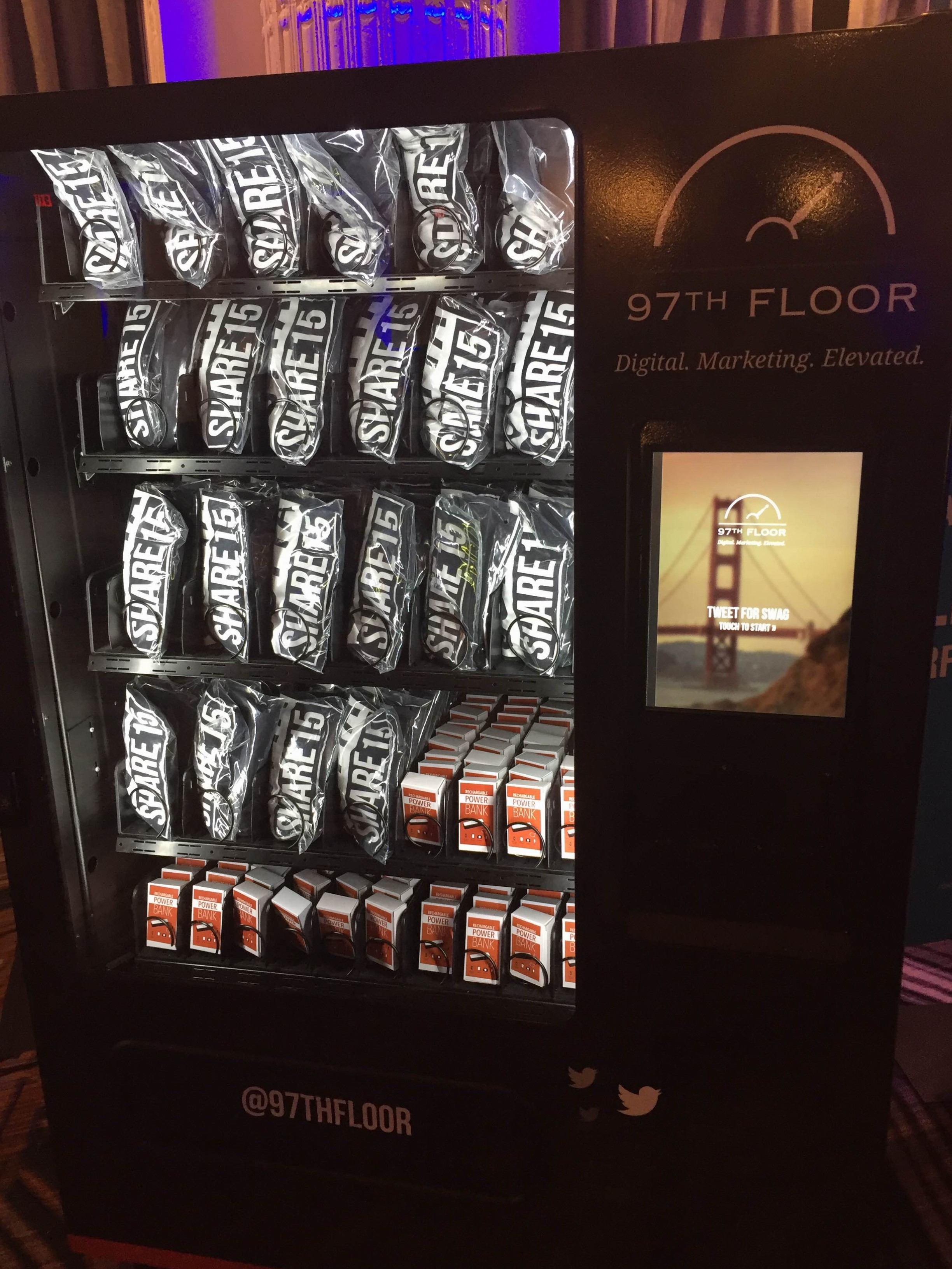
The machine was filled with shirts and portable chargers. To get their swag, participants could tweet a selfie in front of the machine, tagging @97thfloor, #share15, and a special hashtag the machine would generate. Once the tweet went out, the machine would dispense the loot.
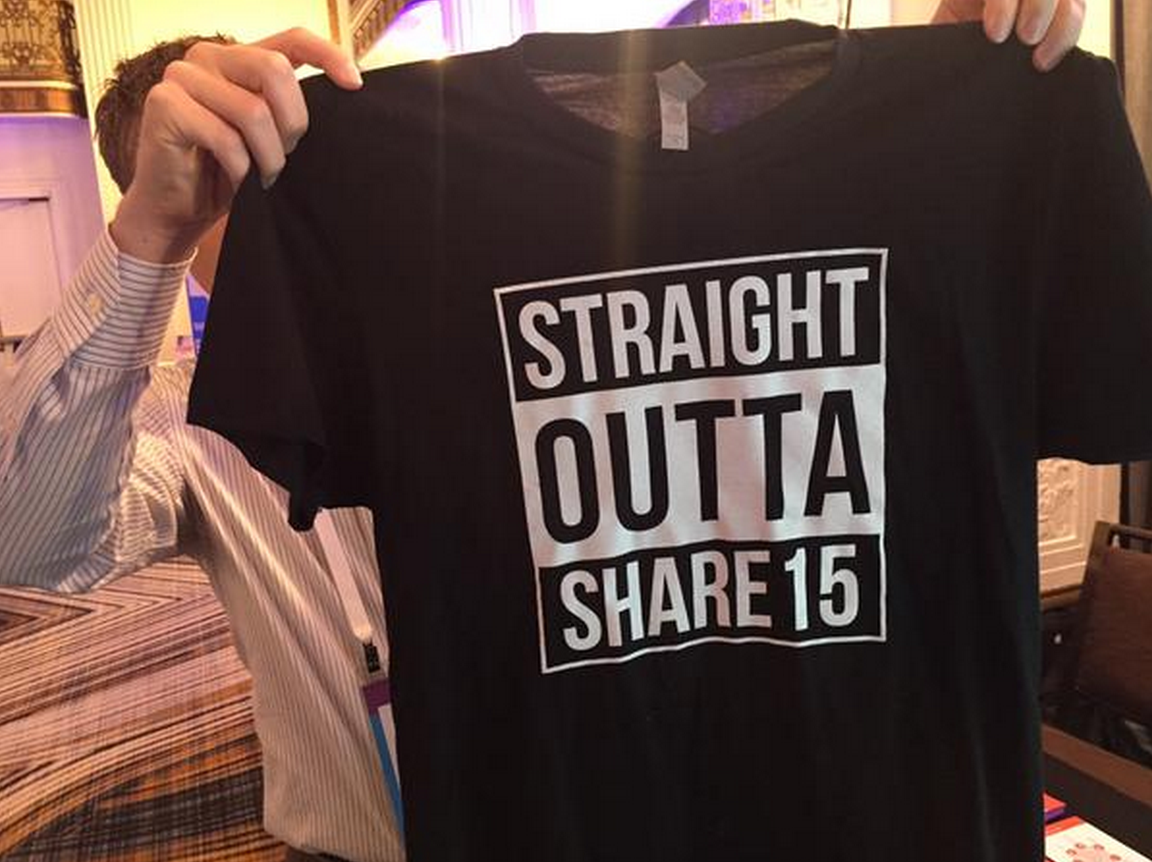
We figured that Share15 was the perfect opportunity to showcase the machine. Where better than a Digital Conference to share a fun, innovative platform to build social engagement?
At #share15 with @97thfloor #dm858 how cool is this? pic.twitter.com/21KKbXTJ5K
— Lisa Brown (@bunltd) September 23, 2015
Not only did this generate buzz for 97th Floor and Share15, it also fell right in line with Chris’s message from his presentation, and 97th Floor’s own brand, combining creative tactics for bigger results.
@97thfloor #share15 #dm901 awesome swag machine!! pic.twitter.com/IXTsfqGHoy
— Jim Yu (@jimyu) September 23, 2015
Having a great time @97thFloor #share15 #dm042 pic.twitter.com/Tsas0gPgLP
— Sophia Eng (@sophianeng) September 23, 2015
We loved coming to Share15 and working with BrightEdge. Their staff was wonderful to work with and a real class act. They really proved just how much they care about their customers. Thanks, guys!
